Banner
Here's Where Your Backyard Was 300 Million Years Ago

We may use terms like "grounded" and terra firma to mean stability and consistency but geology...

Convergent Evolution Cheat Sheet Now 120 Million Years Old

One tenet of natural selection is a random walk of genes but nature may be more predictable than...

Synchrotron Could Shed Light On Exotic Dark Photons

There are many hypothetical particles proposed to explain dark matter and one idea to explore how...

The Pain Scale Is Broken But This May Fix It

Chronic pain is reported by over 20 percent of the global population but there is no scientific...

User picture.
News StaffRSS Feed of this column.

News Releases From All Over The World, Right To You... Read More »

Blogroll

The Miocene climatic optimum, was a period from about 15 to 17 million years ago and it had wild swings in temperature, the amount of continental ice on the planet and CO2 levels.

Historically, CO2 had inconsistent relationships to temperature. When levels were 10X higher than they are now, the temperature was 2 degrees higher. What has been lacking is a solid relationship between them outside the last few decades and a new paper in Paleoceanography finds that during the
Miocene climatic optimum  has found that these changes in temperature and ice volume were matched by equally dramatic shifts in atmospheric CO2. 

During the 1930s, North America endured what came to be called the Dust Bowl, a prolonged era of dryness - the worst drought in America of the last 1,000 years - that withered crops and dramatically altered where the population settled.

80 years ago, in 1934, is when things really got crazy; giant dust storms and drought covered more than 75 percent of the country and affected 27 states severely.

Do you believe in science?

Most people do. Some even say they 'accept' science, since that sounds less faith-oriented than 'believe', but ask most science-accepting atheists and fundamentalist Imams about adaptive radiation in evolution and there answers will be about the same in accuracy.

Nutritionists and their followers also claim to have a lot of faith in science - but they really have a kind of confirmation bias which makes them more likely to trust information that appears scientific yet really doesn't tell them much, according to a new paper in Public Understanding of Science.

Natural gas finally fulfilled its environmental promise this century. Long touted by environmentalists for being much cleaner than coal, hydraulic fracturing - fracking - made it economically viable as well.

The resulting boom also offset the lingering economic malaise in America for states, like Pennsylvania, that embraced it. Poor people could still afford energy but CO2 emissions went back to early 1990s levels, while coal, which had skyrocketed in use when nuclear energy was banned in America, was suddenly back at 1980s levels.

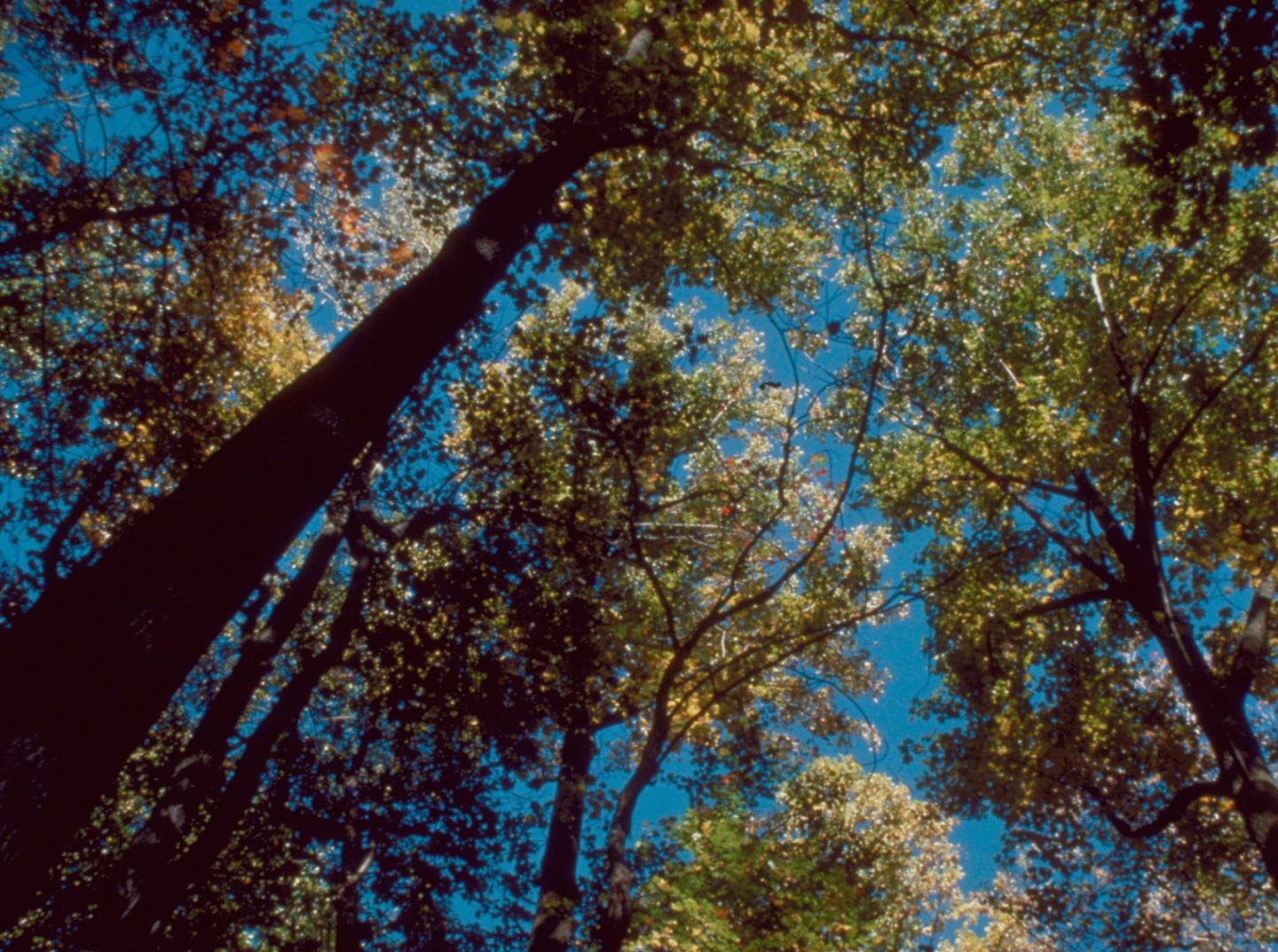
We can blame man for the altered composition of Eastern forests, but not climate change, according to a researcher in Penn State's College of Agricultural Sciences.

Forests in the Eastern United States remain in a state of "disequilibrium" stemming from the clear-cutting and large-scale burning that occurred in the late 1800s, contends Marc Abrams, a professor of forest ecology and physiology. And since about 1930, the Smokey Bear era, aggressive forest-fire suppression has had a far greater influence on shifts in dominant tree species than minor fluctuations in temperature.

Many teens skips breakfast and many teens are obese. The Centers for Disease Control and Prevention (CDC) don't think that is a coincidence, they believe skipping breakfast increases the likelihood of overeating and eventual weight gain. Statistics show that the number of adolescents struggling with obesity, which elevates the risk for chronic health problems, has quadrupled in the past three decades.

A study has found that eating breakfast, particularly meals rich in protein, increases young adults' levels of a brain chemical associated with feelings of reward, which may reduce food cravings and overeating later in the day. Understanding the brain chemical and its role in food cravings could lead to improvements in obesity prevention and treatment.