Banner
Here's Where Your Backyard Was 300 Million Years Ago

We may use terms like "grounded" and terra firma to mean stability and consistency but geology...

Convergent Evolution Cheat Sheet Now 120 Million Years Old

One tenet of natural selection is a random walk of genes but nature may be more predictable than...

Synchrotron Could Shed Light On Exotic Dark Photons

There are many hypothetical particles proposed to explain dark matter and one idea to explore how...

The Pain Scale Is Broken But This May Fix It

Chronic pain is reported by over 20 percent of the global population but there is no scientific...

User picture.
News StaffRSS Feed of this column.

News Releases From All Over The World, Right To You... Read More »

Blogroll

Scientists at Argonne National Laboratory have created a new simulator to more accurately estimate the greenhouse gases likely to be released from Arctic peatlands if they warm.

Their model is based on how oxygen filters through soil and it estimates that previous models probably underestimated methane emissions and overrepresented carbon dioxide emissions from those regions. 

Peatlands, common in the Arctic, are wetlands filled with dead and decaying organic matter. They are the result of millions of years of plants dying and breaking down into rich soil, so they contain a massive amount of carbon.

A research group has discovered that AIM - Apoptosis Inhibitor of Macrophage - a protein that plays a preventive role in obesity progression, can also prevent tumor development in mice liver cells. 

This discovery may lead to a therapy for hepatocellular carcinoma (HCC), the most common type of liver cancer and the third most common cause of cancer deaths.

In modern times, doctors in medical school and residency are steeped in a 'teach to the protocol' environment, mandated by the government and the threat of lawsuits if bold efforts don't work. With the gradual takeover of health care by governments, creativity and and initiative are going to decline even further but some hospitals still engage in high hospital care intensity (HCI) and they have lower rates of patients dying from a major complication, called failure to rescue. 

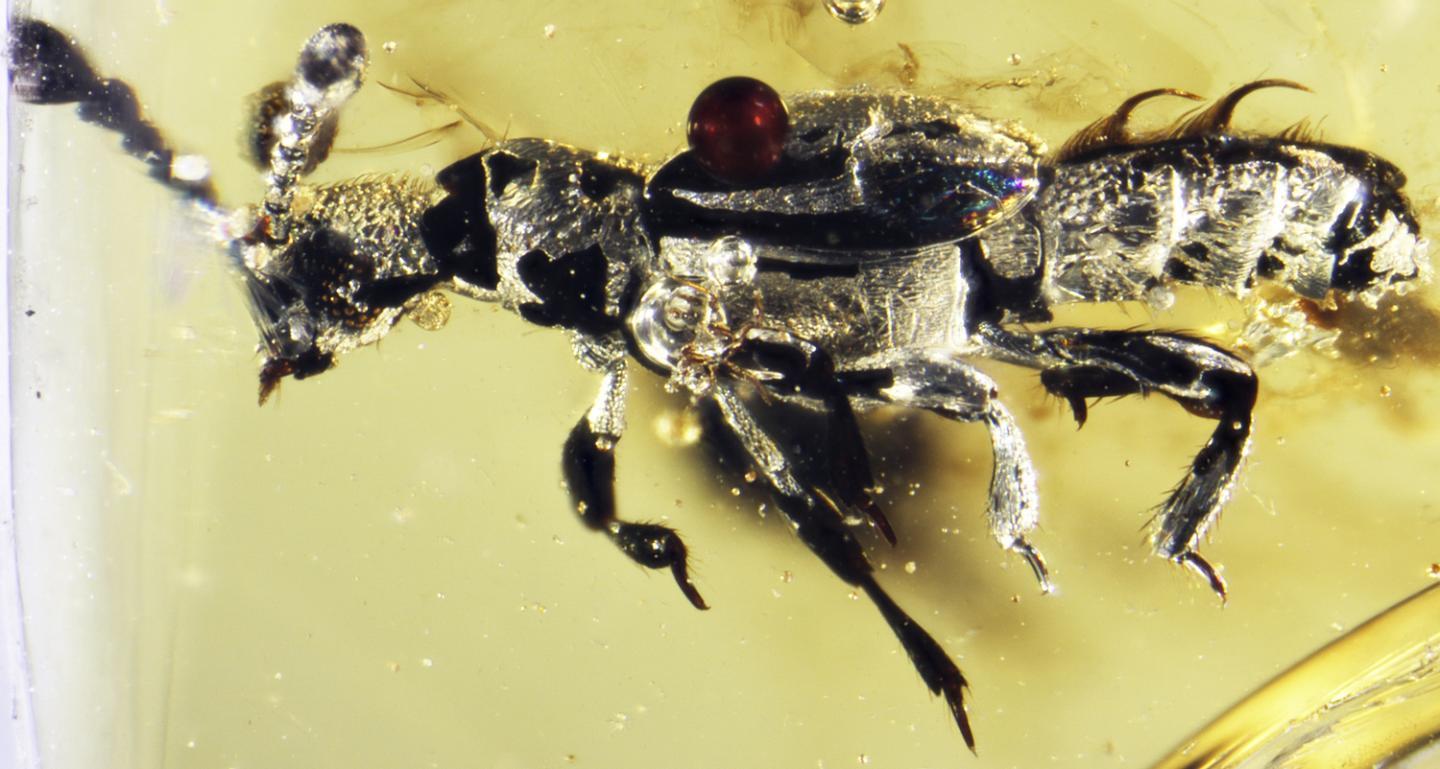
A 52-million-year old beetle was able to live alongside ants—preying on their eggs and usurping resources—within the comfort of their nest. Somehow.

The fossil, encased in a piece of amber from India, is the oldest-known example of this kind of social parasitism, known as "myrmecophily." The research also shows that the diversification of these stealth beetles, which infiltrate ant nests around the world today, correlates with the ecological rise of modern ants. 

Our immune system must distinguish between self and foreign and in order to fight infections without damaging the body's own cells at the same time. The immune system is loyal to cells in the body, but how this works is not fully understood.

A new study has discovered that the immune system uses a molecular biological clock to target intolerant T cells during their maturation process. 

It's an early lesson in genetics: we get half our DNA from Mom, half from Dad.

But that straightforward explanation does not account for a process that sometimes occurs when cells divide. Called gene conversion, the copy of a gene from Mom can replace the one from Dad, or vice versa, making the two copies identical.

In a new study, researchers investigated this process in the context of the evolution of human populations. They found that a bias toward certain types of DNA sequences during gene conversion may be an important factor in why certain heritable diseases persist in populations around the world.