Banner
Here's Where Your Backyard Was 300 Million Years Ago

We may use terms like "grounded" and terra firma to mean stability and consistency but geology...

Convergent Evolution Cheat Sheet Now 120 Million Years Old

One tenet of natural selection is a random walk of genes but nature may be more predictable than...

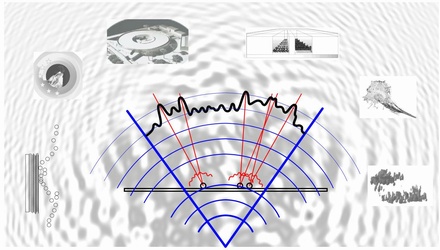
Synchrotron Could Shed Light On Exotic Dark Photons

There are many hypothetical particles proposed to explain dark matter and one idea to explore how...

The Pain Scale Is Broken But This May Fix It

Chronic pain is reported by over 20 percent of the global population but there is no scientific...

User picture.
News StaffRSS Feed of this column.

News Releases From All Over The World, Right To You... Read More »

Blogroll

Earth's atmosphere is a complicated dance of molecules involving the output of plants, animals and human industry in sequences of chemical reactions.

Such processes help maintain the atmosphere's chemical balance; most topically during protest week in New York City, they break down pollutants emitted from the burning of fossil fuels.

Understanding exactly how these reactions proceed is critical for predicting how the atmosphere will respond to environmental changes, but some of the steps of this dance are so quick that all of the molecules involved haven't been measured in the wild.

Periodontitis, gum infection that damages the soft tissue and destroys the bone that supports teeth, is the sixth most prevalent condition in the world affecting 743 million people worldwide, according to research from 2010.

Between 1990 and 2010, the global age-standardized prevalence of severe periodontitis was static at 11.2%. The age-standardized incidence of severe periodontitis in 2010 was 701 cases per 100,000 person-years, a non-significant increase from the 1990 incidence of severe periodontitis.

Ryan Rykaczewski, an oceanographer and assistant professor at the University of South Carolina, is part of a team that are looking deep into the ocean's past, and they have shown that natural processes can cause dramatic year-to-year drops in fish populations and growth rates.

They also raise questions about whether human activities might be making those declines more frequent.


Upwelling means phytoplankton, the perfect 'sea food'


The focus of the research is the California current, which stretches from Washington state to the Baja peninsula and is one of a handful of coastal waters on Earth from which an inordinately large portion of the world's fish harvest originates.

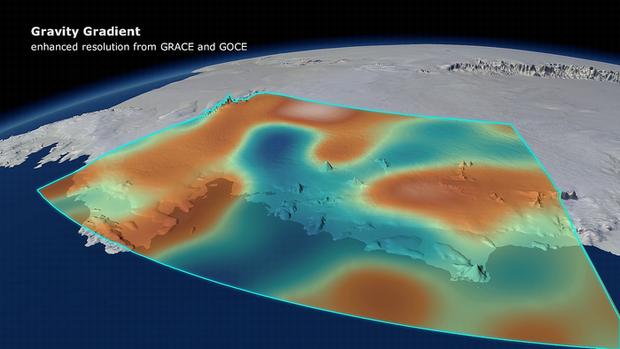
Ice ebbs and flows, that is no secret - but lost in claims that ice is as widespread as ever is the reality that it is now thinner, and the difference is so noticeable the Gravity field and steady-state Ocean Circulation Explorer (GOCE) satellite can detect it.

The strength of gravity at Earth’s surface varies subtly from place to place owing to factors such as the planet’s rotation and the position of mountains and ocean trenches. Changes in the mass of large ice sheets can also cause small local variations in gravity.

Outside the developed world, global population continues to rise but all of the best agricultural locations are in use. If we want people to be self-sufficient (and we do) science is going to need to be able to help the developing world with innovative and sustainable solutions.

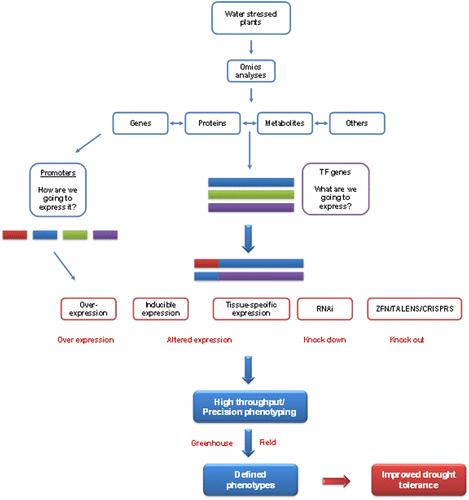
Modern agriculture has not reached any kind of limit, we can easily boost food production by as much as 70-100% in the next few decades. To grow in more difficult areas, and to be resistant to swings in weather, more drought-tolerant food crops are essential.  

The government says the unemployment level is back at 2009 levels - but they use a metric that no one outside government would consider valid, namely how many people collect unemployment checks.

After people have been unemployed past the expiration of the checks, the government claims they must be employed. In reality, many are not. The Great Recession limps along regardless of how the 1 % are doing in the stock market and what government public relations claims are.

In reality, 20 percent of workers laid off from a job during the last five years are still unemployed and looking for work, researchers from the John J. Heldrich Center for Workforce Development at Rutgers have found.