Banner
Here's Where Your Backyard Was 300 Million Years Ago

We may use terms like "grounded" and terra firma to mean stability and consistency but geology...

Convergent Evolution Cheat Sheet Now 120 Million Years Old

One tenet of natural selection is a random walk of genes but nature may be more predictable than...

Synchrotron Could Shed Light On Exotic Dark Photons

There are many hypothetical particles proposed to explain dark matter and one idea to explore how...

The Pain Scale Is Broken But This May Fix It

Chronic pain is reported by over 20 percent of the global population but there is no scientific...

User picture.
News StaffRSS Feed of this column.

News Releases From All Over The World, Right To You... Read More »

Blogroll

Stroke is one of the leading causes of death worldwide and while there are obvious environmental factors such as diet, exercise and behavior, many lines of evidence suggest that the risk of stroke is heritable. Yet until now, only a small number of genes associated with stroke have been identified. 

A new study in the Journal of Clinical Investigation identifies two genes that underlie cerebral small-vessel disease (CSVD), a risk factor for stroke.

Ordan Lehmann and colleagues at the University of Alberta analyzed genome-wide association data from individuals that received brain MRI scans as part of the Cohorts for Heart and Aging Research in Genomic Epidemiology (CHARGE) study.

In the developed world, people are having fewer children and living longer and that has led to a population that is older than in the past.

On average, life expectancy in developed countries has risen at a pace of three months per year, and fertility has fallen below replacement rate in the majority of Europe and some other developed countries. Most academic discussion of this trend has so far focused on potential problems - when social security was young there were over 20 workers per retiree and now there are 3 - and that is without the entire Baby Boom being retired and incurring healthcare costs.

Ovarian cancer is the most deadly gynecological kind, it claims the lives of more than 50% of women who are diagnosed

Ovarian cancer is often diagnosed late and develops a resistance to chemotherapy but new insight into why may lead to better diagnosis and treatment.

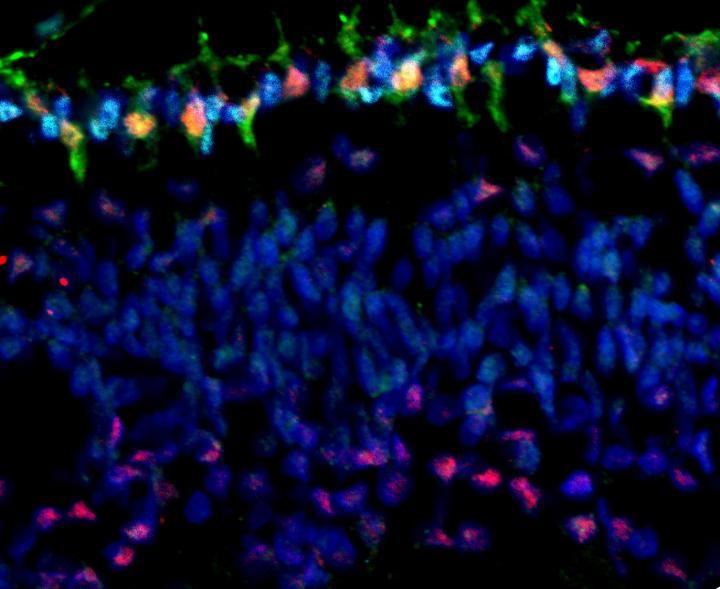
Retinoblastoma is a childhood retinal tumor usually affecting children ages one to two and the most common malignant tumor of the eye in children. Left untreated, retinoblastoma can be fatal or result in blindness.

Retinoblastomas have been found to develop in response to the mutation of a single gene, the RB1 gene, demonstrating that some cells are only a step away from developing into a life-threatening malignancy.

The public supports most traffic safety laws. They routinely defy cell phone laws, believing that they should be pulled over for driving recklessly, not for having a cell phone, and they defy speed limits - but nothing like when the onerous national 55 MPH speed limit was forced on society - yet for the most part, road safety laws are obeyed. People stop at stop signs.

Yet a new survey shows how to strengthen road laws; quantify the traffic-related injury risks associated with a given law.

Astronomers have discovered clear skies and steamy water vapor on a planet known as HAT-P-11b - outside our solar system. HAT-P-11b is about the size of Neptune, making it the smallest exoplanet ever on which water vapor has been detected. 

HAT-P-11b is a so-called exo-Neptune, a Neptune-sized planet that orbits another star. It is located 120 light-years away in the constellation of Cygnus (The Swan). Unlike Neptune, this planet orbits closer to its star, making one lap roughly every five days. It is a warm world thought to have a rocky core, a mantle of fluid and ice, and a thick gaseous atmosphere. Not much else was known about the composition of the planet, or other exo-Neptunes like it, until now.