Banner
Here's Where Your Backyard Was 300 Million Years Ago

We may use terms like "grounded" and terra firma to mean stability and consistency but geology...

Convergent Evolution Cheat Sheet Now 120 Million Years Old

One tenet of natural selection is a random walk of genes but nature may be more predictable than...

Synchrotron Could Shed Light On Exotic Dark Photons

There are many hypothetical particles proposed to explain dark matter and one idea to explore how...

The Pain Scale Is Broken But This May Fix It

Chronic pain is reported by over 20 percent of the global population but there is no scientific...

User picture.
News StaffRSS Feed of this column.

News Releases From All Over The World, Right To You... Read More »

Blogroll

An international research consortium has found that longer telomeres increase the risk of melanoma.

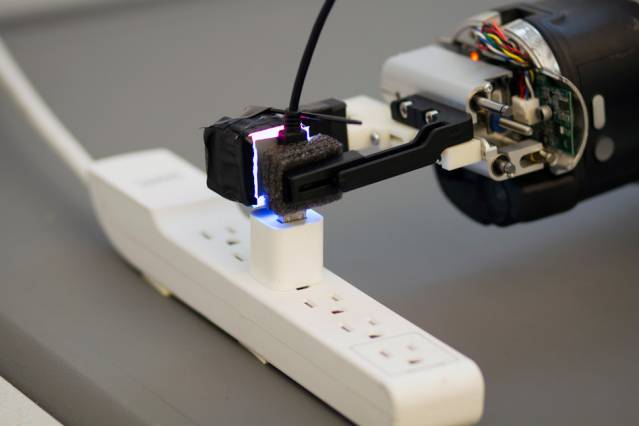
Researchers have equipped a robot with a novel tactile sensor that lets it grasp a USB cable draped freely over a hook and insert it into a USB port. Its processing algorithm is faster, so it can give the robot feedback in real time. 

The sensor is an adaptation of a technology called GelSight, which was developed by the lab of Edward Adelson, the John and Dorothy Wilson Professor of Vision Science at MIT, first described in 2009. The new sensor is less sensitive than the original GelSight sensor, which could resolve details on the micrometer scale, but it's smaller and faster.

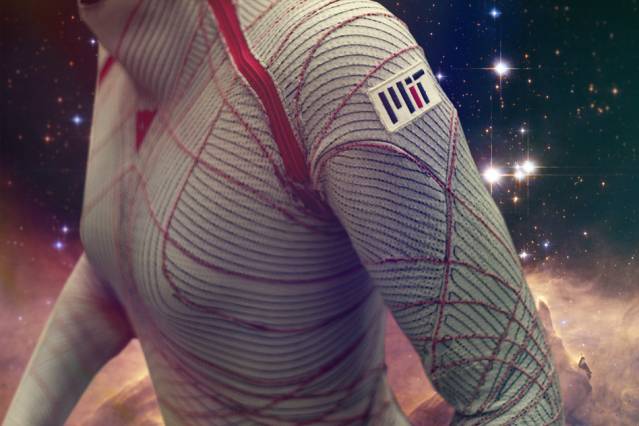
For future astronauts, the process of suiting up may go something like this: Instead of climbing into a conventional, bulky, gas-pressurized suit, an astronaut may don a lightweight, stretchy garment, lined with tiny, musclelike coils. She would then plug in to a spacecraft's power supply, triggering the coils to contract and essentially shrink-wrap the garment around her body.

The skintight, pressurized suit would not only support the astronaut, but would give her much more freedom to move during planetary exploration. To take the suit off, she would only have to apply modest force, returning the suit to its looser form.

A new review of literature suggests that while domestic violence rates are higher for homosexual couples, they aren't as high as previous studies have found, and the authors of the paper say the minority stress model may explain the high prevalence rates.

Previous studies indicate that domestic violence affects up to 75 percent of lesbian, gay and bisexual individuals. A lack of representative data and underreporting of abuse paints an incomplete picture of the true landscape, suggesting even higher rates. By comparison, 25 percent of heterosexual women report domestic abuse while heterosexual men have rates much lower.  

Mobile phones are in the hands of 80 percent of Americans so manufacturers are scrambling to find new ways to keep people buying the next model.

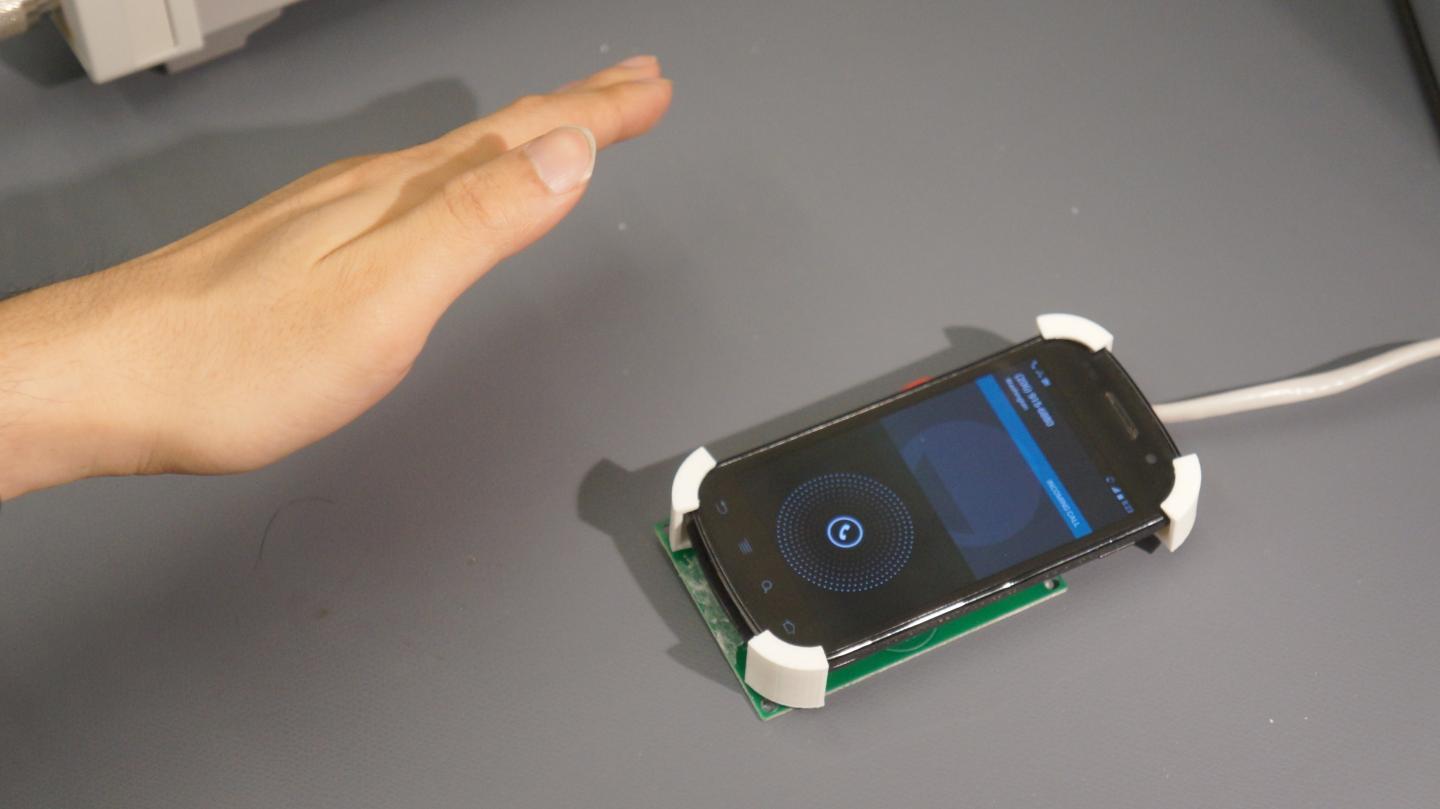
Being able to use gestures in the space around the phone rather than needing a screen may be the next big thing. Some smartphones have incorporated 3-D gesture sensing based on cameras, for example, but cameras consume significant battery power and require a clear view of the user's hands.

University of Washington engineers have developed a new form of low-power wireless sensing technology that could soon contribute to this growing field by letting users "train" their smartphones to recognize and respond to specific hand gestures near the phone.

A longstanding question in science has the role of mitochondria in debilitating and fatal motor neuron diseases.

Mitochondria are organelles – compartments contained inside cells – that serve several functions, including making ATP, a nucleotide that cells convert into chemical energy to stay alive. For this reason mitochondria often are called "cellular power plants." They also play a critical role in preventing too much calcium from building up in cells, which can cause apoptosis, or cell death.

For mitochondria to perform its functions, it must be distributed to cells throughout the body, which is accomplished with the help of small protein "motors" that transport the organelles along axons.