Banner
Here's Where Your Backyard Was 300 Million Years Ago

We may use terms like "grounded" and terra firma to mean stability and consistency but geology...

Convergent Evolution Cheat Sheet Now 120 Million Years Old

One tenet of natural selection is a random walk of genes but nature may be more predictable than...

Synchrotron Could Shed Light On Exotic Dark Photons

There are many hypothetical particles proposed to explain dark matter and one idea to explore how...

The Pain Scale Is Broken But This May Fix It

Chronic pain is reported by over 20 percent of the global population but there is no scientific...

User picture.
News StaffRSS Feed of this column.

News Releases From All Over The World, Right To You... Read More »

Blogroll

Over half of the Earth's accessible agricultural land is already under cultivation because ecological factors such as climate, soil quality, water supply and topography determined the suitability of land for agriculture when people had to just find the best spots.

There are various knobs turning for the future of food. Science has made it possible for food to be grown with less environmental strain in more and more areas but climate change may impact global agriculture.

From government control of health care to new reproductive technologies in this century, we'll need to be able identify key issues, articulate their values and concerns, deliberate openly and find ways forward.

The Hastings Center and the Presidential Commission for the Study of Bioethical Issues have teamed up to publish a series of essays to highlight the best practices in teaching bioethics and to identify gaps in our knowledge of how best to inspire and increase moral understanding, analytical thinking in the moral domain, and professional integrity. The first three of these essays, which appear in the current Hastings Center Report, focus on bioethics education for practicing clinicians.

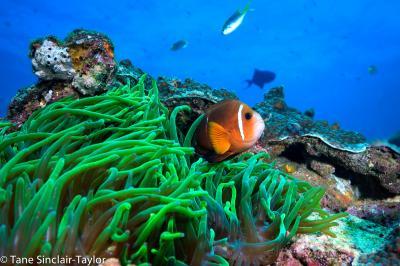
New research has found clownfish larvae can swim up to 400 kilometers in search of a home, which makes them better able to cope with environmental change.

Clownfish spend their entire adult lives under the protection of their host anemone but as babies they must wander the open ocean.

As part of the international study, a team of researchers to southern Oman, where they collected samples of the only two known populations of the Omani clownfish, Amphiprion omanensis


Clownfish spend their entire lives nestling in the protective tentacles of host anemones. Credit: Tane Sinclair-Taylor

Artificial sweeteners are promoted as aids to weight loss and diabetes prevention but a new study finds they could actually hasten the development of glucose intolerance and metabolic disease, and in a surprising way: by changing the composition and function of the gut microbiota, the substantial population of bacteria residing in our intestines.

The work was based on experiments in mice and humans by Dr. Eran Elinav of the Weizmann Institute of Science’s Department of Immunology, who led this research together with Prof. Eran Segal of the Department of Computer Science and Applied Mathematics.

Research lab and hospital equipment are two areas where competition drives costs up - if Lab A has a need for a new piece of equipment, Lab B has to get it and that same goes for hospitals. Companies have no reason to undercut each other because the actual market is not that big. 

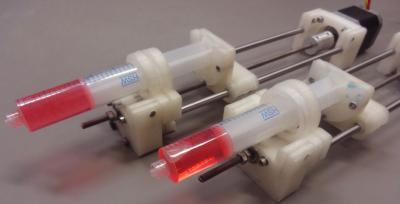
Help may be on the way for a commonly used piece of equipment: the syringe pump. A team led by an engineer at Michigan Technological University has published an open-source library of designs that will let scientists slash its cost. Syringe pumps are used to dispatch precise amounts of liquid, as for drug delivery or mixing chemicals in a reaction. They can also cost hundreds or even thousands of dollars.

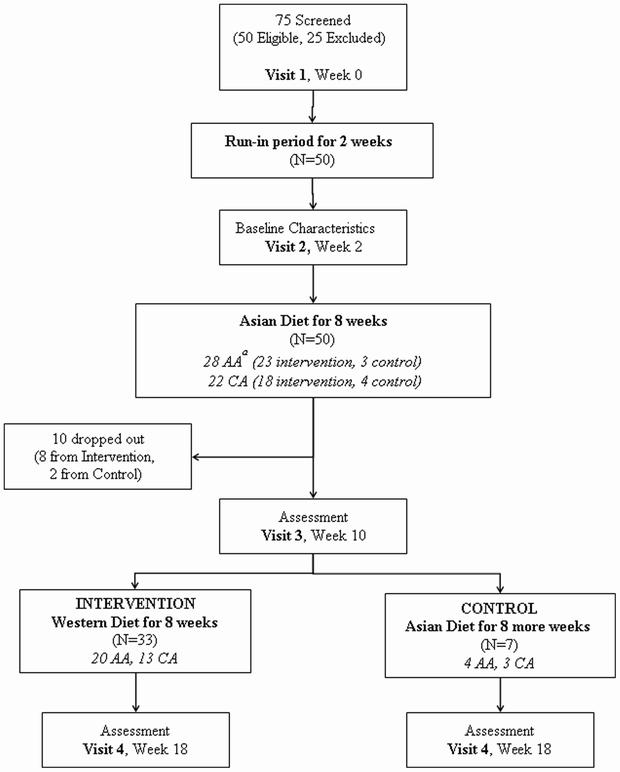
Asian-Americans are at higher risk of developing type 2 diabetes than Caucasian-Americans, and prone to develop the disease at lower body weights.

Can Asian heritage and ancestral reliance on a high-fiber, low-fat Asian mean extra risks for those of Asian heritage?