Selective Serotonin Reuptake Inhibitors (SSRIs), the most widely used drugs for the treatment of depression, have been reported to reduce bone formation and increase the risk of bone fracture. Since osseointegration is influenced by bone metabolism, a new study investigated the association between SSRIs and the risk of failures in osseointegrated implants.
Within the limits of the study, the findings indicate that treatment with SSRIs is associated with an increased failure risk of osseointegrated implants.
Eric R. Kandel, MD, who shared the 2000 Nobel Prize in Physiology or Medicine for his discoveries related to the molecular basis of memory, and Denise B. Kandel, PhD, professor of psychiatry at Columbia University Medical Center, write in the New England Journal of Medicine that electronic cigarettes (e-cigarettes) may function as a "gateway drug"—a drug that lowers the threshold for addiction to other substances, such as marijuana and cocaine— as part of the 120th Shattuck lecture and presented to the Massachusetts Medical Society.
Most living mammals are nocturnal and it has long been thought that the transition to nocturnality occurred at about the same time as mammals evolved, around 200 million years ago. That hypothesis was based on features such as the large brains of mammals (good for processing information from senses like hearing, touch, and smell) and the details of light-sensitive chemicals in the eyes of mammals.
It turns out that nocturnal activity might have a much older origin among ancient mammal relatives, called synapsids.
Should languages be conserved? There are 5,000 languages in the world right now and clearly a lack of ability to communicate is a big factor in war. Some of the languages are spoken by very small populations in remote areas and many languages have disappeared over time because of trade and a desire to communicate with others.
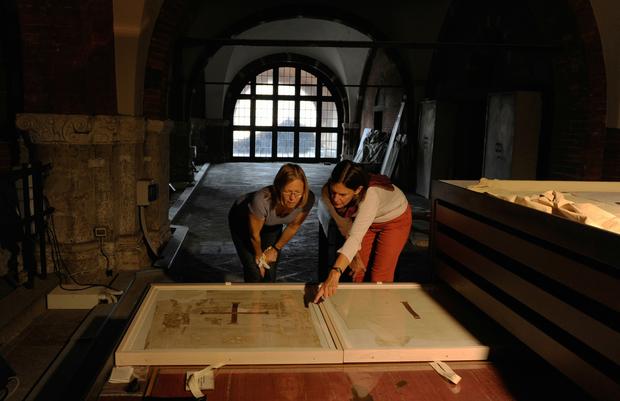
Archaeologists and restorers, are preserving and studying 4th-century tunics ascribed to St. Ambrose. In the course of examining the valuable silk garments, they have made surprising scholarly discoveries regarding the development of early relic worship.
Born in Trier, Germany,
Saint Ambrose
began his career as a politician, becoming elected, in 374, the influential Bishop of the emperor’s residence of Milan. He enacted relic worship, and would become frequently quoted in the catechism. The Ambrosian chants are associated with him, and he is honored as a Doctor of the Church. Surprisingly though, the tunics at Sant’Ambrogio, which are associated with the saint and worshipped as relics, are little known.


 Here's Where Your Backyard Was 300 Million Years Ago
 Convergent Evolution Cheat Sheet Now 120 Million Years Old
 Synchrotron Could Shed Light On Exotic Dark Photons
 The Pain Scale Is Broken But This May Fix It