Banner
Here's Where Your Backyard Was 300 Million Years Ago

We may use terms like "grounded" and terra firma to mean stability and consistency but geology...

Convergent Evolution Cheat Sheet Now 120 Million Years Old

One tenet of natural selection is a random walk of genes but nature may be more predictable than...

Synchrotron Could Shed Light On Exotic Dark Photons

There are many hypothetical particles proposed to explain dark matter and one idea to explore how...

The Pain Scale Is Broken But This May Fix It

Chronic pain is reported by over 20 percent of the global population but there is no scientific...

User picture.
News StaffRSS Feed of this column.

News Releases From All Over The World, Right To You... Read More »

Blogroll

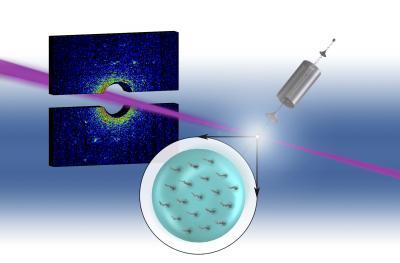
Scientists have mapped quantum tornadoes that swirl within tiny droplets of liquid helium, which confirms that helium nanodroplets are in fact the smallest possible superfluidic objects and opens new avenues to study quantum rotation.

Superfluid helium has long captured scientist's imagination since its discovery in the 1930s. Unlike normal fluids, superfluids have no viscosity, a feature that leads to strange and sometimes unexpected properties such as crawling up the walls of containers or dripping through barriers that contained the liquid before it transitioned to a superfluid.

Next year, American consumers will finally be able to purchase fuel cell cars and they are zero-emissions vehicles but, like current electric cars, not really, since the cars will run on hydrogen made from natural gas.

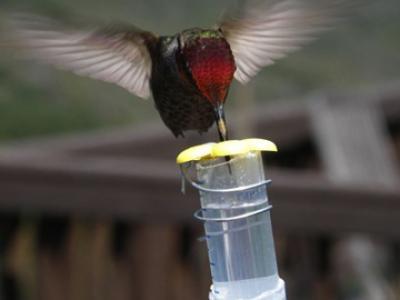
If you capture a hummingbird on high-speed video and slow it down, their wings thrum like helicopter blades as they hover near food. Their hearts beat 20 times a second and their tongues dart 17 times a second to slurp from a feeding station.

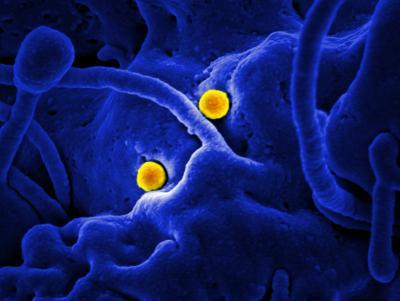
Researchers at
the NIH National Institute of Allergy and Infectious Diseases scientists have found that Middle East respiratory syndrome coronavirus (MERS-CoV) infection in marmosets closely mimics the severe pneumonia experienced by people infected with MERS-CoV, giving researchers the best animal model yet for testing potential treatments. 

They used marmosets after predicting in computer models that the animals could be infected with MERS-CoV based on the binding properties of the virus.

New measurements of atomic-scale magnetic behavior in iron-based superconductors are challenging conventional wisdom about superconductivity and magnetism. 

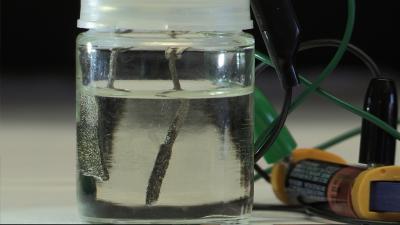
Water is abundant and so is sunlight, and using them to create hydrogen makes sense for a cleaner energy future, where biological systems powered by sunlight can manufacture hydrogen to use as fuel.

The way that plants produce hydrogen by splitting water has been poorly understood but answers are getting closer. A research team created a protein which, when exposed to light, displays the "electrical heartbeat" that is the key to photosynthesis. 

The system uses a naturally-occurring protein and does not need batteries or expensive metals, meaning it could be affordable in developing countries.