Banner
Here's Where Your Backyard Was 300 Million Years Ago

We may use terms like "grounded" and terra firma to mean stability and consistency but geology...

Convergent Evolution Cheat Sheet Now 120 Million Years Old

One tenet of natural selection is a random walk of genes but nature may be more predictable than...

Synchrotron Could Shed Light On Exotic Dark Photons

There are many hypothetical particles proposed to explain dark matter and one idea to explore how...

The Pain Scale Is Broken But This May Fix It

Chronic pain is reported by over 20 percent of the global population but there is no scientific...

User picture.
News StaffRSS Feed of this column.

News Releases From All Over The World, Right To You... Read More »

Blogroll

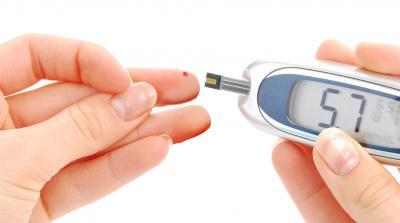
WASHINGTON, August 21, 2014 — Diabetes affects nearly 10 percent of the U.S. population. Among the biggest complaints of diabetics: constant finger pricking to test blood glucose levels. Fortunately, research published in ACS Chemical Biology reports the development of a protein that could lead to less pain and more accurate results for diabetes patients. In the American Chemical Society's (ACS') newest Breakthrough Science video, Sylvia Daunert, Ph.D., shows off her "designer protein" that could eventually allow diabetics to check their blood sugar from their iPhones. The video is available at http://youtu.be/x51o8p8j8Z0.

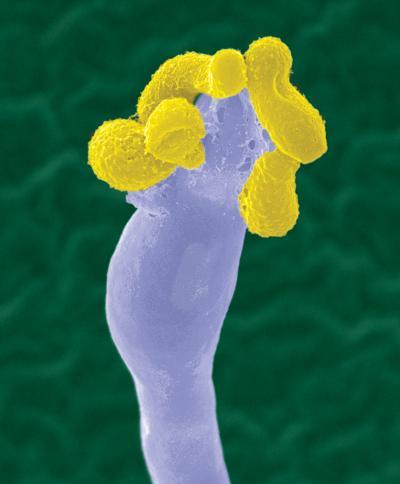
Fungal infections that have been sickening HIV/AIDS patients in Southern California for decades literally grow on trees. For that discovery, we can thank a 13-year-old girl who spent the summer gathering soil and tree samples from areas around Los Angeles hardest hit by infections of the fungus named Cryptococcus gattii (CRIP-to-cock-us GAT-ee-eye).

Cryptococcus, which encompasses a number of species including C. gattii, causes life-threatening infections of the lungs and brain and is responsible for one third of all AIDS-related deaths.

The study found strong genetic evidence that three tree species -- Canary Island pine, Pohutukawa and American sweetgum -- can serve as environmental hosts and sources of these human infections.

The vast reservoir of carbon stored in Arctic permafrost is gradually being converted back to carbon dioxide (CO2) after entering the freshwater system in a process thought to be controlled largely by microbial activity, but a new study concludes that sunlight, not bacteria, is the key to triggering release of CO2 from Arctic soils.

Since climate change could affect when and how permafrost is thawed, which begins the process of converting the organic carbon into CO2, it is vital to know what is happening due to man's impact, what is due to solar cycles and what is due to natural microbes.

Chest pain, breathing difficulties, fainting. Each year approximately 25 percent of patients admitted to medical departments with symptoms of serious illness are sent home again without receiving a diagnosis of the severe symptoms that led to their hospitalization, find Aarhus University and Aarhus University Hospital scholars. 

And that is in Denmark, where health care is free for citizens.

During sex with a familiar partner, men have the highest orgasm rates - though lesbian women apparently don't do too badly.

On average, men experience orgasm 85.1 percent of the time, with only slight deviation by sexual orientation but women experience orgasm 62.9 percent of the time, with lesbian women experiencing orgasm more often than heterosexual or bisexual women, according to a new paper about a survey of American singles titled "Variation in Orgasm Occurrence by Sexual Orientation in a Sample of U.S. Singles" and published in the Journal of Sexual Medicine.

People allergic to milk often assume they have lactose intolerance, but they are actually different mechanisms that occur in different parts of the body. 

People with lactose intolerance do not digest lactose properly because they lack an enzyme known as lactase - and that results in digestive discomfort.  A cow milk allergy is much more dangerous because the body's immune system attacks milk proteins with its own IgE antibodies.