Banner
Here's Where Your Backyard Was 300 Million Years Ago

We may use terms like "grounded" and terra firma to mean stability and consistency but geology...

Convergent Evolution Cheat Sheet Now 120 Million Years Old

One tenet of natural selection is a random walk of genes but nature may be more predictable than...

Synchrotron Could Shed Light On Exotic Dark Photons

There are many hypothetical particles proposed to explain dark matter and one idea to explore how...

The Pain Scale Is Broken But This May Fix It

Chronic pain is reported by over 20 percent of the global population but there is no scientific...

User picture.
News StaffRSS Feed of this column.

News Releases From All Over The World, Right To You... Read More »

Blogroll

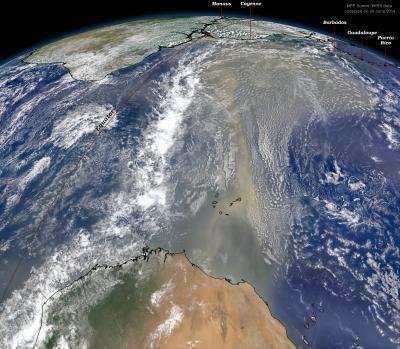
A recent study analyzed concentrations of African dust transported to South America and finds large seasonal peaks in winter and spring, which provides new insight into the overall human health and air quality impacts of African dust, including climate change-induced human health effects.

Researchers analyzed the dust concentrations in aerosol samples from two locations, French Guiana's capital city Cayenne and the Caribbean islands of Guadeloupe, to understand the amount, source regions, and seasonal patterns of airborne dust that travels across the North Atlantic Ocean.

The drug perampanel (trade name Fycompa) has been approved since July of 2012 as an adjunctive ("add-on") therapy for adults and children aged 12 years and older with seizures - colloquially also known as epileptic fits.

In a new early benefit assessment, according to the Act on the Reform of the Market for Medicinal Products (AMNOG), the German Institute for Quality and Efficiency in Health Care (IQWiG) examined whether perampanel offers an added benefit over the appropriate comparator therapy.

During the last ice age, a large part of North America was covered with a massive ice sheet up to 3 kilometers thick and that is a key reason why the sea level was then about 120 meters lower than it is today. 

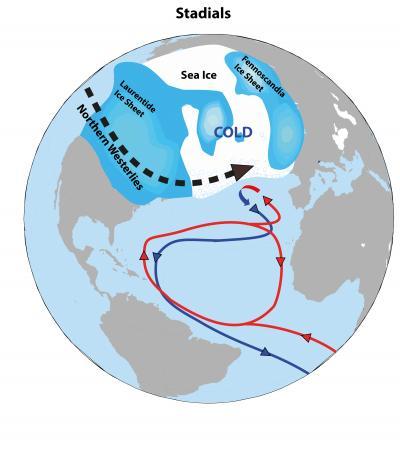
During the cold stadial periods of the last ice age, massive ice sheets covered northern parts of North America and Europe. Strong westerly winds drove the Arctic sea ice southward, even as far as the French coast. Since the extended ice cover over the North Atlantic prevented the exchange of heat between the atmosphere and the ocean, the strong driving forces for the ocean currents that prevail today were lacking.

The invention of fiber optics revolutionized the way we share information, allowing us to transmit data at volumes and speeds we'd only previously dreamed of, and now are breaking another barrier, designing nano-optical cables small enough to replace the copper wiring on computer chips.

This could result in radical increases in computing speeds and reduced energy use by electronic devices.

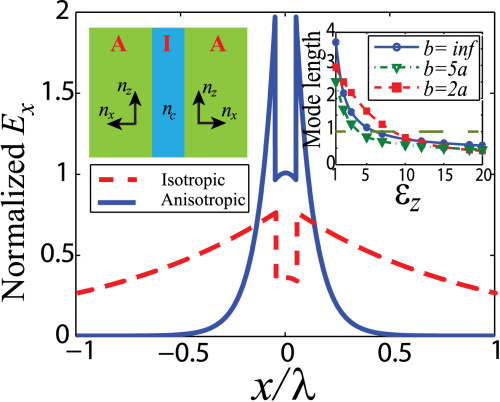
"We're already transmitting data from continent to continent using fiber optics, but the killer application is using this inside chips for interconnects—that is the Holy Grail," says Zubin Jacob, an electrical engineering professor leading the research. "What we've done is come up with a fundamentally new way of confining light to the nano scale." 

The downside to solar and wind is not just low efficiency and high cost, it is also that they are intermittent. But that impacts cost also. Relying on them has meant contracting with traditional energy companies to be 'on demand' at far higher cost than they otherwise would be, to be on call to shut off or add electricity as needed. 

Wind will never be a serious alternative but solar is the future. Yet no matter how good solar becomes, there will still be a problem of storage and riding out its fluctuations - and existing storage capacities are far from adequate for the purpose.

Global warming is currently taking a break. Global temperatures seemed to have risen drastically into the late 1990s but the global average temperature has risen only slightly since 1998 – surprising, considering scientific climate models predicted considerable warming due to rising greenhouse gas emissions. In 2006, former U.S. Vice-President Al Gore said by 2016 it would be too late if we did not stop CO2 immediately.

Climate skeptics use this contradiction to question climate change as well as the validity of climate models. Meanwhile, the majority of climate researchers continued to emphasize that a short-term 'warming hiatus' can largely be explained on the basis of current scientific understanding and did not contradict longer term warming.