Banner
Here's Where Your Backyard Was 300 Million Years Ago

We may use terms like "grounded" and terra firma to mean stability and consistency but geology...

Convergent Evolution Cheat Sheet Now 120 Million Years Old

One tenet of natural selection is a random walk of genes but nature may be more predictable than...

Synchrotron Could Shed Light On Exotic Dark Photons

There are many hypothetical particles proposed to explain dark matter and one idea to explore how...

The Pain Scale Is Broken But This May Fix It

Chronic pain is reported by over 20 percent of the global population but there is no scientific...

User picture.
News StaffRSS Feed of this column.

News Releases From All Over The World, Right To You... Read More »

Blogroll

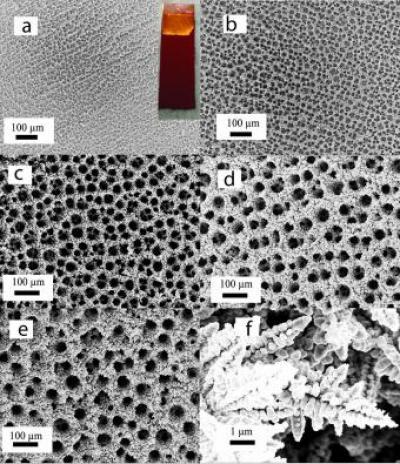
A catalyst made from a foamy form of copper has vastly different electrochemical properties from catalysts made with smooth copper in reactions involving carbon dioxide, a new study shows. The research suggests that copper foams could provide a new way of converting excess CO2 into useful industrial chemicals.

As levels of carbon dioxide in the atmosphere continue to rise, researchers are looking for ways to make use of it. One approach is to capture CO2 emitted from power plants and other facilities and use it as a carbon source to make industrial chemicals, most of which are currently made from fossil fuels. The problem is that CO2 is extremely stable, and reducing it to a reactive and useful form isn't easy.

A new study identifies a novel gene, Inpp4b, that controls nerve conduction velocity. Investigators report that even minor reductions in conduction velocity may aggravate disease in multiple sclerosis (MS) patients and in mice bred for the MS-like condition experimental autoimmune encephalomyelitis (EAE).

Men, women and children exposed to high levels of phthalates tended to have reduced levels of testosterone in their blood compared to those with lower chemical exposure, according to a new paper in the Endocrine Society's Journal of Clinical Endocrinology&Metabolism.

Testosterone is the main sex hormone in men. It contributes to a variety of functions in both sexes, including physical growth and strength, brain function, bone density and cardiovascular health. In the last 50 years, research has identified a trend of declining testosterone in men and a rise in related health conditions, including reduced semen quality in men and genital malformations in newborn boys.

A new paper delineating spiders’ roles within their colonies is intriguing because the spiders’ specialization (like caregiver or hunter-warrior) isn’t determined by size or physical structure, like with ants, but by personalities.

Aren't spiders loners? Most are, but a few species such as Anelosimus studiosus live in groups.

Colin Wright, a second-year PhD student in the University of Pittsburgh’s Department of Biological Sciences, along with Jonathan Pruitt, assistant professor of behavioral ecology at Pitt and Tate Holbrook of the College of Coastal Georgia, separated docile spiders from the aggressive by observing how much space they demanded from fellow colony members. Aggressive females demand more space than docile ones.

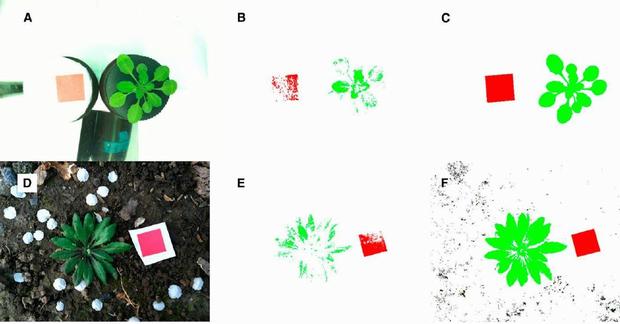
If you want to do something more practical with your phone than playing Angry Birds and reading email you won't reply to until you get to a computer, researchers at U.C. Davis have created Easy Leaf Area, which allow users to accurately measure leaf area from digital images in seconds. 

Leaf measurements are often critical in plant physiological and ecological studies, but traditional methods have been time consuming and sometimes destructive to plant samples.  

Bacteria's ability to destroy viruses has been a mystery but researchers say they now have a clear picture of the bacterial immune system and say its unique shape is likely why bacteria can so quickly recognize and destroy their assailants.

The researchers drew what they say is the first-ever picture of the molecular machinery, known as Cascade, which stands guard inside bacterial cells. To their surprise, they found it contains a two-strand, unencumbered structure that resembles a ladder, freeing it to do its work faster than a standard double-helix would allow.