Banner
Here's Where Your Backyard Was 300 Million Years Ago

We may use terms like "grounded" and terra firma to mean stability and consistency but geology...

Convergent Evolution Cheat Sheet Now 120 Million Years Old

One tenet of natural selection is a random walk of genes but nature may be more predictable than...

Synchrotron Could Shed Light On Exotic Dark Photons

There are many hypothetical particles proposed to explain dark matter and one idea to explore how...

The Pain Scale Is Broken But This May Fix It

Chronic pain is reported by over 20 percent of the global population but there is no scientific...

User picture.
News StaffRSS Feed of this column.

News Releases From All Over The World, Right To You... Read More »

Blogroll

If you've ever spent any time watching a gecko, you've been impressed by their uncanny ability to adhere to any surface - including upside down on ceilings. 

A new study in the Journal of Applied Physics reveals that  the little lizards can turn the "stickiness" of toe hairs on the bottom of their feet on and off, which enables them to run at great speeds or even cling to ceilings without expending much energy.  Geckos, as well as spiders and insects, have independently evolved the same adhesion system mechanism and have been using it for millions of years. 

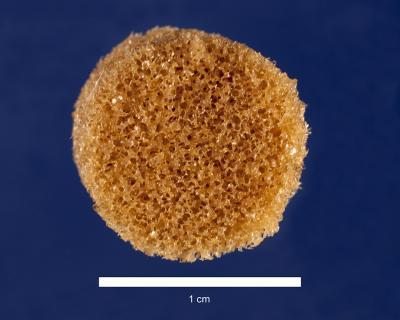
Injuries, birth defects and sometimes surgery to remove a tumor can create gaps in bone that are too large to heal naturally, and in the head, face or jaw, they can dramatically alter a person's appearance.

At the National Meeting&Exposition of the American Chemical Society, researchers presented details about a "self-fitting" material that expands with warm salt water to precisely fill bone defects, and also acts as a scaffold for new bone growth.

Researchers at the University of Montreal and CHU Sainte-Justine Research Centre have traced the origins of Attention deficit hyperactivity disorder (ADHD), substance abuse and conduct disorder, and found that they develop from the same neurocognitive deficits, which might explain why they often occur together.

The findings were established by studying the reward sensitivity and decision making patterns of 1,778 European 14-year-olds of comparable demographic profile. The teens were asked to undertake several tasks while undergoing an MRI and answer personality questionnaires. Clinicians also profiled the participants, once at the time of the testing, and again two years later.

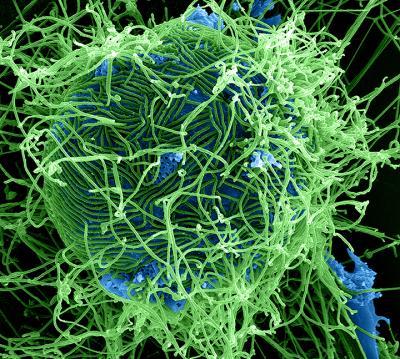
The latest outbreak of Ebola virus disease that has claimed more than 1,000 lives in West Africa and poses a serious, ongoing threat to that region: the spread to capital cities and Nigeria —Africa's most populous nation — presents challenges for health care professionals. 

The situation has garnered significant attention and fear around the world, but proven public health measures and sharpened clinical vigilance will contain the epidemic and thwart a global spread, according to a new commentary by Anthony S. Fauci, M.D., director of the National Institute of Allergy and Infectious Diseases (NIAID), part of the National Institutes of Health.

A group of criminologists has an interesting reason why people who left crime-ridden cities should stick around - fear of crime is good for kids.

Most politicians and police officers seek to reduce crime, of course, and mitigate the causes where they can, so an argument that it's psychologically healthy is going against 50 years of sociological belief, which says that people who are afraid are likely to do less rational things to protect themselves, and have a lot of other chronic psychological issues.

 The 340B program, a federal program that provides billions in drug discounts to safety net hospitals and other health care providers, is expanding under health care reform, but there is uncertainty for safety net providers and drug manufacturers.

The federal 340B program began in 1992 to help health care providers extend services to vulnerable populations, including the indigent and uninsured. The program allows some hospitals, clinics and health centers to buy outpatient prescription drugs at discounted prices that are generally lower than the amount paid by state Medicaid programs.