Banner
Here's Where Your Backyard Was 300 Million Years Ago

We may use terms like "grounded" and terra firma to mean stability and consistency but geology...

Convergent Evolution Cheat Sheet Now 120 Million Years Old

One tenet of natural selection is a random walk of genes but nature may be more predictable than...

Synchrotron Could Shed Light On Exotic Dark Photons

There are many hypothetical particles proposed to explain dark matter and one idea to explore how...

The Pain Scale Is Broken But This May Fix It

Chronic pain is reported by over 20 percent of the global population but there is no scientific...

User picture.
News StaffRSS Feed of this column.

News Releases From All Over The World, Right To You... Read More »

Blogroll

Depending on the analysis strategy used, estimating treatment outcomes in meta-­analyses may differ and may result in major alterations in the conclusions derived from the analysis, according to a study in JAMA which could easily apply to all fields. 

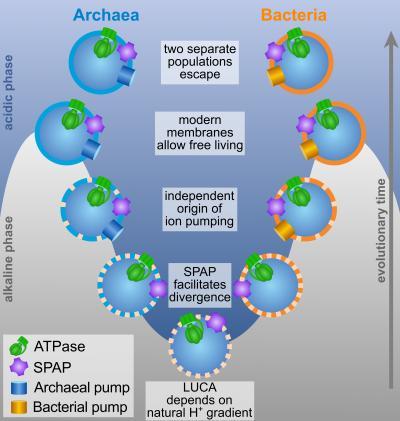
Descent with modification means that all life on Earth probably came from one common ancestor – a single-celled organism – We just have to speculate and create models for what it may have looked like, how it lived and how it evolved into today's modern cell.

So model we do and a recent paper uses mathematical modeling to speculate that life's Last Universal Common Ancestor (LUCA) had a 'leaky' membrane, which, if would, would help scientists answer two of biology's biggest questions:

1. Why all cells use the same bizarre, complex mechanism to harvest energy

2. Why two types of single-celled organism that form the deepest branch on the tree of life – bacteria and archaea – have completely different cell membranes

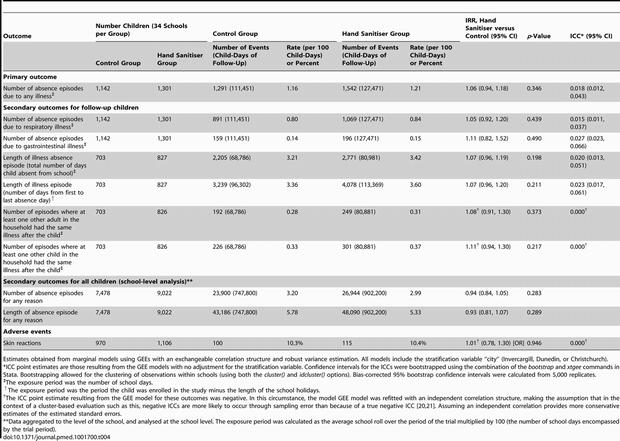
Installing hand sanitizers in  classrooms has not led to reductions in the rate of school absences in children, according to results of a cluster randomized trial that that randomly assigned 68 city primary schools in New Zealand to the intervention or control group and measured the rate of school absence in children attending the participating schools.

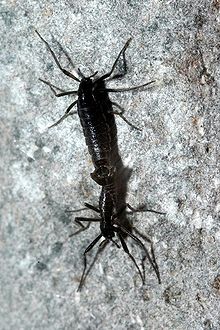
Scientists have sequenced the genome of Belgica antarctica, the Antarctic midge – the smallest in insects described to-date –  and believe it can explained by the midge's adaptation to its deep-freeze extreme living environment.

The midge is a small, wingless fly that spends most of its two-year larval stage frozen in the Antarctic ice. Upon adulthood, the insects spend seven to 10 days mating and laying eggs, and then they die. Its genome contains only 99 million base pairs of nucleotides, making it smaller than other tiny reported genomes for the body louse (105 million base pairs) and the winged parasite Strepsiptera (108 million base pairs), as well as the genomes of three other members of the midge family. 

Drier conditions at the edges of forest patches slow down the decay of dead wood and significantly alter the cycling of carbon and nutrients in woodland ecosystems, according to a new study.

Forests around the world have become increasingly fragmented, and in the UK three quarters of woodland area lie within 100 meters of the forest edge. It has long been known that so-called 'edge effects' influence temperature and moisture (the 'microclimate') in woodlands, but the influence on the carbon cycle is largely unknown. 

With carbon dioxide from the American energy sector plummeting back to early 1990s levels and coal, the dirtiest energy source, back at early 1980s levels, environmentalists have tried to turn on natural gas and its primary component, methane.

Don't be fooled. Other sources, like solar, are not ready yet, wind never will be and nuclear science is reviled by Democrats so methane is the best bridge to the future (which will eventually be solar).  A new technique transforms the delightful stinky, air-polluting landfill gas into a hydrogen fuel cell, according to a presentation at National Meeting of the American Chemical Society.