Banner
Here's Where Your Backyard Was 300 Million Years Ago

We may use terms like "grounded" and terra firma to mean stability and consistency but geology...

Convergent Evolution Cheat Sheet Now 120 Million Years Old

One tenet of natural selection is a random walk of genes but nature may be more predictable than...

Synchrotron Could Shed Light On Exotic Dark Photons

There are many hypothetical particles proposed to explain dark matter and one idea to explore how...

The Pain Scale Is Broken But This May Fix It

Chronic pain is reported by over 20 percent of the global population but there is no scientific...

User picture.
News StaffRSS Feed of this column.

News Releases From All Over The World, Right To You... Read More »

Blogroll

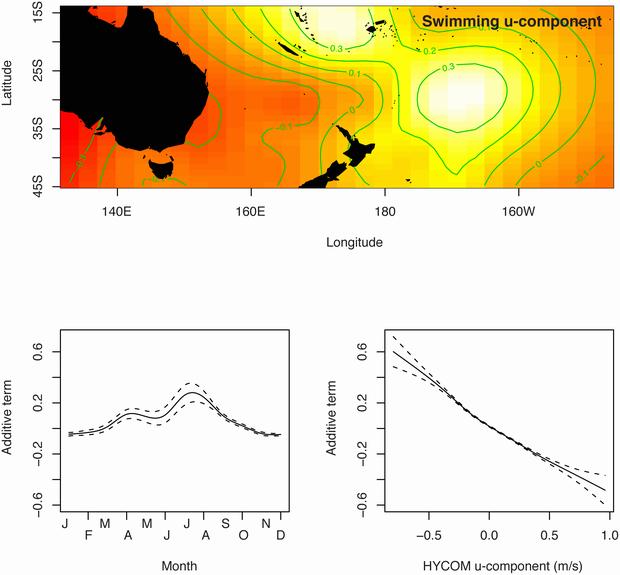
Juvenile loggerhead turtles don't just passively drift through life, they swim into oncoming ocean currents, according to a new study.

Lanternsharks produce and perceive bioluminescent light in order to communicate, find prey, and camouflage themselves against predators in the mesopelagic twilight zone.

The mesopelagic twilight zone is 200-1000 meters deep in the sea - a vast, dim habitat, where, with increasing depth, sunlight is progressively replaced by point-like bioluminescent emissions. To better understand strategies used by bioluminescent predators inhabiting this region that help optimize photon capture, the authors of a new study analyzed the eye shape, structure, and retinal cell mapping in the visual systems of five deep-sea bioluminescent sharks, including four Lanternsharks (Etmopteridae) and one kitefin shark (Dalatiidae).

Parasite is colloquially a bad word but about half of all known species are parasites and biologists have long hypothesized that the strategy of leeching off other organisms is a major driver of biodiversity. 

Perhaps being called a parasite is a negative but in the evolution of life on Earth, being one is a winner. Studying populations of Galápagos hawks (Buteo galapagoensis) and feather lice that live in their plumage (Degeeriella regalis), a group led by University of Arizona ecologists and evolutionary biologists has gathered some of the first field evidence suggesting that a phenomenon called co-divergence between parasites and hosts is indeed an important mechanism driving the evolution of biodiversity.

Brief, acute psychological stress promoted healing in mouse models of three different types of skin irritations, according to a study
the Journal of Investigative Dermatology

The scientists found that healing was brought about by the anti-inflammatory effects of glucocorticoids – steroid hormones – produced by the adrenal glands in response to stress.

Since President Richard Nixon declared a War on Cancer over 40 years ago, survival rates have improved dramatically and cancer rates have even gone down, despite claims that everything from DDT to nuclear energy to genetically modified foods would cause a cancer epidemic.

Yet not all cancer survival has improved. Pancreatic cancer still has  the lowest survival rate of the 21 most common cancers, and in 40 years just over 3 percent of pancreatic cancer patients survive for at least five years, only a fraction more than the 2 percent who survived that long in the early 1970s.

Human milk is obviously baby food, but for sick, hospitalized infants, it's also medicine, according to a series of articles in Advances in Neonatal Care devoted to best practices in providing human milk to hospitalized infants. 

"The immunological and anti-inflammatory properties of human milk are especially important for the critically ill infants in our intensive care units," said Diane L. Spatz, Ph.D., R.N.-B.C., FAAN, nurse researcher and director of the Lactation Program at The Children's Hospital of Philadelphia (CHOP), and the invited guest editor of the August 2014 issue of the journal, published by the National Association of Neonatal Nurses.