Banner
Here's Where Your Backyard Was 300 Million Years Ago

We may use terms like "grounded" and terra firma to mean stability and consistency but geology...

Convergent Evolution Cheat Sheet Now 120 Million Years Old

One tenet of natural selection is a random walk of genes but nature may be more predictable than...

Synchrotron Could Shed Light On Exotic Dark Photons

There are many hypothetical particles proposed to explain dark matter and one idea to explore how...

The Pain Scale Is Broken But This May Fix It

Chronic pain is reported by over 20 percent of the global population but there is no scientific...

User picture.
News StaffRSS Feed of this column.

News Releases From All Over The World, Right To You... Read More »

Blogroll

Materials that are firmly bonded together with epoxy and other tough adhesives are ubiquitous in modern life — from crowns on teeth to modern composites used in construction. Yet it has proved remarkably difficult to study how these bonds fracture and fail, and how to make them more resistant to such failures.

Now researchers at MIT have found a way to study these bonding failures directly, revealing the crucial role of moisture in setting the stage for failure. 

Autism is not caused by a deficiency of oxytocin,  according to new findings from the Stanford University School of Medicine and Lucile Packard Children's Hospital Stanford.

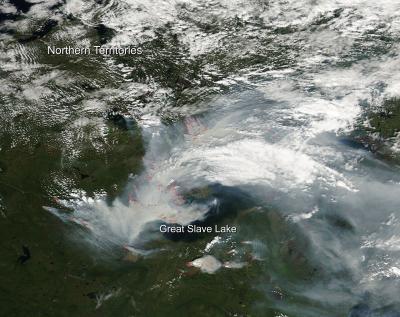
Fires and the resultant smoke that comes from them are both just as widespread and heavy as they were in the month of July. Hundreds of fires dot the landscape and the Northwest Territories Live Fire map shows the extent of the wildfires and hot spots that have been reported. Fire danger around this area of the Northwest Territories remains in either the high or extreme range.

On the live fire map, notated detections of new fires number in the dozens. These fires are ones having been detected within the last 24 hours. Residents of Yellowknife were witness to red lightning recently due to the amount of smoke in the atmosphere coloring the lightning strikes.

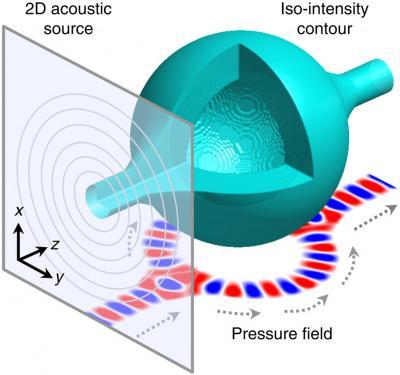
There's a new wave of sound on the horizon carrying with it a broad scope of tantalizing potential applications, including advanced ultrasonic imaging and therapy, acoustic cloaking, and levitation and particle manipulation. Researchers with the Lawrence Berkeley National Laboratory (Berkeley Lab) have developed a technique for generating acoustic bottles in open air that can bend the paths of sound waves along prescribed convex trajectories.

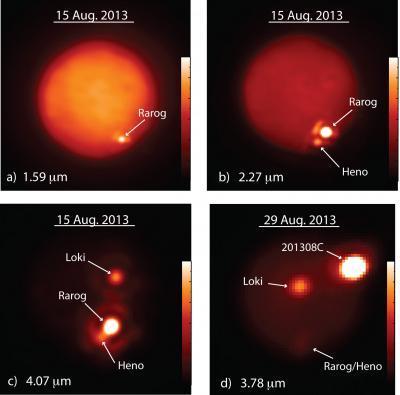
Io, the innermost of Jupiter's four large "Galilean" moons, is about the same size as Earth's moon, some 2,300 miles across, but it is very different than our moon. So different it is the only other place in the solar system that shares one trait that Earth has - volcanoes erupting extremely hot lava.

Because of Io's low gravity, large volcanic eruptions produce an umbrella of debris that rises high into space and that can be seen from Earth. Last August, astronomers did just that, capturing three massive volcanic eruptions within a two-week period.

It may be that these rare "outbursts", sending material hundreds of miles above the surface, might be much more common than astronomers thought.

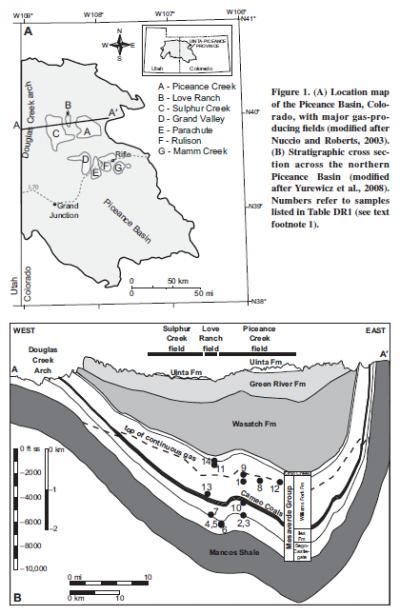
Hydraulic fracturing is in the news because more natural gas has meant substantially fewer carbon emissions - and it has also been implicated in a variety of environmental issues.

Man is doing what nature has always done, albeit on a different time scale. A new GSA BULLETIN study  examines how long it takes natural Earth processes to form hydraulic fractures and whether the formation is driven by sediment compaction, oil and gas generation or something else. Plus, in order to make environmental models about modern hydraulic fracturing production, it's important to know what role these natural fractures play.