Banner
Here's Where Your Backyard Was 300 Million Years Ago

We may use terms like "grounded" and terra firma to mean stability and consistency but geology...

Convergent Evolution Cheat Sheet Now 120 Million Years Old

One tenet of natural selection is a random walk of genes but nature may be more predictable than...

Synchrotron Could Shed Light On Exotic Dark Photons

There are many hypothetical particles proposed to explain dark matter and one idea to explore how...

The Pain Scale Is Broken But This May Fix It

Chronic pain is reported by over 20 percent of the global population but there is no scientific...

User picture.
News StaffRSS Feed of this column.

News Releases From All Over The World, Right To You... Read More »

Blogroll

The European Society for Medical Oncology (ESMO) has expressed concern that the proposed EU General Data Protection Regulation could make cancer research impossible and add a significant burden to both doctors and cancer patients.

The proposed wording of the regulation stipulates 'explicit and specific patient consent', meaning that researchers would have to approach patients every single time research is planned in order to consult their data or use tissue samples stored for research purposes. 

A probiotic that prevents obesity could be on the horizon, at least if an animal model translates to humans. Bacteria that produce a therapeutic compound in the gut inhibit weight gain, insulin resistance and other adverse effects of a high-fat diet in mice, Vanderbilt University investigators say.

A lot would have to happen before this could move to human studies - regulatory hurdles and raising millions of dollars in venture capital, but the findings in the Journal of Clinical Investigation have the researchers excited because they suggest that it may be possible to manipulate the bacterial residents of the gut — the gut microbiota — to treat obesity and other chronic diseases.

Before the European colonial era, the people who lived on the land now called California used fire to control growth and make sure they had food, fuel, tools, and objects for ritual. 

Much artificial-intelligence research addresses the problem of making predictions based on large data sets. An obvious example is the recommendation engines at retail sites like Amazon and Netflix.

But some types of data are harder to collect than online click histories —information about geological formations thousands of feet underground, for instance. And in other applications — such as trying to predict the path of a storm — there may just not be enough time to crunch all the available data.

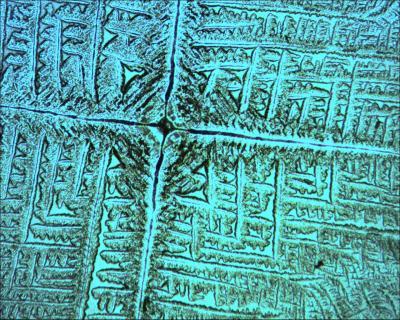
Researchers have detected a previously unknown interaction between microorganisms and salt. When Escherichia coli cells are introduced into a droplet of salt water and left to dry, bacteria manipulate the sodium chloride crystallisation to create biomineralogical biosaline 3D morphologically complex formations, where they hibernate.

Afterwards, by rehydrating the material, bacteria are revived. The discovery was made by chance with a home microscope but made the cover of Astrobiology because it may be a way to find signs of life on other planets.

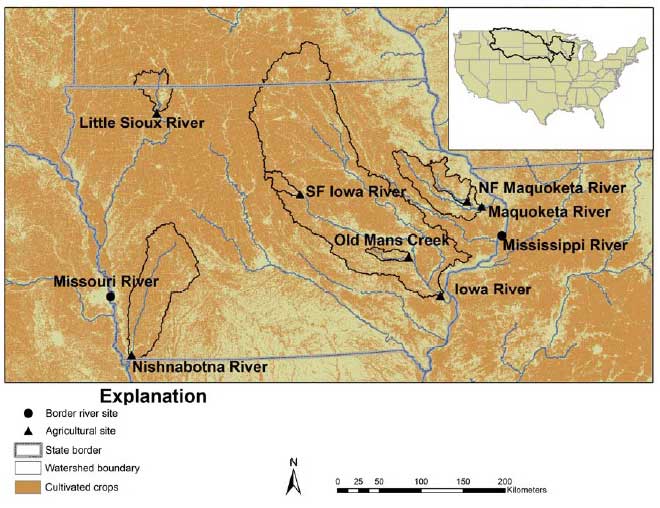
Insecticides that behave like nicotine, known as neonicotinoids, became popular in the late 1990s as replacements for more toxic products. They have been effective but like all products there is concern about ongoing environmental effects. The U.S. Environmental Protection Agency has classified all neonicotinoids as safe for humans.