Banner
Here's Where Your Backyard Was 300 Million Years Ago

We may use terms like "grounded" and terra firma to mean stability and consistency but geology...

Convergent Evolution Cheat Sheet Now 120 Million Years Old

One tenet of natural selection is a random walk of genes but nature may be more predictable than...

Synchrotron Could Shed Light On Exotic Dark Photons

There are many hypothetical particles proposed to explain dark matter and one idea to explore how...

The Pain Scale Is Broken But This May Fix It

Chronic pain is reported by over 20 percent of the global population but there is no scientific...

User picture.
News StaffRSS Feed of this column.

News Releases From All Over The World, Right To You... Read More »

Blogroll

The planet's soil releases about 60 billion tons of carbon into the atmosphere each year, which is far more than that released by burning fossil fuels.

This soil respiration and the enormous release of carbon is balanced by carbon coming into the soil system from falling leaves and other plant matter, as well as by the underground activities of plant roots. 

Short-term warming studies have documented that rising temperatures increase the rate of soil respiration. As a result, scientists have worried that global warming would accelerate the decomposition of carbon in the soil, and decrease the amount of carbon stored there. If true, this would release even more carbon dioxide into the atmosphere, where it would accelerate global warming.

Where does the solar system end and interstellar space begin? There are no 'Now Leaving...' signs so it's somewhat subjective. If you think the argument over Pluto was confusing, you'll be intrigued that the argument over the solar system takes that to a whole new level.

Two years ago, it was announced that wherever the boundary of the solar system was, Voyager 1 had passed it, traveling further from Earth than any other manmade object. But some scientists insist it is still within the heliosphere – the region of space dominated by the Sun and its wind of energetic particles – and has not yet reached the 'space between the stars'. 

Highly purified crystals that split light with uncanny precision are key parts of high-powered lenses, specialized optics and, potentially, computers that manipulate light instead of electricity. Producing these crystals often involves etching them with a precise beam of electrons and can be difficult and expensive.

Researchers at Princeton and Columbia universities have proposed a new method that could allow scientists to customize and grow these specialized materials, known as photonic crystals, with relative ease. 

The rapid rise in valley fever cases in the arid southwest has become a serious health concern, as human habitation has pushed further into desert areas where the soil spores are widespread. Currently, Valley Fever affects an estimated 150,000 people a year, with most cases occurring in Arizona, California, Nevada, New Mexico and Utah.

The disease has no cure at present and is tricky to diagnose because it is similar to community-acquired pneumonias.

How would a child respond to this question? Would his or her list be full of relatives, animals from movies and books, or perhaps neighborhood pets? Would the poppies blooming on the front steps make the list or the oak tree towering over the backyard?

How might the animals children name compare to those named by children raised in a different cultural or language background or in a community that offers more direct contact with the natural world?

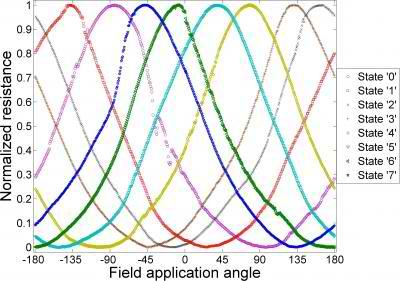
Magnetic random access memory (MRAM) is intriguing because of demand for fast, low-cost, nonvolatile, low-consumption, secure memory devices.

MRAM relies on manipulating the magnetization of materials for data storage rather than electronic charges, boasts all of these advantages as an emerging technology, but so far it hasn't been able to match flash memory in terms of storage density.