Banner
Here's Where Your Backyard Was 300 Million Years Ago

We may use terms like "grounded" and terra firma to mean stability and consistency but geology...

Convergent Evolution Cheat Sheet Now 120 Million Years Old

One tenet of natural selection is a random walk of genes but nature may be more predictable than...

Synchrotron Could Shed Light On Exotic Dark Photons

There are many hypothetical particles proposed to explain dark matter and one idea to explore how...

The Pain Scale Is Broken But This May Fix It

Chronic pain is reported by over 20 percent of the global population but there is no scientific...

User picture.
News StaffRSS Feed of this column.

News Releases From All Over The World, Right To You... Read More »

Blogroll

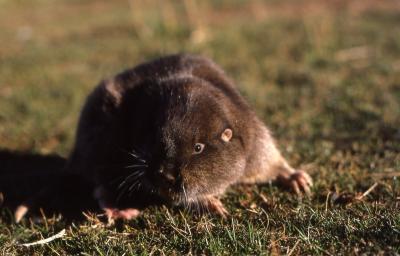
It's uncommon to identify a new species of mammal these days, but four new species of Ctenomys, a genus of gopher-like mammal commonly called tuco-tucos and found throughout much of South America, have been identified.

Tuco-tucos are burrowing rodents ranging from 7 to 12 inches long and weighing less than a pound. They demonstrate the broad range of biological diversity in the lowlands and central valleys of Bolivia, where all four new species were found.

It's a common trope among Hollywood celebrities; media is alarmed at weight gain, celebrity says they are proud of their body, they feel better than ever, people clap, celebrity appears two months later and lost 25 lbs. and is on magazine covers with diet tips and talking about how much better they feel.

Celebrities are externally driven and they add external motivations to boost their willpower, what about people who can't afford personal chefs and trainers? What about regular people who are already demoralized? An intervention program aimed at helping obese women maintain their weight also had the benefit of significantly reducing depression in nearly half the participants, according to a new study.

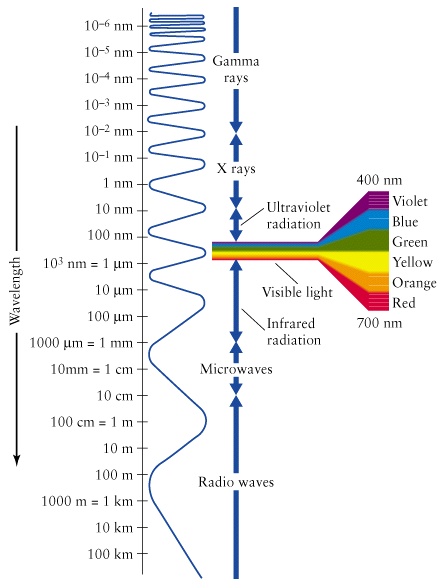
We all understand light has a wide electromagnetic spectrum and we only see a small band of that. In physics terms, that is between 400 - 700 nanometers and they show up as colors,from violet to red.

We can't see in the ultraviolet radiation spectrum because it is a shorter wavelength than what we can detect - violet - which is why it's in the name, and we can't see infrared because its wavelength is longer than red, which is why the name is infrared. 

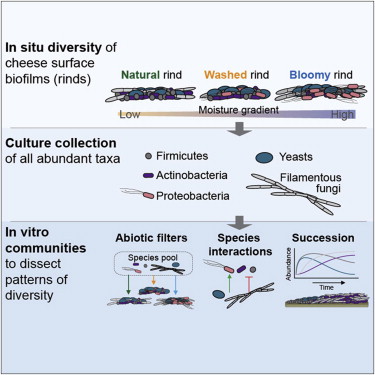
After studying 137 varieties of cheese collected in 10 different countries, systems biologists at Harvard University have been able to identify three general types of microbial communities that live on cheese, opening the door to using each as a "model" community for the study of whether and how various microbes and fungi compete or cooperate as they form communities, what molecules may be involved in the process and what mechanisms may be involved.

Kidney donations have been in decline and a study in the Journal of the American Society of Nephrology (JASN) says it has discovered why; it's cheaper to get a kidney than to give one.  

For their study, Jagbir Gill, MD, MPH of University of British Columbia in Vancouver and his colleagues divided the US population based on the median household income level of residents' zip codes, and they examined the rates of living donation between 1999 and 2010 in high and low income populations.  

Government subsidies have made wind farming a leader in the renewable energy sector.

It isn't just politicians tired of subsidies and environmentalists and homeowners who don't want them near their homes, they also catch fire more than is reported. 
Wind turbines catch fire because highly flammable materials such as hydraulic oil and plastics are in close proximity to machinery and electrical wires. These can ignite a fire if they overheat or are faulty. Lots of oxygen, in the form of high winds, can quickly fan a fire inside a turbine. Once ignited, the chances of fighting the blaze are slim due to the height of the wind turbine and the remote locations that they are often in.