Banner
Here's Where Your Backyard Was 300 Million Years Ago

We may use terms like "grounded" and terra firma to mean stability and consistency but geology...

Convergent Evolution Cheat Sheet Now 120 Million Years Old

One tenet of natural selection is a random walk of genes but nature may be more predictable than...

Synchrotron Could Shed Light On Exotic Dark Photons

There are many hypothetical particles proposed to explain dark matter and one idea to explore how...

The Pain Scale Is Broken But This May Fix It

Chronic pain is reported by over 20 percent of the global population but there is no scientific...

User picture.
News StaffRSS Feed of this column.

News Releases From All Over The World, Right To You... Read More »

Blogroll

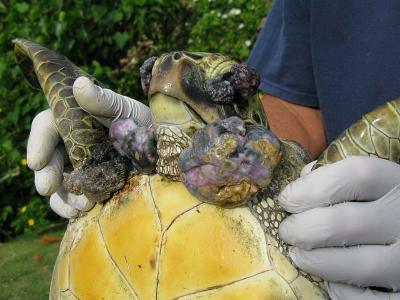
For nearly four decades, some have suspected that persistent organic pollutants -  a large group of man-made chemicals that, as their name indicates, persist in the environment - contributed to a green turtle's susceptibility to the virus that causes fibropapilomatosis, a disease that forms large benign tumors that can inhibit the animal's sight, mobility and feeding ability. 

A new paper by researchers from the Hollings Marine Laboratory (HML) and university and federal collaborators in Hawaii demonstrated these man-made chemicals are not a co-factor linked to the increasing number of green sea turtles afflicted with fibropapilomatosis.

Over 5 million people in the U.S. have Alzheimer's disease. It is the most common form of dementia and is the sixth leading cause of death in the U.S. Desperate families latch onto just about any possible treatment, including supplements. Do they work? Not so far.

But in a retrospective study, older adults involved in the 
Alzheimer's Disease Neuroimaging Initiative (ADNI)
study were assessed with neuropsychological tests and brain magnetic resonance imaging (MRI) every six months.  The group included 229 older adults who were cognitively normal; 397 who were diagnosed with mild cognitive impairment; and 193 with AD.

If your baby is allergic to milk, your choices might get a little more narrow, if the European Society for Paediatric Gastroenterology, Hepatology and Nutrition (ESPGHAN) and the North American Society for Pediatric Gastroenterology, Hepatology and Nutrition have their way.

In a commentary in the Journal of Pediatric Gastroenterology and Nutrition, they say that the inorganic arsenic levels of dietary products used by children should be regulated, and make the recommendation that "Rice drinks should not be used in infants and young children."

Much of what we know about Öetzi - the 'Tyrolean Iceman’ – such as what he looked like and that he suffered from lactose intolerance, stems from a tiny bone sample which allowed the decoding of his genetic make-up.

A team of scientists have examined the part of the sample consisting of non-human DNA. In the DNA mixture, they detected a sizeable presence of a particular bacterium: Treponema denticola, an opportunistic pathogen involved in the development of periodontitis. The finding supports the computer tomography based diagnosis that the Iceman suffered from periodontitis.

Liquid water is essential for almost every biological process so understanding liquid water is crucial for understanding biology - including some of its exceptional behavior.  

According to classical understanding, when water contacts other water, it will spread out and finally both mix together, i.e., water always completely wets water due to the hydrogen bonds formed among water molecules.

Taking B vitamins doesn't slow mental decline nor will it prevent Alzheimer's disease, according to clinical trial data involving 22,000 people.

High levels in the blood of a compound called homocysteine have been found in people with Alzheimer's disease, and people with higher levels of homocysteine have been shown to be at increased risk of Alzheimer's disease.

Taking folic acid and vitamin B-12 are known to lower levels of homocysteine in the body, so this gave rise to the 'homocysteine hypothesis' that taking B vitamins could reduce the risk of Alzheimer's disease.