Banner
Here's Where Your Backyard Was 300 Million Years Ago

We may use terms like "grounded" and terra firma to mean stability and consistency but geology...

Convergent Evolution Cheat Sheet Now 120 Million Years Old

One tenet of natural selection is a random walk of genes but nature may be more predictable than...

Synchrotron Could Shed Light On Exotic Dark Photons

There are many hypothetical particles proposed to explain dark matter and one idea to explore how...

The Pain Scale Is Broken But This May Fix It

Chronic pain is reported by over 20 percent of the global population but there is no scientific...

User picture.
News StaffRSS Feed of this column.

News Releases From All Over The World, Right To You... Read More »

Blogroll
Ask an older person what it is like to be under the constant threat of infectious disease. They love vaccines and they love antibiotics because everyone once knew someone who was crippled or died due to an inability to prevent or cure serious illnesses.

But it won't be wealthy progressive elites who send us back to a "Dark Ages of medicine" with their anti-vaccine fad, warned UK Prime Minister David Cameron last week, it is more likely be the growing threat of resistance to antibiotics.

Since 1945, when penicillin became a widespread treatment, humanity has had a relatively easy time of things. But in the modern biological arms race, microbes are developing resistance to existing antibiotics faster than our regulatory system can approve new ones.

Supermassive black holes in the cores of some galaxies drive massive outflows of molecular hydrogen gas. As a result, most of the cold gas is expelled from the galaxies.

Since cold gas is required to form new stars, this directly affects the galaxies' evolution and those outflows are a key ingredient in theoretical models of the evolution of galaxies, but it is a mystery how they are accelerated. A new study provides the first direct evidence that the molecular outflows are accelerated by energetic jets of electrons that are moving at close to the speed of light. Such jets are propelled by the central supermassive black holes.

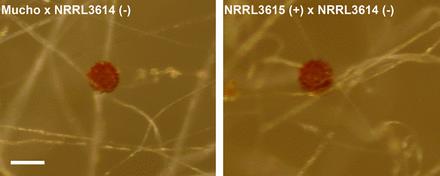
In September of 2013, customers of Chobani brand Greek yogurt complained of gastrointestinal problems after consuming products manufactured in the company's Idaho plant. The company issued a recall and claimed that the fungal contaminant Murcor circinelloides was only a potential danger to immunocompromised individuals.

Yet complaints of severe GI discomfort continued from otherwise healthy customers and researchers began to question the fungus and its ability to cause harm in healthy humans.  Resulting research has found that this fungus is not harmless after all, but a strain with the ability to cause disease. 

Batteries are common in the devices we use - everything from electric cars to laptops. Unfortunately the last real breakthrough in battery technology was lithium-ion and it's been 25 years of not much since. We're no longer using a 386 PC but our devices are using that equivalent in battery power.

There are efforts to try and get the most performance out of this legacy technology and one effort is replacing the graphite traditionally used in one of the battery's electrodes  with a sponge-like silicon material. Silicon has more than 10 times the energy storage capacity of graphite. 

A new study on biological erosion of mesophotic tropical coral reefs - low energy reef environments between 30-150 meters deep - provides new insights into processes that affect the overall structure of these important ecosystems.

The purpose of the study was to better understand how bioerosion rates and distribution of bioeroding organisms, such as fish, mollusks and sponges, differ between mesophotic reefs and their shallow-water counterparts and the implications of those variations on the sustainability of the reef structure.

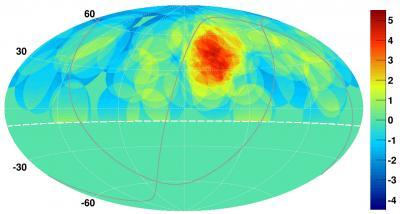
Astronomers have found a "hotspot" beneath the Big Dipper emitting a disproportionate number of the highest-energy cosmic rays, a discovery which may move physics toward identifying the mysterious sources of the most energetic particles in the universe.

Many astrophysicists suspect ultrahigh-energy cosmic rays are generated by active galactic nuclei, or AGNs, in which material is sucked into a supermassive black hole at the center of galaxy, while other material is spewed away in a beam-like jet known as a blazar. Another popular possibility is that the highest-energy cosmic rays come from some supernovas (exploding stars) that emit gamma rays bursts.