Banner
Here's Where Your Backyard Was 300 Million Years Ago

We may use terms like "grounded" and terra firma to mean stability and consistency but geology...

Convergent Evolution Cheat Sheet Now 120 Million Years Old

One tenet of natural selection is a random walk of genes but nature may be more predictable than...

Synchrotron Could Shed Light On Exotic Dark Photons

There are many hypothetical particles proposed to explain dark matter and one idea to explore how...

The Pain Scale Is Broken But This May Fix It

Chronic pain is reported by over 20 percent of the global population but there is no scientific...

User picture.
News StaffRSS Feed of this column.

News Releases From All Over The World, Right To You... Read More »

Blogroll

A breakthrough discovery into how living cells process and respond to chemical information could help advance the development of treatments for a large number of cancers and resistant to therapy.

Researchers have unlocked the secret behind the activation of the Ras family of proteins, one of the most important components of cellular signaling networks in biology and major drivers of cancers that are among the most difficult to treat.

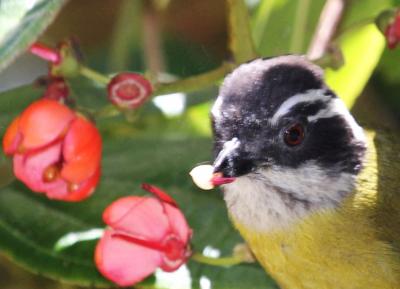
A small tree or shrub found in mountainous Central and South American rainforests has a most unusual relationship with the birds that pollinate its flowers, according to a new study - the plant known as Axinaea offers up its male reproductive organs as a tempting and nutritious food source for the birds.

As the birds seize those bulbous stamens with their beaks, they are blasted with pollen by the flowers' complex "bellows" organs. The birds then deliver that pollen to receptive female floral organs as they forage on.

Food bodies situated on male reproductive organs are otherwise only known from beetle-pollinated flowers. There is no other known example among plants of such a precise and anatomically distinct bellows organ.

A newly discovered planet now named OGLE-2013-BLG-0341LBb
in a binary star system located 3,000 light-years from Earth is expanding astronomers' notions of where Earth-like—and even potentially habitable—planets can form. And how to find them.

At twice the mass of Earth, the planet orbits one of the stars in the binary system at almost exactly the same distance from which Earth orbits the sun. However, because the planet's host star is much dimmer than the sun, the planet is much colder than the Earth—a little colder, in fact, than Jupiter's icy moon Europa.

Astronomers search for exoplanets by measuring shifts in the pattern of a star's spectrum - the different wavelengths of radiation that it emits as light.

These "Doppler shifts" result from subtle changes in the star's velocity caused by the gravitational tugs of orbiting planets, but Doppler shifts of a star's absorption lines can also result from magnetic events like sunspots originating within the star itself -- giving false clues of a planet that does not actually exist.

Researchers at the Royal Veterinary College have identified a highly specialized ligament structure that is thought to prevent giraffes' legs from collapsing under the immense weight of these animals.

"Giraffes are heavy animals (around 1000 kg), but have unusually skinny limb bones for an animal of this size" explained lead investigator Christ Basu, a PhD student in the Structure&Motion Lab. "This means their leg bones are under high levels of mechanical stress."

Sequences of DNA called enhancers, which control a gene's output, find their targets long before they are activated during embryonic development, according to scientists at the European Molecular Biology Laboratory (EMBL) in Heidelberg, who write in Nature that the degree of complexity of enhancers' interactions in the 'simple' fruit fly Drosophila is comparable to what is seen in vertebrates.