Banner
Here's Where Your Backyard Was 300 Million Years Ago

We may use terms like "grounded" and terra firma to mean stability and consistency but geology...

Convergent Evolution Cheat Sheet Now 120 Million Years Old

One tenet of natural selection is a random walk of genes but nature may be more predictable than...

Synchrotron Could Shed Light On Exotic Dark Photons

There are many hypothetical particles proposed to explain dark matter and one idea to explore how...

The Pain Scale Is Broken But This May Fix It

Chronic pain is reported by over 20 percent of the global population but there is no scientific...

User picture.
News StaffRSS Feed of this column.

News Releases From All Over The World, Right To You... Read More »

Blogroll

Though strange fads like the blood type diet, going gluten-free or going vegetarian are clearly gimmicks, when your body is in a rut, it helps to change it up a little.

Just like exercise, if you do the same workout every day, its effectiveness will drop - and eating pasta and vegetables all of the time will make it hard to lose weight. But if that is your diet, forget counting calories and just eat meat. Your body will take care of the rest. Don't live the rest of your life that way, that is as crazy as being vegetarian, but for weight loss, it's better to count macronutrients than calories.

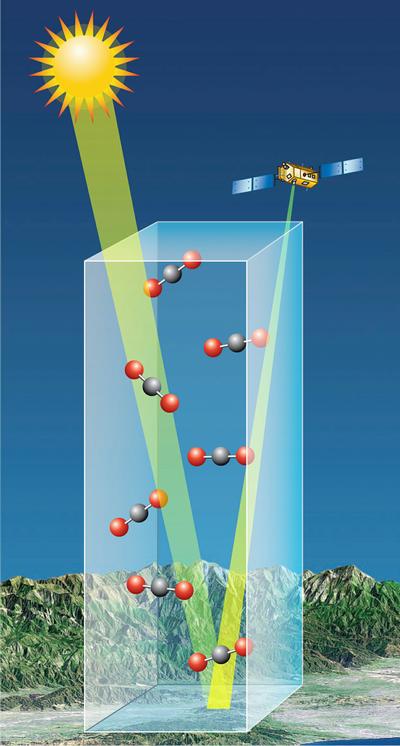
The Orbiting Carbon Observatory (OCO) was a NASA Earth System Science Pathfinder Project (ESSP) mission designed to make precise, time-dependent global measurements of atmospheric carbon dioxide (CO2) from an Earth orbiting satellite.

But on February 24, 2009 and it failed to reach orbit.

5 years later, it was time to try again. In 2012, NASA awarded launch services contracts for three United Launch Alliance Delta 2 rockets. And OCO-2 flew on a Boeing Delta II 7320-10C, one of the most successful launch vehicles ever flown with well over 100 successful launches, rather than  on a Taurus XL.
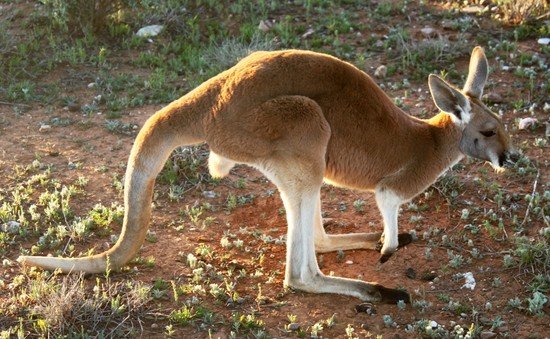
A new study has found that kangaroos, commonly viewed as two-legged hoppers, move with a “pentapedal” gait, planting their tails on the ground in combination with their front and hind legs. 

What’s remarkable is that the tail is anatomically quite different, being made up of more than 20 vertebrae taking on the roles of our feet, calves and thigh bones. “Animals have discovered many uses for their tails,” says professor Max Donelan of Simon Fraser University’s Locomotion Laboratory, “but as far as we know, this is the first use of one as a leg.

Motörhead concert goers may have to sign a waiver before they buy tickets. If that band were in California, they would have to wear a Proposition 65 warning on their shirts.

Why? Because they can give you brain damage, according to a Case Report published in The Lancet. Ariyan Pirayesh Islamian and colleagues from the Hannover Medical School, detail the case of a man who developed a chronic subdural hematoma (bleeding in the brain) after headbanging at a Motörhead concert.

In Switzerland, 7,000 to 8,000 persons each year fall ill with a campylobacter infection, making it the most frequent bacterial disease transmitted through food.

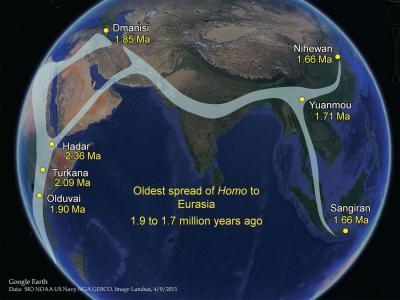
Many traits unique to humans are thought to have originated in the genus Homo between 2.4 and 1.8 million years ago in Africa.

What are the evolutionary factors that drove them?

A large brain, long legs, the ability to craft tools and prolonged maturation periods were all thought to have evolved together at the start of the Homo lineage as African grasslands expanded and Earth's climate became cooler and drier. However, new climate and fossil evidence analyzed by a team of researchers suggests that these traits did not arise as a single package. Rather, several key ingredients once thought to define Homo evolved in earlier Australopithecus ancestors between 3 and 4 million years ago, while others emerged significantly later.