Banner
Here's Where Your Backyard Was 300 Million Years Ago

We may use terms like "grounded" and terra firma to mean stability and consistency but geology...

Convergent Evolution Cheat Sheet Now 120 Million Years Old

One tenet of natural selection is a random walk of genes but nature may be more predictable than...

Synchrotron Could Shed Light On Exotic Dark Photons

There are many hypothetical particles proposed to explain dark matter and one idea to explore how...

The Pain Scale Is Broken But This May Fix It

Chronic pain is reported by over 20 percent of the global population but there is no scientific...

User picture.
News StaffRSS Feed of this column.

News Releases From All Over The World, Right To You... Read More »

Blogroll

The United States of America has the best medical treatment in the world, but like most things with quality it is not cheap. Advocacy groups like the Commonwealth Fund focus on high average cost in their cultural efforts to nationalize the health care system, but they rarely cover the real reason health care coverage is high - too much is included and hospitals and doctors have a defensive medicine culture due to a hyperactive malpractice system.

If you don't cover every possible test, and something goes wrong, you will get sued. And now, with greater government involvement, even more doctors will be trained in a 'teach to the protocol' environment and run down a checklist of things they know are not relevant.

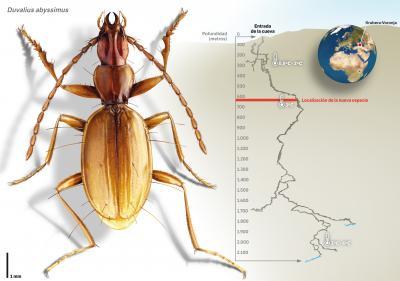
Cave beetles are one of the most iconic species found in subterranean habitats. They were historically the first living organisms described by science that are adapted to the conditions of hypogean - subterranean - life.

Now, the unusual habitat of the Krubera cave, 2,140 meters deep. in the Western Caucasus has revealed a new species of beetle, named Duvalius abyssimus. Ana Sofía Reboleira, researcher from the Universities of Aveiro and La Laguna, and Vicente M. Ortuño, from the University of Alcalá, named it in Zootaxa

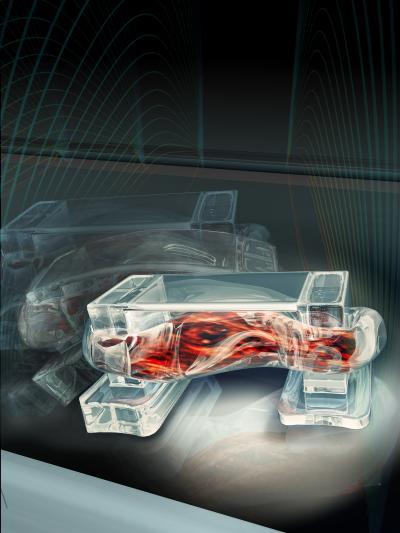
Engineers at the University of Illinois at Urbana-Champaign have demonstrated a class of walking "bio-bots" powered by muscle cells and controlled with electrical pulses, giving researchers unprecedented command over their function. 

The new bio-bots are powered by a strip of skeletal muscle cells that can be triggered by an electric pulse. This gives the researchers a simple way to control the bio-bots and opens the possibilities for other forward design principles, so engineers can customize bio-bots for specific applications.

The H1N1 2009 pandemic influenza virus, known informally as 'swine flu', has remained a hot topic in science and culture. The science and medical community, including former FDA deputy commissioner Dr. Scott Gottlieb, criticized the Obama admiinistration for not allowing multi-dose vials of vaccines because they contained thimerosal, which had been one of the reasons during the 2008 campaign season that Senator Obama hinted he believed vaccines caused autism. The anti-immigration contingent blamed international air travel.

Can addiction be predicted? That's always been the goal and conjecture has focused on everything from family to environment. But there are just as many fails as wins. A child who grew up in a house with smokers is only correlated to smoking if they felt like their parents were positive role models, for example, so inheritance claims are spotty.

We all know how fire works, the same way we know how gravity works. But, like gravity, there is a lot we don't know about combustion. 

There are many reasons to delve into its secrets. For modern culture, combustion insight could lead to more efficient fuel use and that means less pollution. Today, gasoline has amazing energy density and that makes it difficult to replace so while we research something better, more efficient combustion would mean less waste.

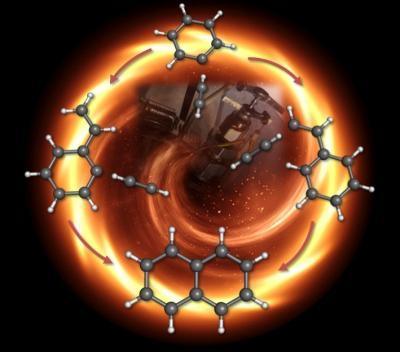
Researchers at the Department of Energy's Lawrence Berkeley National Lab (LBNL) and the University of Hawaii have uncovered the first step in the process that transforms gas-phase molecules into solid particles like soot and other carbon-based compounds.