Banner
Here's Where Your Backyard Was 300 Million Years Ago

We may use terms like "grounded" and terra firma to mean stability and consistency but geology...

Convergent Evolution Cheat Sheet Now 120 Million Years Old

One tenet of natural selection is a random walk of genes but nature may be more predictable than...

Synchrotron Could Shed Light On Exotic Dark Photons

There are many hypothetical particles proposed to explain dark matter and one idea to explore how...

The Pain Scale Is Broken But This May Fix It

Chronic pain is reported by over 20 percent of the global population but there is no scientific...

User picture.
News StaffRSS Feed of this column.

News Releases From All Over The World, Right To You... Read More »

Blogroll

Rifampicin and related drugs are important antibiotics in the "drug cocktail" that cures tuberculosis in about 6 months. But two forms of tuberculosis, referred to as "multi-drug-resistant," or MDR, and "extensively drug-resistant," or XDR, have become resistant to rifampicin.

In 1993, resurging levels of tuberculosis due to antibiotic resistance led the World Health Organization to declare it a global health emergency. Today more than 1 million people around the world are dying each year from tuberculosis.

Obviously, as the creators of the four pillars of the Science 2.0 concept, we're interested in new ways to use data to make meaningful decisions, but we recognize that key breakthroughs are more likely to happen in the private sector, where money can be made filling a demand.

A paper by Aetna and GNS Healthcare Inc. in the American Journal of Managed Care demonstrates how analysis of patient records using analytics can predict future risk of metabolic syndrome.

As carbon dioxide (CO2) in America has declined, environmentalists and the federal government have begun to focus on the energy that got us CO2 emissions back at early 1990s levels - natural gas.

What was once the preferred solution of environmentally conscious people became worse than coal and methane, they began to claim, would make CO2 irrelevant if natural gas were not banned. That was a claim so crazy even the National Resources Defense Council disavowed it, though it got a prominent place, bolstered by lots of anonymous sources, in the New York Times.

If your child spends their evening beating up hookers in Grand Theft Auto, there is a silver lining - they are less likely to actually beat up hookers in real life. At least surveys by humanities scholars say so.

This is good knowledge. There has long been a fear that advertising of McDonald's Happy Meals and cigarettes and violence in media might actually lead to people buying more junk food or smoking or being violent, but the new study led by Matthew Grizzard, PhD, assistant professor in the University at Buffalo Department of Communication, and co-authored by researchers at Michigan State University and the University of Texas, Austin, finds just the opposite: people who engage in bad behavior are less likely to do it because they have greater sensitivity.

A new study has found that palladium-gold nanoparticles are excellent catalysts for cleaning polluted water - and can even convert biodiesel waste into valuable chemicals.

In dozens of studies, Rice University chemical engineer Michael Wong and colleagues have focused on using the tiny metallic specks to break down carcinogenic and toxic compounds and have now examined whether palladium-gold nanocatalysts could convert glycerol, a waste byproduct of biodiesel production, into high-value chemicals.

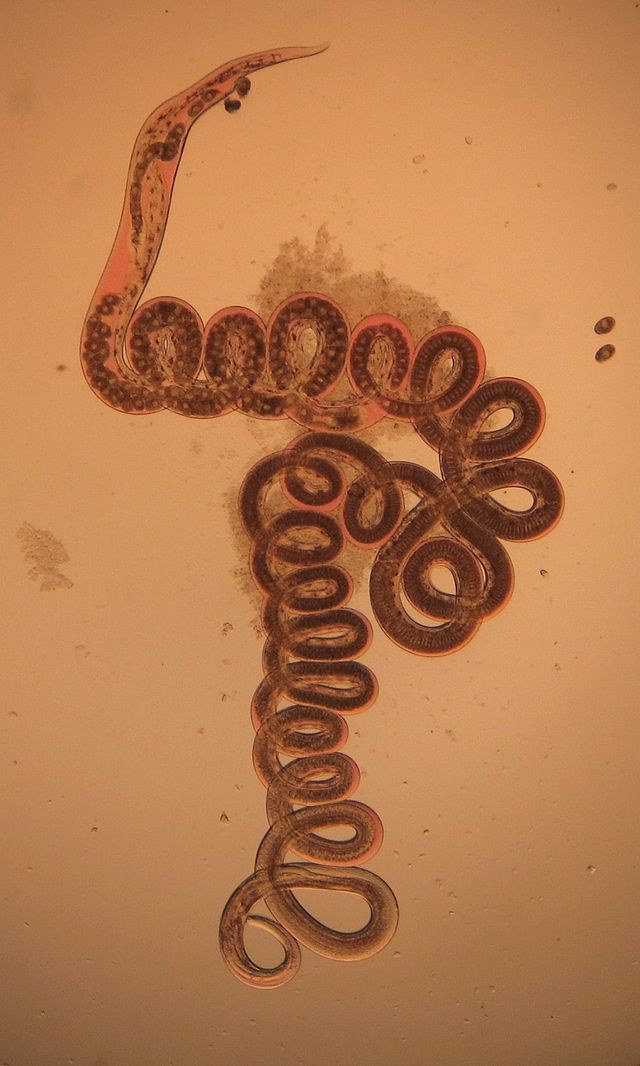
Signals from the immune system that help repel common parasites  like tapeworms, roundworms and other helminths can inadvertently cause a dormant viral infection to become active again, which may explain how complex interactions between infectious agents and the immune system have the potential to affect illness.

The scientists identified specific signals in mice that mobilize the immune system to fight parasites that infect nearly a quarter of all humans. The same signals cause an inactive herpes virus infection in the mice to begin replicating again.

The researchers speculated that the virus might be taking advantage of the host response to the worm infection, multiplying and spreading when the immune system's attention is fixed on fighting the worms.