Banner
Here's Where Your Backyard Was 300 Million Years Ago

We may use terms like "grounded" and terra firma to mean stability and consistency but geology...

Convergent Evolution Cheat Sheet Now 120 Million Years Old

One tenet of natural selection is a random walk of genes but nature may be more predictable than...

Synchrotron Could Shed Light On Exotic Dark Photons

There are many hypothetical particles proposed to explain dark matter and one idea to explore how...

The Pain Scale Is Broken But This May Fix It

Chronic pain is reported by over 20 percent of the global population but there is no scientific...

User picture.
News StaffRSS Feed of this column.

News Releases From All Over The World, Right To You... Read More »

Blogroll

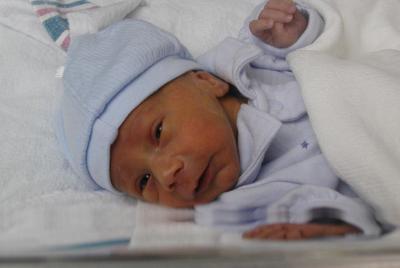
About 450,000 (12 percent) of the 3.9 million babies born each year in the United States are premature. Thanks to modern medicine, the number of preterm infants who survive has also surged in middle income countries in Latin America, Asia, and Eastern Europe. 

In these parts of the world, rates of childhood blindness from retinopathy of prematurity (ROP) are estimated at 15 to 30 percent—compared to 13 percent in the United States. Some degree of  retinopathy of prematurity appears in more than half of all infants born at 30 weeks pregnancy or younger—a full-term pregnancy is 40 weeks—but only about 5 to 8 percent of cases become severe enough to require treatment.

The sign of a bad gambler is the belief that they are on a winning streak, that luck is just going their way.

Gambling is math and luck. If you can afford to keep doubling, you will win. And as long as you stop after you win, you can never lose. That is why casinos have table minimums and maximums, to prevent winning. 

But humans have a well-documented tendency to see instead winning and losing streaks in situations that, in fact, are random. Psychologists disagree about whether this "hot-hand bias" is a cultural artifact picked up in childhood or a predisposition deeply ingrained in the structure of our cognitive architecture. 

Melanoma is one of the worst, most metastatic cancers known today.

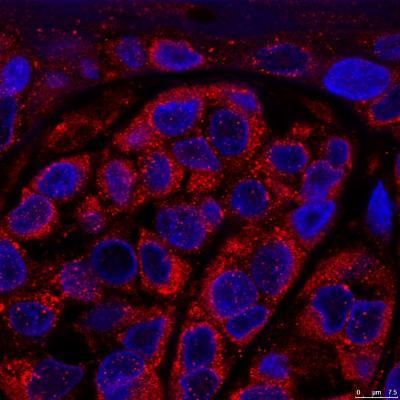
Researchers from the Spanish National Cancer Research Centre (CNIO) have discovered more than 40 genes that predict the level of aggressiveness of melanoma and that distinguish it from other cancers with a poor prognosis. The discovery will help to identify unique aspects of melanoma that could contribute to determine the risk of developing metastasis in patients with this disease. It explains why a drug, also described by CNIO, is being used to selectively attack the melanoma tumor cells.  

What is the function of these genes? Strangely, the factors that are increased in melanoma share a common mechanism: the formation of vesicles called endosomes.

Advocates for subsidized health care insist we face a black and white issue - the rich have health care and the poor do not.

Yet poor people in developing nations are healthier than wealthier countries. 

Hans Rosling,  Professor of International Health at the Karolinska Institute in Stockholm, is giving a presentation at
the 64th Lindau Nobel Laureate Meeting where he intends to underscore the fact that false assumptions regarding the reality of life for people throughout the world are an impediment to the urgently needed potential solutions to the rising global demand for health care. 

That the world of health is divided between rich and poor is more cliché

Surveys of 20 homeless, alcohol-dependent patients who had four or more annual visits to Bellevue Hospital's emergency department for two consecutive years determined that all began drinking in childhood or adolescence, and 13 reported having alcoholic parents. 13 patients reported abuse in their childhood homes and 19 left home by age 18. Only one was married and none of the subjects was employed. The three who were military veterans said that military life amplified their alcohol use. 

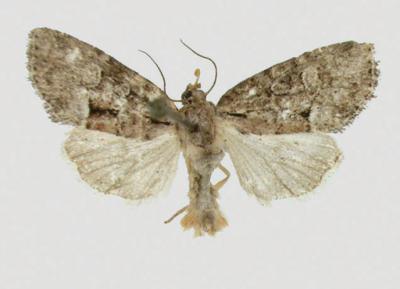
A small, drab and highly inconspicuous moth has been flitting nameless about its special niche among the middle elevations of one of the world's oldest mountain ranges, the southern Appalachian Mountains in North America. A team of American scientists has now identified this new to science species as Cherokeea attakullakulla.

It was frequenting these haunts for tens of millions of years before the first humans set foot on this continent, all the while not caring in the least that it had no name or particular significance, but it will probably still get listed as endangered.