Banner
Here's Where Your Backyard Was 300 Million Years Ago

We may use terms like "grounded" and terra firma to mean stability and consistency but geology...

Convergent Evolution Cheat Sheet Now 120 Million Years Old

One tenet of natural selection is a random walk of genes but nature may be more predictable than...

Synchrotron Could Shed Light On Exotic Dark Photons

There are many hypothetical particles proposed to explain dark matter and one idea to explore how...

The Pain Scale Is Broken But This May Fix It

Chronic pain is reported by over 20 percent of the global population but there is no scientific...

User picture.
News StaffRSS Feed of this column.

News Releases From All Over The World, Right To You... Read More »

Blogroll

Can rats show regret and, if so, how would we know?

Neuroscientists at the University of Minnesota say they do and it's intriguing because regret is a cognitive behavior thought to be uniquely and fundamentally human.    

"Regret is the recognition that you made a mistake, that if you had done something else, you would have been better off," said A. David Redish, Ph.D., a professor of neuroscience in the University of Minnesota. "The difficult part of this study was separating regret from disappointment, which is when things aren't as good as you would have hoped. The key to distinguishing between the two was letting the rats choose what to do."

Citrus is the world's most widely cultivated fruit crop. In the U.S. alone, the citrus crop was valued at over $3.1 billion in 2013. Originally domesticated in Southeast Asia thousands of years ago before spreading throughout Asia, Europe, and the Americas via trade, citrus is now under attack from citrus greening, an insidious emerging infectious disease that is destroying entire orchards. To help defend citrus against this disease and other threats, researchers worldwide are mobilizing to apply genomic tools and approaches to understand how citrus varieties arose and how they respond to disease and other stresses.

Antidepressant drugs are common in the developed world and are among the most prescribed medications in North America. Though antidepressants are effective for some, there is a lot of variability in how individuals respond to antidepressant treatment.  

A recent study found that levels of a small molecule found only in primates are lower in the brains of depressed individuals, a discovery that may hold a key to improving treatment options for those who suffer from depression.

Once the public loses confidence in the ability of journalists to be trusted guides for the public, it is hard to regain it. Scientists don't trust journalists because they get a lot of science wrong. The public doesn't trust journalists because they don't ask the awkward questions of people whose work they admire.

And then there is the framing they engage in.
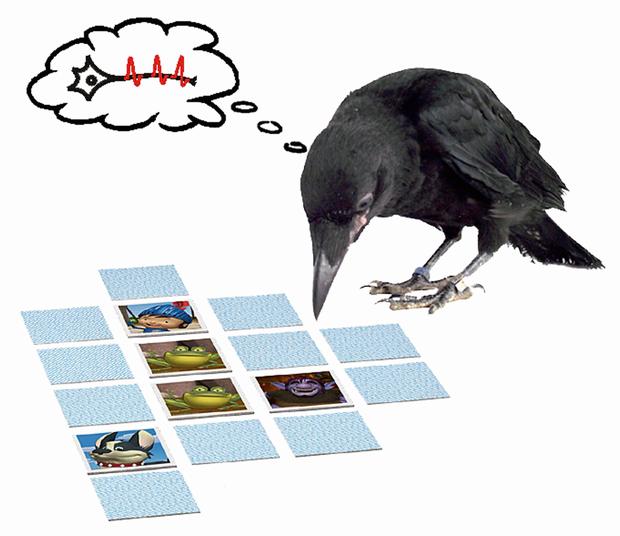
An important prerequisite for intelligence is a good short-term memory which can store and process the information needed for ongoing processes. This 'working memory' is a kind of mental notepad – without it, we could not follow a conversation, do mental arithmetic or play any simple game.

A new study has discovered neurons allowing crows to remember short-term. In the animal kingdom, the group of birds including crows and ravens, the corvids, are known for their intelligence because they have just such a working memory, but their endbrain – which is highly-developed but has a fundamentally different structure from that of mammals – has no cerebral cortex; and that is the part of the brain which in mammals produces the working memory.
700 people under the age of 25 die by suicide in the UK per year. 160 young people under the age of 20 die by suicide in England each year and there are higher rates of suicide in young people in Scotland and Northern Ireland than in England and Wales.

Why? Is it economics? Copycat culture? 

The National Confidential Inquiry into Suicide and Homicide by People with Mental Illness (Inquiry), led by Professor Louis Appleby of the University of Manchester, is carrying out an investigation to examine causes and recommend prevention strategies. The investigation will look at the role of social media and Internet sites in suicides as well as suicides which appear to occur in clusters or follow a copy-cat pattern.