Banner
Here's Where Your Backyard Was 300 Million Years Ago

We may use terms like "grounded" and terra firma to mean stability and consistency but geology...

Convergent Evolution Cheat Sheet Now 120 Million Years Old

One tenet of natural selection is a random walk of genes but nature may be more predictable than...

Synchrotron Could Shed Light On Exotic Dark Photons

There are many hypothetical particles proposed to explain dark matter and one idea to explore how...

The Pain Scale Is Broken But This May Fix It

Chronic pain is reported by over 20 percent of the global population but there is no scientific...

User picture.
News StaffRSS Feed of this column.

News Releases From All Over The World, Right To You... Read More »

Blogroll

You catch more flies with honey than vinegar, it is said, but most people want to avoid catching flies at all. A study has found that a popular non-nutritive sweetener, erythritol,  the main component of the sweetener Truvia®, is toxic to Drosophila melanogaster flies in a dose-dependent manner and so may be an effective and human-safe insecticide.

Methicillin-resistant Staphylococcus aureus (MRSA) has become the poster child for antibiotic resistance in large part because of a larger problem: patients tend to stop taking antibiotics once they feel better. In such instances, the surviving bacteria may become impervious to the drugs designed to fight them. 

A single-dose antibiotic could fix that and a new one, oritavancin, is as effective in the battle against stubborn skin infections as a twice-daily infusion given for up to 10 days, according to a recent large study.

Anti-depressants are having a bad decade. They've been increasingly implicated in acts of violence - it used to be that if a person had been treated by multiple therapists, society had done its part, and now society wonders if over-medicating and creating too many psychological labels are the problem rather than the solution.

Now antidepressants are increasingly linked to obesity. 

Since it is election season in America, we can expect a new wave of social psychology papers claiming that political liberals are smarter and more creative than political conservatives. It makes good mainstream news fodder, just like sexism in hurricane names does. Some of the articles will even bolster their case with fMRI images to seem scientific.

Outside people with confirmation bias, surveys of college students done by psychologists are easily dismissed, but what about genetic data? A paper in Neuron argues that genetic evidence for criminality may be on the horizon. 

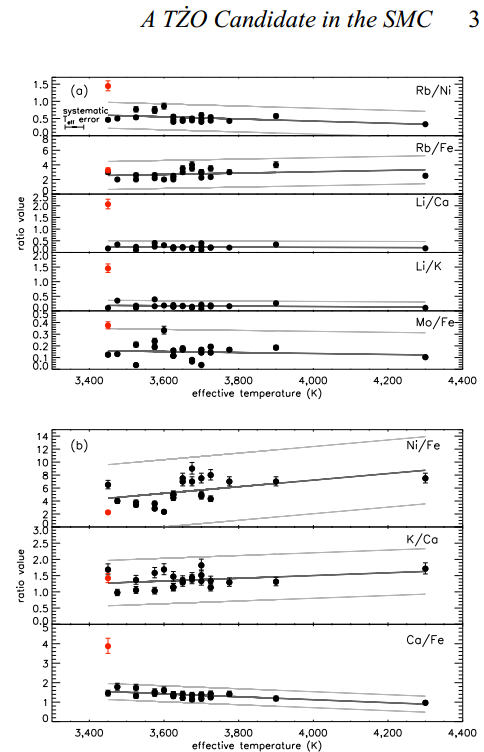
In 1975, physicist Kip Thorne and astronomer Anna Żytkow proposed that there are hybrids of red supergiant and neutron stars that superficially resemble normal red supergiants, such as Betelguese in the constellation Orion, but differ in their distinct chemical signatures that result from unique activity in their stellar interiors.

New research reveals how the algae behind red tide thoroughly disables – but doesn't kill – other species of algae. The study shows how chemical signaling between algae can trigger big changes in the marine ecosystem.

Marine algae fight other species of algae for nutrients and light, and, ultimately, survival. The algae that cause red tides, the algal blooms that color blue ocean waters red, carry an arsenal of molecules that disable some other algae. The incapacitated algae don't necessarily die, but their growth grinds to a halt. This could explain part of why blooms can be maintained despite the presence of competitors.