Banner
Here's Where Your Backyard Was 300 Million Years Ago

We may use terms like "grounded" and terra firma to mean stability and consistency but geology...

Convergent Evolution Cheat Sheet Now 120 Million Years Old

One tenet of natural selection is a random walk of genes but nature may be more predictable than...

Synchrotron Could Shed Light On Exotic Dark Photons

There are many hypothetical particles proposed to explain dark matter and one idea to explore how...

The Pain Scale Is Broken But This May Fix It

Chronic pain is reported by over 20 percent of the global population but there is no scientific...

User picture.
News StaffRSS Feed of this column.

News Releases From All Over The World, Right To You... Read More »

Blogroll

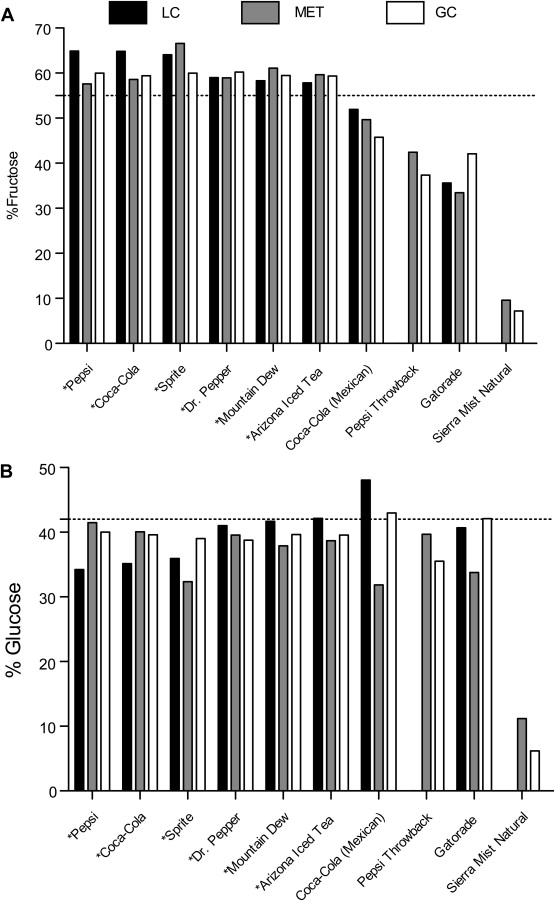
Researchers at the Keck School of Medicine of the University of Southern California say that though fructose is naturally found in numerous fruits and other products, it is not only harmful, the public is being lied to about it on labels.

High fructose corn syrup (HFCS) has long been a target for food activists. Though we live in a world where over 90% of added sugar is sucrose (table sugar), some believe HFCS in soda is causing American obesity. But it can only be American obesity, since much of the world does not use it in soda. 

Researchers have found a way to prevent nonalcoholic fatty liver disease, the most common cause of chronic liver disease worldwide, in mice.

By blocking a path that delivers dietary fructose to the liver, mice were prevented from developing the condition, according to investigators at Washington University School of Medicine in St. Louis writing in the Journal of Biological Chemistry.

In people, nonalcoholic fatty liver disease often accompanies obesity, elevated blood sugar, high blood pressure and other markers of metabolic syndrome. Some estimate as many as 1 billion people worldwide have fatty liver disease, even if they don't realize it.

Observations with the 1.6-meter telescope at Big Bear Solar Observatory (BBSO) in California, the most powerful ground-based instrument dedicated to studying the Sun, have resulted in the highest- resolution solar observations ever made.

Kapteyn's Star, named after Dutch astronomer Jacobus Kapteyn, who discovered it at the end of the 19th century, is the second fastest-moving star in the sky and belongs to the Galactic halo, an extended group of stars orbiting our Galaxy on very elliptical orbits. 

With a third of the mass of the Sun, this red-dwarf can be seen with an amateur telescope in the southern constellation of Pictor. 

An international team of astronomers reports the discovery of two new planets orbiting Kapteyn's Star. One of these planets orbits the star at the right distance to allow liquid water to exist on its surface, a key ingredient to support life. 

Deep sea fish help keep more than one million tons of CO2 from UK and Irish surface waters every year - that's worth £10 million per year in carbon credits, if anyone actually paid full price for those. Those fish living in deep waters on the continental slope around the UK may play an important role in carrying carbon from the surface to the seafloor, but they do it solely for free. 

A team led by Gregorio Valdez, an assistant professor at the Virginia Tech Carilion Research Institute, have created a search engine called EvoCor that identifies genes that are functionally linked.

EvoCor is a portmanteau of "evolution" and "correlation" and connotes the idea that genes with a similar evolutionary history and expression pattern have evolved together to control a specific biological process.