Banner
Here's Where Your Backyard Was 300 Million Years Ago

We may use terms like "grounded" and terra firma to mean stability and consistency but geology...

Convergent Evolution Cheat Sheet Now 120 Million Years Old

One tenet of natural selection is a random walk of genes but nature may be more predictable than...

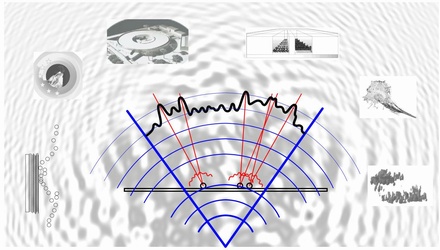
Synchrotron Could Shed Light On Exotic Dark Photons

There are many hypothetical particles proposed to explain dark matter and one idea to explore how...

The Pain Scale Is Broken But This May Fix It

Chronic pain is reported by over 20 percent of the global population but there is no scientific...

User picture.
News StaffRSS Feed of this column.

News Releases From All Over The World, Right To You... Read More »

Blogroll

NEW YORK, NY (May 22, 2014) — Researchers have discovered how a gene commonly linked to obesity—FTO—contributes to weight gain. The study shows that variations in FTO indirectly affect the function of the primary cilium, a little-understood hair-like appendage on brain and other cells. Specific abnormalities of cilium molecules, in turn, increase body weight, in some instances, by affecting the function of receptors for leptin, a hormone that suppresses appetite. The findings, made in mice, suggest that it might be possible to modify obesity through interventions that alter the function of the cilium, according to scientists at Columbia University Medical Center (CUMC).

LA JOLLA, CA—May 21, 2014—In surprise findings, scientists at The Scripps Research Institute (TSRI) have discovered that a protein with a propensity to form harmful aggregates in the body when produced in the liver protects against Alzheimer's disease aggregates when it is produced in the brain. The results suggest that drugs that can boost the protein's production specifically in neurons could one day help ward off Alzheimer's disease.

"This result was completely unexpected when we started this research," said TSRI Professor Joel N. Buxbaum, MD. "But now we realize that it could indicate a new approach for Alzheimer's prevention and therapy."

RAPID RESISTANCE to vemurafenib – a treatment for a type of advanced melanoma, the deadliest form of skin cancer – could be prevented by blocking a druggable family of proteins, according to research* published in Nature Communications today (Thursday).

Scientists at the Cancer Research UK Manchester Institute, based at the University of Manchester, have revealed the MLK family of four enzymes 'undoes' the tumour-shrinking effects of vemurafenib**.

Around half of metastatic melanomas – aggressive skin cancer that has spread to other parts of the body – are caused by a fault in the cell-growth gene BRAF, causing the signal telling cells to multiply to be permanently switched on.

The so-called symbiotic relationship between trees and the fungus that grow on their roots may actually work more like a capitalist market relationship between buyers and sellers, according to the new study published in the journal New Phytologist.

Melanin — and specifically, the form called eumelanin — is the primary pigment that gives humans the coloring of their skin, hair, and eyes. It protects the body from the hazards of ultraviolet and other radiation that can damage cells and lead to skin cancer, but the exact reason why the compound is so effective at blocking such a broad spectrum of sunlight has remained something of a mystery.

A new review
in CA: A Cancer Journal for Clinicians
summarizes what is known about economic factors tied to the obesity epidemic in the United States.

It includes what most people knew; despite claims of 40 years ago that a population bomb was going to cause mass starvation, agricultural science instead caused the food curve to rise sharply. For the first time in the history of the world, the poorest people can afford to be fat, a privilege only available to the wealthy in past years.