Banner
Here's Where Your Backyard Was 300 Million Years Ago

We may use terms like "grounded" and terra firma to mean stability and consistency but geology...

Convergent Evolution Cheat Sheet Now 120 Million Years Old

One tenet of natural selection is a random walk of genes but nature may be more predictable than...

Synchrotron Could Shed Light On Exotic Dark Photons

There are many hypothetical particles proposed to explain dark matter and one idea to explore how...

The Pain Scale Is Broken But This May Fix It

Chronic pain is reported by over 20 percent of the global population but there is no scientific...

User picture.
News StaffRSS Feed of this column.

News Releases From All Over The World, Right To You... Read More »

Blogroll

The astronomer Giovanni Schiaparelli first described them as 'canali' in the 19th century. A conspicuous net-like system of deep gorges known as the Noctis Labyrinthus is clearly visible on Mars' equatorial region.

The gorge system, in turn, leads into another massive canyon, the Valles Marineris, which is 4,000 km long, 200 km wide and 7 km deep. Both of these together would span the US completely from east to west.

These gorges resemble terrestrial canyons formed by water so most researchers assumed that immense flows of water must have carved the Noctis Labyrinthus and the Valles Marineris into the surface of Mars. Or perhaps tectonic activity had created the largest rift valley on a planet in our solar system.

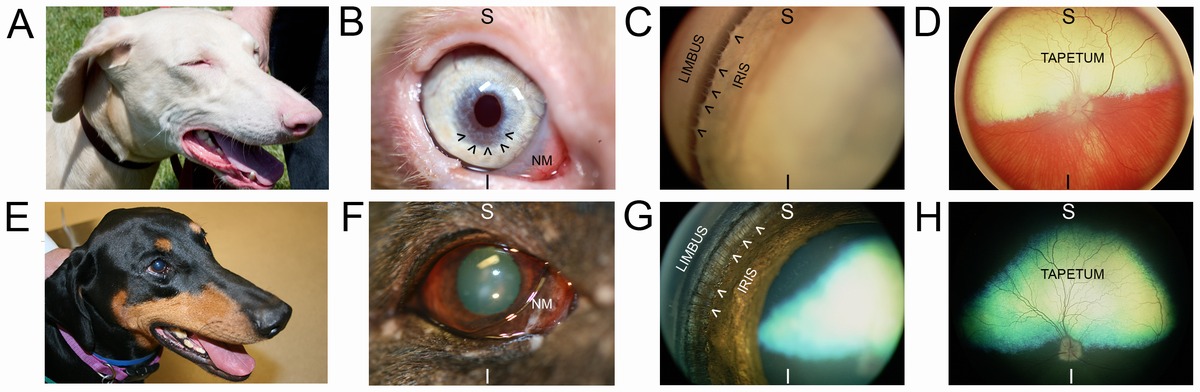
A genetic mutation
that causes albinism
 in Doberman pinschers has been identified. And the researchers discovered that type of albinism has certain characteristics that are evident in humans too. 

Paige Winkler, a doctoral student in the College of Veterinary Medicine at Michigan State University, and Joshua Bartoe, an assistant professor in the Department of Small Animal Clinical Sciences, led the effort to discover the mutated gene that is associated with a form of albinism in humans. 

A new robot is capable of reacting quickly and catching objects with complex shapes, like bottles and tennis rackets, in less than 5/100ths of a second.

The robot arm measures about 1.5 meters long, has three joints and a hand with four fingers. It was programmed at the Learning Algorithms and Systems Laboratory at
Ecole Polytechnique Fédérale de Lausanne
 (LASA) and designed to test robotic solutions for capturing moving objects.

Researchers have identified several target molecules which are suitable for the development of new allergy drugs. The Journal of Allergy and Clinical Immunology, the most prestigious journal in the field of allergology, has recently published an extensive review article on the prospects of drug therapy for allergy. Completed in a large-scale EU project, the lead author of the review article is Professor Ilkka Harvima of the University of Eastern Finland and Kuopio University Hospital.

At the surface, Antarctica is a motionless and frozen landscape. Yet hundreds of miles down the Earth is moving at a rapid rate, new research has shown.

The study, led by Newcastle University, UK, and published this week in Earth and Planetary Science Letters, explains for the first time why the upward motion of the Earth's crust in the Northern Antarctic Peninsula is currently taking place so quickly.

Previous studies have shown the earth is 'rebounding' due to the overlying ice sheet shrinking in response to climate change. This movement of the land was understood to be due to an instantaneous, elastic response followed by a very slow uplift over thousands of years.

While most of Antarctica is remaining cold, rapid increases in summer ice melt, glacier retreat and ice shelf collapses are being observed in Antarctic Peninsula, where the stronger winds passing through Drake Passage are making the climate warm exceptionally quickly.

Until this study, published in Nature Climate Change, Antarctic climate observations were available only from the middle of last century.

By analysing ice cores from Antarctica, along with data from tree rings and lakes in South America, Dr Abram and her colleagues were able to extend the history of the westerly winds back over the last millennium.

"The Southern Ocean winds are now stronger than at any other time in the past 1,000 years," Abram said.