Banner
Here's Where Your Backyard Was 300 Million Years Ago

We may use terms like "grounded" and terra firma to mean stability and consistency but geology...

Convergent Evolution Cheat Sheet Now 120 Million Years Old

One tenet of natural selection is a random walk of genes but nature may be more predictable than...

Synchrotron Could Shed Light On Exotic Dark Photons

There are many hypothetical particles proposed to explain dark matter and one idea to explore how...

The Pain Scale Is Broken But This May Fix It

Chronic pain is reported by over 20 percent of the global population but there is no scientific...

User picture.
News StaffRSS Feed of this column.

News Releases From All Over The World, Right To You... Read More »

Blogroll

Pregnant women show increased activity in the area of the brain related to emotional skills as they prepare to bond with their babies, according to a new study by scientists at Royal Holloway, University of London.

The research, which will be presented at the British Psychological Society's annual conference on Wednesday 7 May, found that pregnant women use the right side of their brain more than new mothers do when they look at faces with emotive expressions.

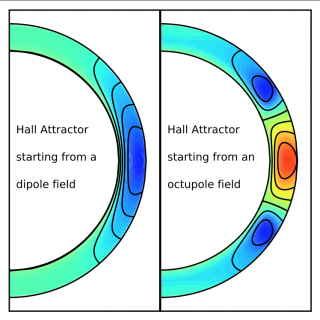
Neutron stars are extraordinarily dense stellar bodies created when massive stars collapse. They host the strongest magnetic fields in the universe -- as much as a billion times more powerful than any man-made electromagnet.

But some neutron stars are much more strongly magnetized than others and no one is sure why.

A paper by McGill University physicists Konstantinos Gourgouliatos and Andrew Cumming
in Physical Review Letters  sheds new light on the expected geometry of the magnetic field in neutron stars and could help scientists measure the mass and radius of these unusual stellar bodies, and thereby gain insights into the physics of matter at extreme densities.

There once was a time when pilots had to do everything with a plane - they had to be able to repair it and fly it and that meant knowing everything about it.

Today, much of flying is automated, freeing pilots' attention from mundane flight tasks and allowing them to focus on the big picture. Many regard humans as something of a safety net for machines, there in case something goes wrong - but a paper in Human Factors says it doesn't really work that way. 

Orlando, Fla. — Scientists have developed the first reversible glue that could be used on the battlefield to treat eye injuries, potentially saving soldiers' vision. The research is being presented at the 2014 Annual Meeting of the Association for Research in Vision and Ophthalmology (ARVO) this week in Orlando, Fla.

When applied to a wounded eye, the adhesive warms up and becomes sticky, sealing the wound and minimizing further damage while the soldier is transported for treatment. Upon arriving at a hospital, doctors can simply apply cool saline solution to the glue, causing it to revert to its non-adhesive form and be removed with minimal discomfort.

Astronomers have made a measurement of a distant neutron star that is one million times more precise than the previous world's best - and they did it by using...nothing.

The interstellar medium is the 'empty' space between stars and galaxies. It's not really empty, it is made up of sparsely spread charged particles and those can be used as a giant lens. The astronomers did just that, to magnify and look closely at the radio wave emission from a small rotating neutron star.

Result: the highest resolution measurement ever achieved, equivalent to being able to see the double-helix structure of our genes from the Moon.

New cancer therapies, particularly agents that block vascular endothelial growth factor (VEGF) signaling, have been successful and are now used as a first line therapy for some tumors, but almost 100% of patients who take VEGF inhibitors (VEGFIs) develop high blood pressure, and a subset develops severe hypertension.

The mechanisms underlying VEGF inhibitor-induced hypertension need to be better understood and there is a need for clear guidelines and improved management, say investigators behind the review in the Canadian Journal of Cardiology.