Banner
Here's Where Your Backyard Was 300 Million Years Ago

We may use terms like "grounded" and terra firma to mean stability and consistency but geology...

Convergent Evolution Cheat Sheet Now 120 Million Years Old

One tenet of natural selection is a random walk of genes but nature may be more predictable than...

Synchrotron Could Shed Light On Exotic Dark Photons

There are many hypothetical particles proposed to explain dark matter and one idea to explore how...

The Pain Scale Is Broken But This May Fix It

Chronic pain is reported by over 20 percent of the global population but there is no scientific...

User picture.
News StaffRSS Feed of this column.

News Releases From All Over The World, Right To You... Read More »

Blogroll

Animal hoarding is a psychological disorder where a person accumulates a large numbers of animals at home, usually cats and dogs, without providing them with a minimal standard of care.

Details about the cause of the disorder remain largely unknown and but it obviously has a negative effect on the health of both the people who suffer from it and the animals involved.  Researchers from Hospital del Mar Research Institute writing in Animal Welfare have tackled the first European study to compile data on this disorder   

Countess Elizabeth Báthory de Ecsed of Hungary was such a prolific serial killer she has been termed "The Blood Countess". Her vampire-like tendencies - especially bathing in the blood of young women to supposedly keep her skin young - became folklore.

Virginal blood is not going to prevent wrinkles - even Joe Mercola would not try to sell that as a remedy - but researchers say something — or some things — in the blood of young mice can restore mental capabilities in old mice. Will it hold true for humans? If so, poor kids need to watch out. Wealthy elites will find a way to make it government policy.

Are you a morning person or a night owl? Is it just a personal preference or is there something to it? It's a complex puzzle with a lot of variables to consider. Literature concerning variation of sensory function according to the circadian cycle is lacking and chronobiological studies have focused on circadian fluctuation in performing simple motor tasks, fine skilled movement, and anaerobic exercise.

To try and determine when people at their optimal, researchers observed and compared the circadian fluctuations in tactile sense, joint reposition sense and two-point discrimination in 21 healthy adult subjects, at approximately 9:00, 13:00 and 18:00 during the day.

During their annual Winter Study at Isle Royale National Park, scientists from Michigan Technological University counted nine wolves organized into one breeding pack and a second small group that is a remnant of a formerly breeding pack.

In the Isle Royale Wolf-Moose Study’s annual report released today, the researchers say that over the past three years, they have tallied the lowest numbers of wolves ever: nine in 2011–12, eight in 2012–13 and nine in 2013–14. During the same period, predation rates—the proportion of the moose population killed by wolves—also dropped to the lowest ever recorded, while the number of moose doubled, to approximately 1,050 moose.

Privacy discussions of modern times have four pillars - and they are all weak, according to a new article.

There are four main arguments about privacy: (1) it is dead; (2) people don't care about privacy and modern youth care even less; people with nothing to hide have nothing to fear; and privacy is bad for business.
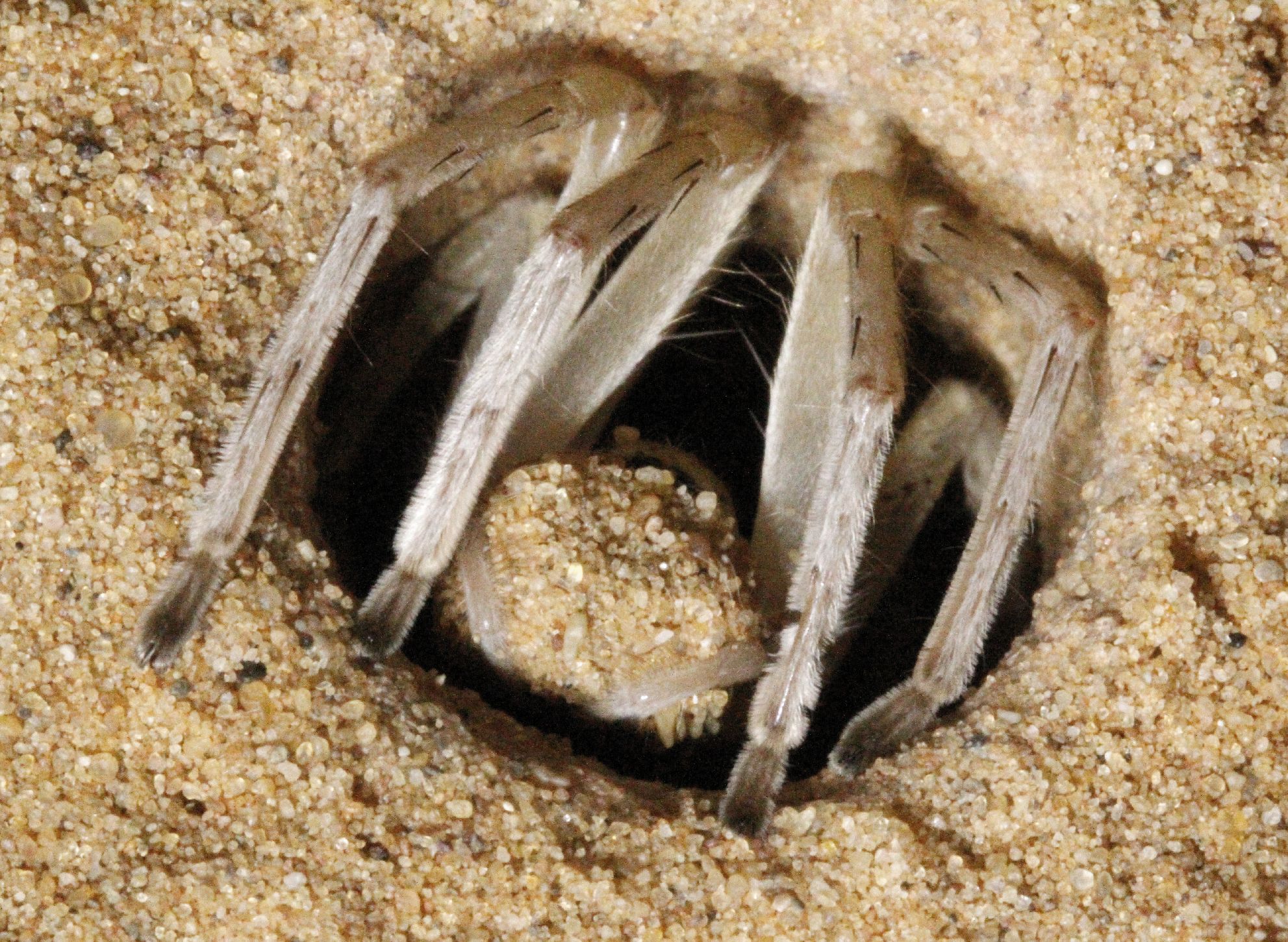
A paper in Zootaxa describes a new species of spider, Cebrennus rechenbergi, the only spider that is able to move by means of flic-flac jumps. 

The nocturnal spider Cebrennus rechenbergi lives in the sand desert Erg Chebbi in southeastern Morocco, not far from the Algerian border.