Banner
Here's Where Your Backyard Was 300 Million Years Ago

We may use terms like "grounded" and terra firma to mean stability and consistency but geology...

Convergent Evolution Cheat Sheet Now 120 Million Years Old

One tenet of natural selection is a random walk of genes but nature may be more predictable than...

Synchrotron Could Shed Light On Exotic Dark Photons

There are many hypothetical particles proposed to explain dark matter and one idea to explore how...

The Pain Scale Is Broken But This May Fix It

Chronic pain is reported by over 20 percent of the global population but there is no scientific...

User picture.
News StaffRSS Feed of this column.

News Releases From All Over The World, Right To You... Read More »

Blogroll
Preliminary results of a randomized, double blind, placebo controlled trial on osteoarthritis of the knee using ActiPatch Therapy have been announced.

BioElectronics Corporation says the initial interim analysis showed statistically significant results for the primary and secondary outcomes measures. The study is being led by Doctor Gianluca Bagnato, Division of Rheumatology, University Hospital Gaetano Martino, Messina, Italy. The final analysis of the full study data set will be carried out soon and the results have been accepted in the Annals of the Rheumatic Diseases and presented at the European League against Rheumatism 2014 conference.

In high school and college, your coach told you to avoid alcohol. And for good reason; alcohol saps muscle strength and it's lingering lethargic effects aren't welcome either.

The lack of muscle strength really becomes evident when studying long-time alcoholics but it is also evidence in patients with mitochondrial disease.  A new study on mitochondria that are unable to self-repair may mean a new way to diagnose mitochondrial disease, and a new drug target. 

We know that around 12,000 years ago, a fundamental thing began to happen all around the world - plants were cultivated and animals were domesticated for transport, food and fiber. 

The ability to program living holds tremendous potential for energy, agriculture, water remediation and medicine, and synthetic biology is on the case.

Researchers have already designed a 'tool box' of small genetic components that act as intracellular switches, logic gates, counters and oscillators but wiring those components together to form larger circuits that can function as 'genetic programs' has been difficult, because of the small number of available wires.
At the International Society for Heart and Lung Transplantation (ISHLT) 34th Annual Meeting in San Diego, TransMedics announced results of the PROCEED II heart transplant Food and Drug Administration (FDA) pivotal trial results using the Organ Care System (OCS™) platform.

PROCEED II Trial is a large international, multi-center, clinical trial designed to evaluate the ability of the OCS Heart Technology to preserve donor hearts compared with cold storage.
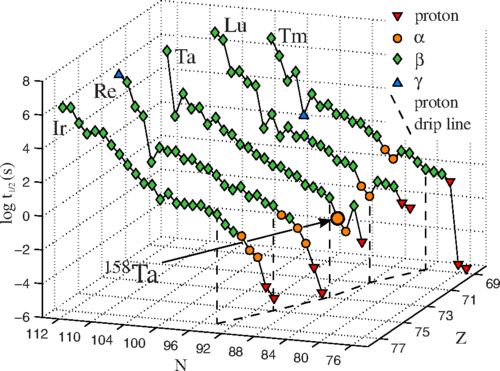
Identifying the full extent of the nuclear landscape, essentially how many isotopes exist, is vital for nuclear physics.

There is a lot left to learn. Beyond the stable nuclei that we find on Earth, there are many unstable nuclei that are formed in stellar events such as supernovae, but which are short-lived. There is a limit to how many protons and neutrons a nucleus can hold – too many and the excess will literally ‘pop out’. These limits are known as the proton and neutron ‘drip lines’.

Although these drip lines can be calculated, getting experiments to agree is another issue. Even finding them experimentally can be a difficult prospect.