Banner
Here's Where Your Backyard Was 300 Million Years Ago

We may use terms like "grounded" and terra firma to mean stability and consistency but geology...

Convergent Evolution Cheat Sheet Now 120 Million Years Old

One tenet of natural selection is a random walk of genes but nature may be more predictable than...

Synchrotron Could Shed Light On Exotic Dark Photons

There are many hypothetical particles proposed to explain dark matter and one idea to explore how...

The Pain Scale Is Broken But This May Fix It

Chronic pain is reported by over 20 percent of the global population but there is no scientific...

User picture.
News StaffRSS Feed of this column.

News Releases From All Over The World, Right To You... Read More »

Blogroll
It's no secret that bacterial parasites can change creatures. The parasitic lancet liver fluke infects the brain of ants, compelling them to climb to the tip of a blade of grass and into the mouth of a grazing animal. Another parasite is thought to change the behavior of rats to make them more susceptible to predation. 

They basically become zombies. And some bacterial parasites can even turn plants into the living dead.
Scientists who monitored skuas in Adélie Land and the Kerguelen Islands for ten years have found when these seabirds exhibit high mercury levels in their blood, their breeding success decreases. 

The researchers from the Centre d'Etudes Biologiques de Chizé and from the Littoral, Environnement et Sociétés Laboratory (CNRS / Université de La Rochelle) say that this is the first time that toxicological measurements have been combined with a population study carried out over such a long period in the Antarctic and Subantarctic. 

Before 1940, Nobel Prizes were a reflection of the rapidly evolving state of science. It was uncommon for an award to happen for a discovery 20 years or more after the research happened, it seemed more like a concession prize because nothing had happened recently - in physics, chemistry and medicine, delayed awards only occurred 11%, 15% and 24% of the time.

By 1985, those percentages were 60%, 52% and 45%. This is only a problem that has cropped up in science and medicine, other prizes are quickly awarded on pop culture status; President Obama was apparently given one, based on when nominations happen, for his first inauguration speech.

An analysis of temperature data since 1500 A.D. all but rules out the possibility that global warming in the industrial era is a natural fluctuation of climate, according to a paper in Climate Dynamics.

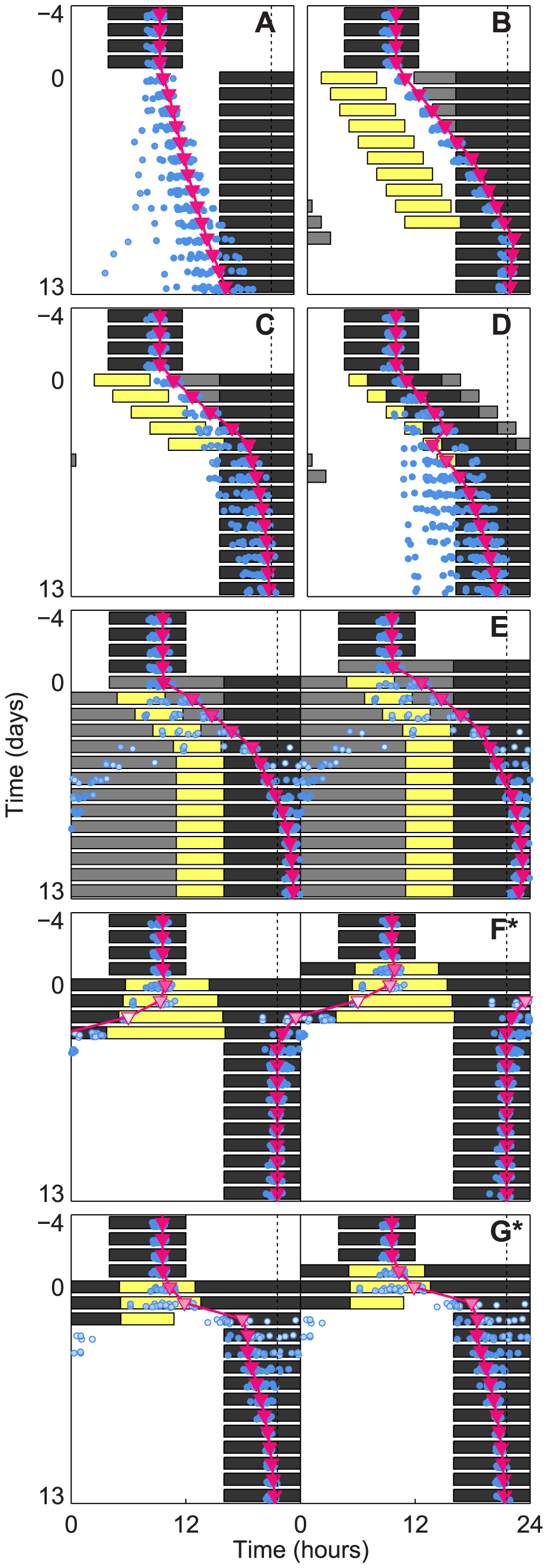
Want to reduce jet lag? A new app called Entrain claims it is the first to use a numbers-based approach  to "entrainment," the scientific term for synchronizing circadian rhythms with the outside hour. It's based on work by  Danny Forger, a professor of mathematics at the University of Michigan, and Kirill Serkh, a doctoral student at Yale University.   

Entrain is built around the premise that light, particularly from the sun and in wavelengths that appear to our eyes as the color blue, is the strongest signal to regulate circadian rhythms. These fluctuations in behaviors and bodily functions, tied to the planet's 24-hour day, do more than guide us to eat and sleep. They govern processes in each one of our cells.

In Tom Wolfe's "The Right Stuff" and in 1940s engineering, there was a demon in the air at 750 miles per hour, a line some said could not be crossed. It was called the Sound Barrier for that reason.

If that demon could cause a plane to break apart in air, imagine what it would do to a car on the ground. 

We'll find out in 2015. The BLOODHOUND SSC will make a test run at almost 800 MPH in 2015, which will beat the current official land speed record of 763 MPH, and will attempt 1,000 MPH in 2016. To keep her between the ditches, engineers will have to model how the car will cope with the supersonic rolling ground, rotating wheels and resulting shock waves in close proximity to the test surface at Hakskeen Pan, South Africa.