Banner
Here's Where Your Backyard Was 300 Million Years Ago

We may use terms like "grounded" and terra firma to mean stability and consistency but geology...

Convergent Evolution Cheat Sheet Now 120 Million Years Old

One tenet of natural selection is a random walk of genes but nature may be more predictable than...

Synchrotron Could Shed Light On Exotic Dark Photons

There are many hypothetical particles proposed to explain dark matter and one idea to explore how...

The Pain Scale Is Broken But This May Fix It

Chronic pain is reported by over 20 percent of the global population but there is no scientific...

User picture.
News StaffRSS Feed of this column.

News Releases From All Over The World, Right To You... Read More »

Blogroll

Comprehensive genomic analysis of low-grade brain tumors using data from The Cancer Genome Atlas (TCGA) brain tumor studies sorts them into three categories, one of which has the molecular hallmarks and shortened survival of glioblastoma multiforme, the most lethal of brain tumors, researchers reported at the American Association for Cancer Research Annual Meeting 2014.

Brain tumors arise in the glia, or supportive cells, of the brain and now are classified by their histology – characteristics visible via microscopy – and their cell of origin, either astrocytes or oligodendrocytes.

Scholars from the University of Pittsburgh and Dartmouth-Hitchcock Norris Cotton Cancer Center are associating binge drinking in both adults and teens with liking, owning and identifying a certain kind of music.

The weak observational results are published in Alcoholism: Clinical&Experimental Research and are certain to cause a buzz in mainstream media because the finding is based on a national randomized survey of over 2,541 people ages 15 to 23 and says that musicians who make alcohol brand references in popular music are to blame if kids get drunk.

In February, the University of California, Los Angeles held its 11th Symposium on Sources and Detection of Dark Matter and Dark Energy in the Universe - "Dark Matter 2014" was aimed at discussing the latest progress in the quest to identify dark matter, the umbrella term for the unknown stuff that makes up more than a quarter of the universe yet remains a mystery.

So where does the hunt stand? Between sessions, three leading physicists at the conference spent an hour discussing the search for dark matter on several fronts.

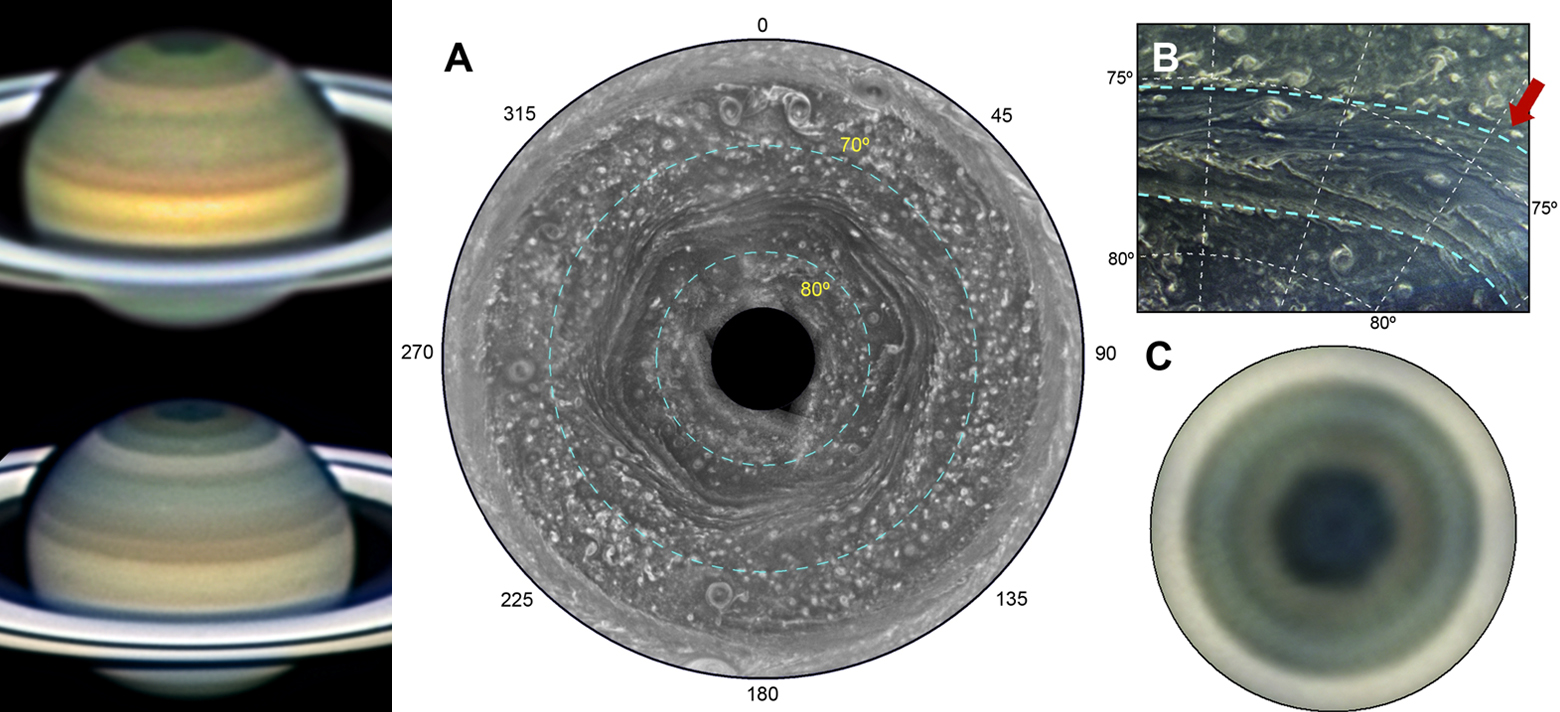
An unusual hexagonal shape surrounding Saturn's north pole was spotted on the planet for the first time thirty years ago and nothing similar, with such a regular geometry, has been found on any other (non-Earth, obviously) planet in the Solar System. 

That's not the only mystery. Saturn is the only planet in the Solar System whose rotation time remains unknown.  

Writing in Geophysical Research Letters, the University of the Basque Country Planetary Sciences Group has now been able to study and measure the phenomenon and, among other achievements, establish its rotation period. What is more, this period could be the same as that of the planet itself. 

Rubén Martínez, a graduate in Biology and Biochemistry at Elhuyar Fundazioa, and colleagues have developed a new methodology that makes it possible to know what physiological state the yeast is in at each point in the wine fermentation process. 

This knowledge is of particular interest for producers, since changes in the grape directly affect the chemical composition of the must.

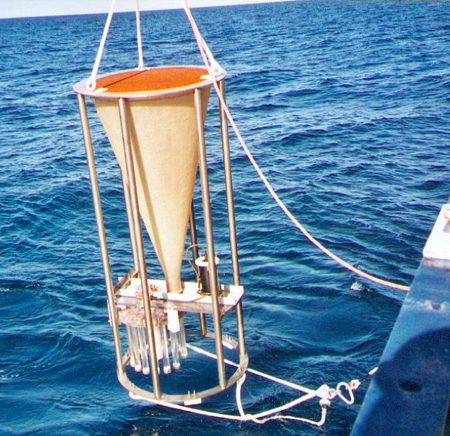
Some of the carbon, like the black soot and charcoal residue of fires, that finds its way into Earth's oceans stays there for thousands for years, and some of the black carbon breaks away and hitches a ride to the ocean floor on passing particles.

Virtually all black carbon results from combustion. Soot, the airborne version of black carbon, is a key element of smoke. Charcoal is another form of black carbon. Each form is produced naturally by wildfires, as well by industry and other human activities.