We can identify an athletic body by analysis of their skeletons because bones show remarkably rapid adaptation to both the intensity and direction of strains. Put under stress through physical exertion – such as long-distance walking or running – they gain in strength as the fibers are added or redistributed according to where strains are highest.
Can you put a price on ecological restoration? Of course you can. In fact, you must, or the discourse will be taken over by activists for whom price is no object. In the real world, an evidence-based price on clean water and soil fertility helps the United Nations set ecological restoration targets for degraded and deforested land.
Forests provide essential ecosystem services for people, including timber, food and water. For those struggling with the after-effects of deforestation, the main hope lies in rebuilding forest resources through ecological restoration.
Researchers at Bournemouth University have shown that placing a monetary value on ecosystem services provides a mechanism for evaluating the costs and benefits of reforestation activity.
What makes a good blood donor? A willingness to welcome anyone who enters the room, it seems, and names like Don Juan, Napoleon, Gucci, Azur, and Marissa don't hurt either.
“I chose them for their hematological characteristics, but also for their good disposition. We didn’t want cats that would be stressed when handled or that needed excessive sedation,” said Dr. Marie-Claude Blais, Professor at the University of Montreal’s Faculty of Veterinary Medicine.
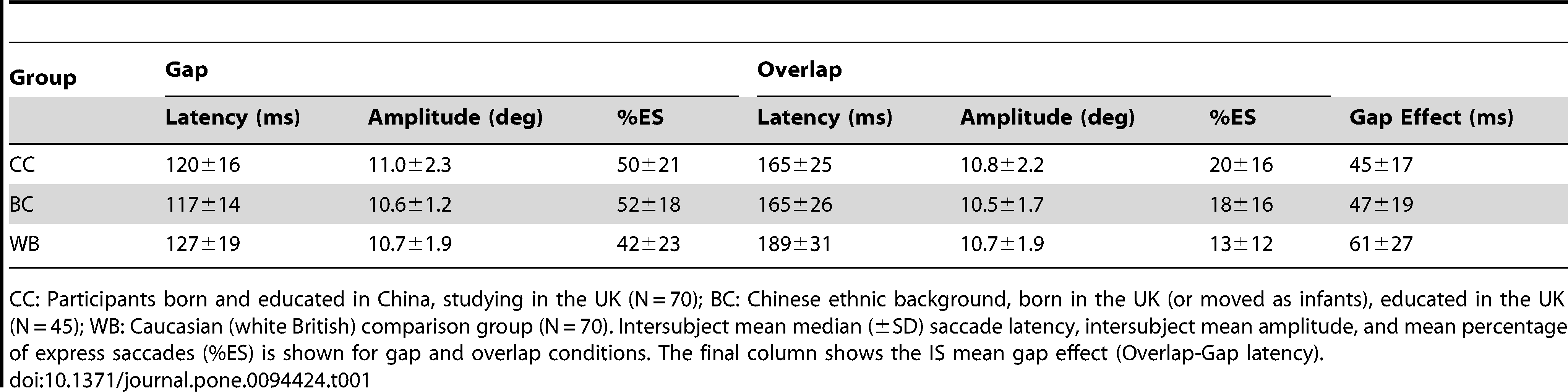
Rapid eye movements, known as saccades, have been a source of a nature versus nurture debate.
One hypothesis has been that this neurological behaviour is a product of culture in people of Chinese origin. A new study casts doubt on that.
Scientists tested three groups – students from mainland China, British people with Chinese parents and white British people – to see how quickly their eyes reacted to dots appearing in the periphery of their vision.
These express saccades – particularly fast responses which begin a tenth of a second after a target appears - were similar in British and mainland Chinese while white British participants made far fewer.
Conventional wisdom and sociological arguments have claimed that societies with more men than women, such as China, will become more violent, but a new study has found that a male-biased sex ratio does not lead to more crime.
Rates of rape, sexual assault and homicide are actually lower in societies with more men than women, the study found, and evolutionary theories predicting that when males outnumber females, males will compete more vigorously for the limited number of mates don’t hold up either.
“Here, we untangle the logic behind the widely held notion that in human societies where men outnumber women, there will be more violence,” said anthropology professor Monique Borgerhoff Mulder of U.C. Davis, co-author of the study.


 Here's Where Your Backyard Was 300 Million Years Ago
 Convergent Evolution Cheat Sheet Now 120 Million Years Old
 Synchrotron Could Shed Light On Exotic Dark Photons
 The Pain Scale Is Broken But This May Fix It