Banner
Here's Where Your Backyard Was 300 Million Years Ago

We may use terms like "grounded" and terra firma to mean stability and consistency but geology...

Convergent Evolution Cheat Sheet Now 120 Million Years Old

One tenet of natural selection is a random walk of genes but nature may be more predictable than...

Synchrotron Could Shed Light On Exotic Dark Photons

There are many hypothetical particles proposed to explain dark matter and one idea to explore how...

The Pain Scale Is Broken But This May Fix It

Chronic pain is reported by over 20 percent of the global population but there is no scientific...

User picture.
News StaffRSS Feed of this column.

News Releases From All Over The World, Right To You... Read More »

Blogroll

The transfer, via a viral vector, of a normal copy of the gene deficient in patients, allowed to fully and very rapidly cure the heart disease in mice. These findings are published in Nature Medicine on 6 April, 2014.

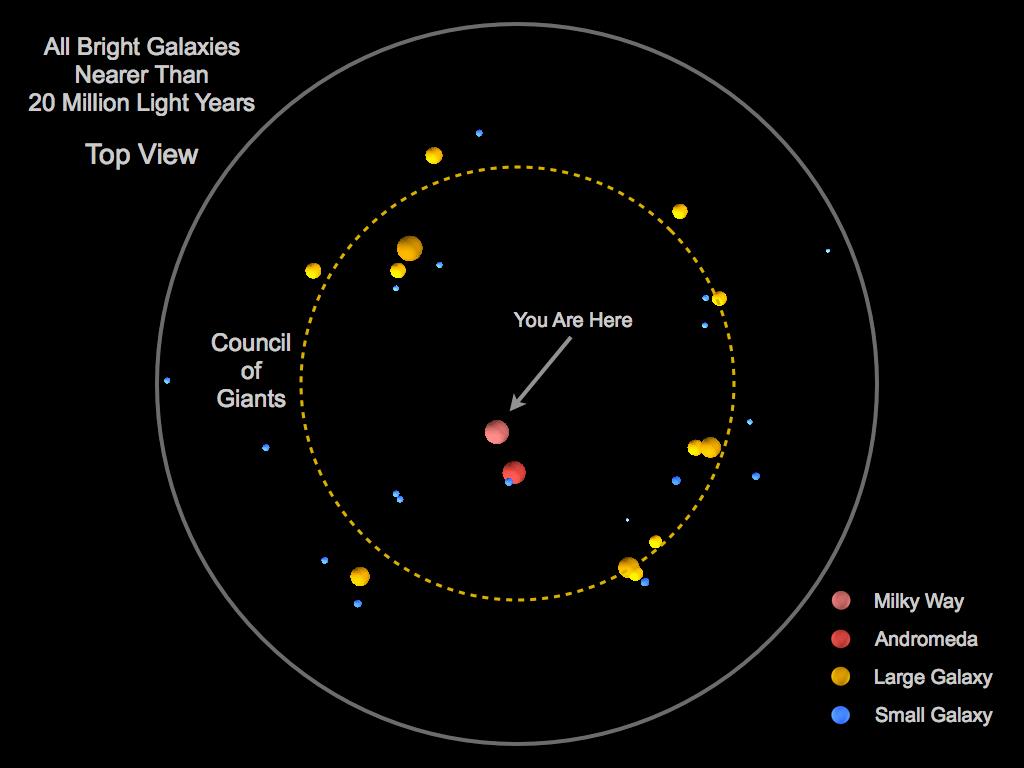
The universe is big - really big. Just our Milky Way galaxy alone is about 300 billion stars, with planets whizzing around them and clouds of gas and dust floating in between.

Then there is our orbiting companion, the Andromeda Galaxy and a small group of galaxies in our Local Group, which is about 3 million light years across.

What is in the vast unknown remains a mystery but a recent paper shed light on our immediate neighborhood - bright galaxies within 35-million light years of the Earth. 
A new initiative is underway to breathe life back into the 700,000-gallon ocean tank at Biosphere 2. The new ocean at Biosphere 2 will provide a glimpse into the sea that's closest to Southern Arizona – the Gulf of California, which stretches for a thousand miles from the mouth of the Colorado River to Mazatlan on the mainland of Mexico.

The original "ocean" was one of several habitats intended to sustain a crew of scientists living and working inside the Biosphere 2 dome isolated from the outside world. When the "enclosed missions" ended in 1994, the fragile ecology of the ocean habitat collapsed. The corals died and algae and bacterial mats took over, crowding out the reef.  
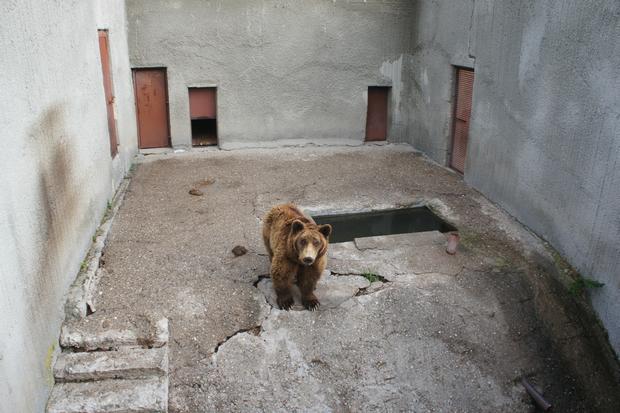
A genetic study of brown bears (Ursus arctos) in Bulgarian mountain regions showed they originated in Carpathia. So how did they get to Bulgaria? It wasn't natural dispersal. 

Bulgarian and Romanian NGOs, the Frankfurt Zoological Society, and scientists of the Senckenberg Conservation Genetics Section in Frankfurt have found that a legend was probably true - the legend being that the former leader of the Romanian Communist Party, Nicolae Ceausescu, flew the bears to Bulgaria.

PROVIDENCE, R.I. [Brown University] — The surface of Mercury crackled with volcanic explosions for extended periods of the planet's history, according to a new analysis led by researchers at Brown University. The findings are surprising considering Mercury wasn't supposed to have explosive volcanism in the first place, and they could have implications for understanding how Mercury formed.

Despite high rates of contraceptive use, unwanted pregnancies resulting in terminations remain high among young women.

In an article in the April issue of the Australian and New Zealand Journal of Public Health, Danielle Mazza from Monash University, and colleagues, examine the paradox of high rates of contraceptive use, over the counter availability of emergency contraception and unplanned pregnancy.

"The emergency contraceptive pill has been available to women for over-the-counter purchase since 2004," Professor Mazza said.

"Together with high rates of contraceptive use, this should result in lower rates of unplanned pregnancies for Australian women, but it has not.