

Banner
Synchrotron Could Shed Light On Exotic Dark Photons

There are many hypothetical particles proposed to explain dark matter and one idea to explore how...

The Pain Scale Is Broken But This May Fix It

Chronic pain is reported by over 20 percent of the global population but there is no scientific...
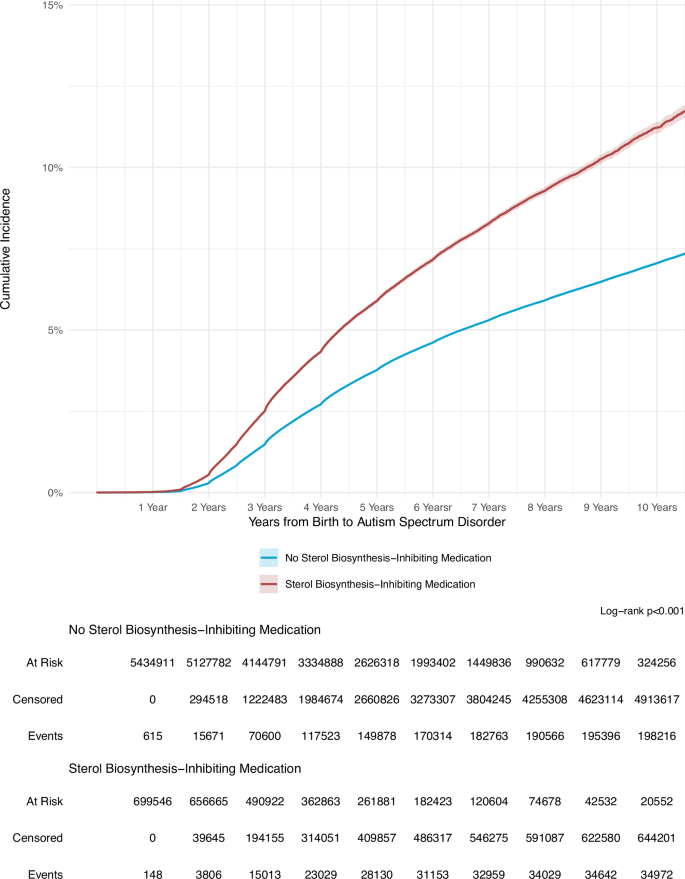
Study Links Antidepressants, Beta-blockers and Statins To Increased Autism Risk

An analysis of 6.14 million maternal-child health records  has linked prescription medications...

Pilot Study: Fibromyalgia Fatigue Improved By TENS Therapy

Fibromyalgia is the term for a poorly-understood condition where people experience pain and fatigue...

User picture.
News StaffRSS Feed of this column.

News Releases From All Over The World, Right To You... Read More »

Blogroll

BLOOMINGTON -- A new Indiana University study that examines the brain activity of alcohol-dependent women compared to women who were not addicted found stark and surprising differences, leading to intriguing questions about brain network functions of addicted women as they make risky decisions about when and what to drink.

The study used functional magnetic resonance imaging, or fMRI, to study differences between patterns of brain network activation in the two groups of women. The findings indicate that the anterior insular region of the brain may be implicated in the process, suggesting a possible new target of treatment for alcohol-dependent women.

The first life developed in ancient oceans some 3.6 billion years ago, but then nothing much happened. For a billion years, we remained pretty much a layer of slime. 

Then 550 million years ago, evolution came roaring back and here we are today. So what was the hold-up during a billion boring years?

According to University of Tasmania geologist Professor Ross Large and colleagues, the key was a lack of oxygen and nutrient elements, which placed evolution in a precarious position. "During that billion years, oxygen levels declined and the oceans were losing the ingredients needed for life to develop into more complex organisms."

How accurately can you simulate the universe's most violent events?

Enrico Ramirez-Ruiz wanted to find out, so when the first detailed observations of a star being ripped apart by a black hole were reported in 2012 (Gezari et al., Nature), he was eager to compare the data with his numerical model.

He was also highly skeptical of one of the published conclusions: that the disrupted star was a rare helium star. 

"I was sure it was a normal hydrogen star and we were just not understanding what's going on," said Ramirez-Ruiz, a professor of astronomy and astrophysics at the University of California, Santa Cruz.

Primary care doctors are not quick to prescribe antihypertensive medication to young people even after an average of 20 months of high blood pressure. Young adults who are white, male, not on Medicaid and not frequent clinic visitors are especially less likely to receive medication. These are the results of a study¹ by a research team at the University of Wisconsin School of Medicine and Public Health in the United States led by Heather Johnson. It appears in the Journal of General Internal Medicine², published by Springer.

Bottle gourds traveled the Atlantic Ocean from Africa and were likely domesticated many times in various parts of the New World, according to a team of scientists who studied bottle gourd genetics to show they have an African, not Asian ancestry.

"Beginning in the 1950s we thought that bottle gourds floated across the ocean from Africa," said Logan Kistler, post-doctoral researcher in anthropology, Penn State. "However, a 2005 genetic study of gourds suggested an Asian origin."

Domesticated bottle gourds are ubiquitous around the world in tropical and temperate areas because, while they are edible when young, the mature fruit make ideal lightweight, waterproof, liquid-carrying vessels.

WASHINGTON D.C. Feb. 18, 2014 -- Understanding how antibodies work is important for designing new vaccines to fight infectious diseases and certain types of cancer and for treating disorders of the immune system in animals and humans.

In research to be presented at the 58th Annual Biophysical Society Meeting, taking place in San Francisco from Feb. 15-19, Dr. Damian Ekiert, who is now at the University of California, San Francisco, will describe research he conducted as part of a team of researchers from The Scripps Research Institute in La Jolla, Calif.

In San Francisco, Ekiert will explain how the immune systems of cows are used to understand the diversity of antibodies and how that knowledge could improve the health of both people and livestock.

