

Banner
Synchrotron Could Shed Light On Exotic Dark Photons

There are many hypothetical particles proposed to explain dark matter and one idea to explore how...

The Pain Scale Is Broken But This May Fix It

Chronic pain is reported by over 20 percent of the global population but there is no scientific...
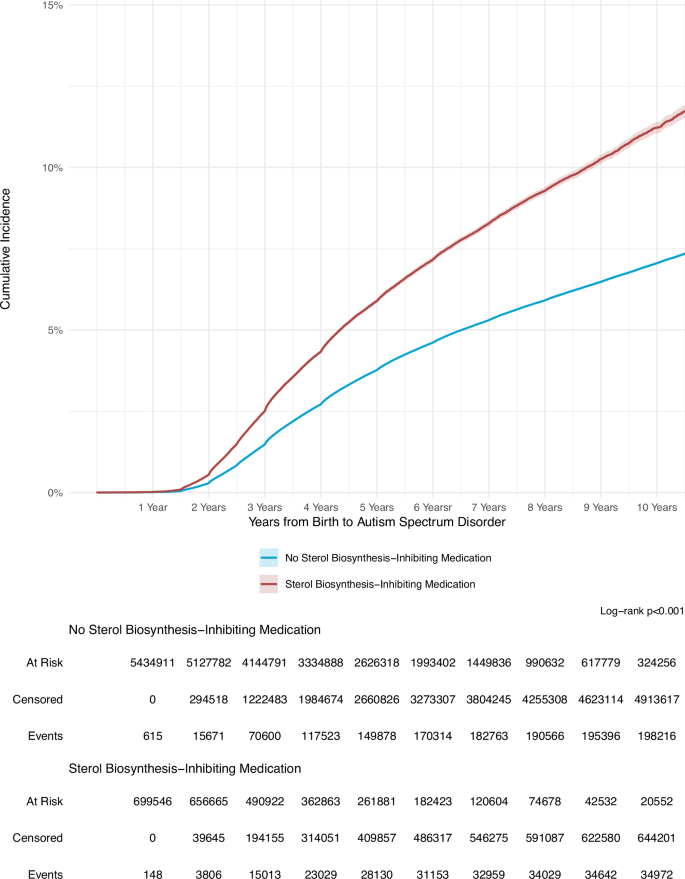
Study Links Antidepressants, Beta-blockers and Statins To Increased Autism Risk

An analysis of 6.14 million maternal-child health records  has linked prescription medications...

Pilot Study: Fibromyalgia Fatigue Improved By TENS Therapy

Fibromyalgia is the term for a poorly-understood condition where people experience pain and fatigue...

User picture.
News StaffRSS Feed of this column.

News Releases From All Over The World, Right To You... Read More »

Blogroll

WASHINGTON D.C. Feb. 18, 2014 -- Calico cats, renowned and beloved for their funky orange and black patchwork or "tortoiseshell" fur, can thank X chromosome inactivation or "silencing" for their unique look.

A team of University of California San Francisco (UCSF) researchers is striving to unlock the mystery of how one X chromosome can be rendered nearly completely inactive. They will present their latest results at the 58th Annual Biophysical Society Meeting, which takes place Feb. 15-19, 2014, in San Francisco, Calif.

WASHINGTON D.C. Feb. 18, 2014 -- To better understand the causes of male infertility, a team of Bay Area researchers is exploring the factors, both physiological and biochemical, that differentiate fertile sperm from infertile sperm. At the 58th Annual Biophysical Society Meeting, which takes place Feb. 15-19, 2014, in San Francisco, Calif., the team will present its work to identify and characterize proteins known as ion channels, which are crucial for sperm fertility and expressed within a sperm cell's plasma membrane.

RICHLAND, Wash. – Scientists have created a microbattery that packs twice the energy compared to current microbatteries used to monitor the movements of salmon through rivers in the Pacific Northwest and around the world.

The battery, a cylinder just slightly larger than a long grain of rice, is certainly not the world's smallest battery, as engineers have created batteries far tinier than the width of a human hair. But those smaller batteries don't hold enough energy to power acoustic fish tags. The new battery is small enough to be injected into an organism and holds much more energy than similar-sized batteries.

Coral Gables, Fla. (Feb. 17, 2014) -- There is a big effort in industry to produce electrical devices with more and faster memory and logic. Magnetic memory elements, such as in a hard drive, and in the future in what is called MRAM (magnetic random access memory), use electrical currents to encode information. However, the heat which is generated is a significant problem, since it limits the density of devices and hence the performance of computer chips.

Scientists are now proposing a novel approach to achieve greater memory density while producing less heat: by using an electric field instead of a current to turn magnetism on and off, thereby encoding the electrical devices.

NASHVILLE, Tenn. – To develop correctly, baby hearts need rhythm...even before they have blood to pump.

"We have discovered that mechanical forces are important when making baby hearts," said Mary Kathryn Sewell-Loftin, a Vanderbilt graduate student working with a team of Vanderbilt engineers, scientists and clinicians attempting to grow replacement heart valves from a patient's own cells.

In an article published last month in the journal Biomaterials the team reported that they have taken an important step toward this goal by determining that the mechanical forces generated by the rhythmic expansion and contraction of cardiac muscle cells play an active role in the initial stage of heart valve formation.

We tend to think of antibiotic resistance as a product of modern medicine and the mutation ability of pesky viruses to get around dying.

Writing in the journal Applied and Environmental Microbiology, a team of investigators say they have discovered viruses containing genes for antibiotic resistance in a fossilized fecal sample from 14th century Belgium, long before antibiotics were used in medicine.


