Banner
Synchrotron Could Shed Light On Exotic Dark Photons

There are many hypothetical particles proposed to explain dark matter and one idea to explore how...

The Pain Scale Is Broken But This May Fix It

Chronic pain is reported by over 20 percent of the global population but there is no scientific...
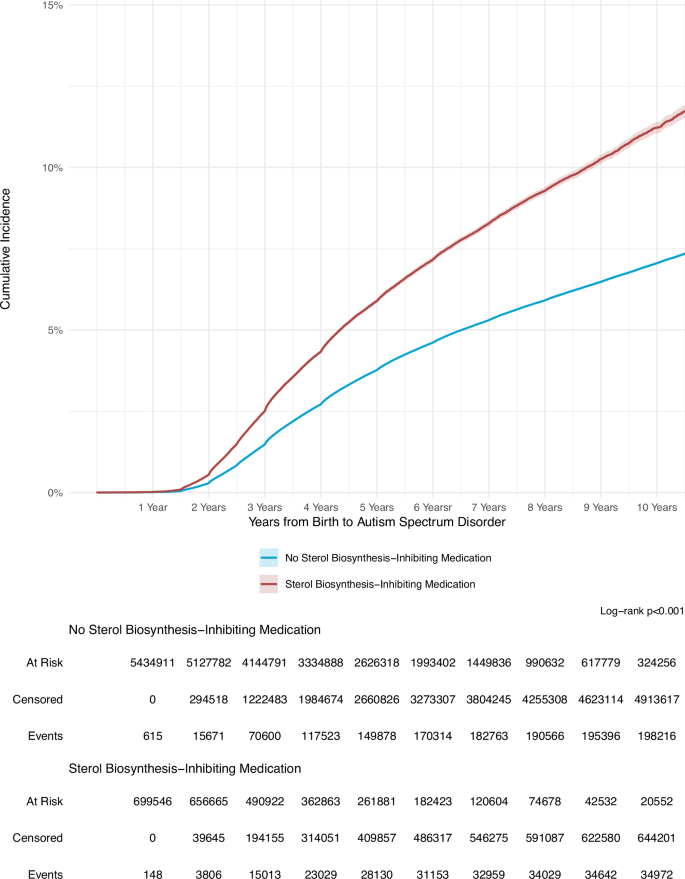
Study Links Antidepressants, Beta-blockers and Statins To Increased Autism Risk

An analysis of 6.14 million maternal-child health records  has linked prescription medications...

Pilot Study: Fibromyalgia Fatigue Improved By TENS Therapy

Fibromyalgia is the term for a poorly-understood condition where people experience pain and fatigue...

User picture.
News StaffRSS Feed of this column.

News Releases From All Over The World, Right To You... Read More »

Blogroll

The eggs produced by adolescent girls are not the same as the ones produced by adult women, according to a recent study in Human Molecular Genetics, which lists evidence that there are two completely distinct types of eggs in the mammalian ovary – "the first wave" and "the adult wave".

 Professor Kui Liu from the University of Gothenburg and colleagues used two genetically modified mouse models to show that the first wave of eggs, which starts immediately after birth, contributes to the onset of puberty and provides fertilizable eggs into the transition from adolescence to adulthood.

In contrast, the adult wave remains in a state of dormancy until activated during the adult life and then provides eggs throughout the entire reproductive lifespan.

If a name is ambiguous and given without context, humans struggle to understand the meaning, so you can imagine the struggle computers have.

 When Germans read the last name "Merkel" without context, they will not know if it refers to the Chancellor of Germany Angela Merkel or tsoccer coach Max Merkel.  And 

Two computer scientists at at the University of Liverpool think they have successfully cracked the Erdős discrepancy problem (for a particular discrepancy bound C=2), an 80 year old maths puzzle proposed by the Hungarian mathematician Paul Erdős, who offered $500 for its solution.

They just can't be sure, because it is too big for a human to replicate.The resulting proof generated is an enormous 13 gigabytes, 30 percent larger than downloading all of the content on Wikipedia.

Autism diagnoses have gone up a lot in the last generation. It was to the 2000s what ADD diagnoses were to the 1990s. 

And so people have rushed to attribute blame. Vaccines, GMOs, even BPA. If someone is selling alternative medicine, food or culture they have found a way to link their competition to autism. And then there is the idea that it is simply better diagnoses. And the charge that it has been over-diagnosed.

New diagnosis guidelines by the American Psychiatric Association (APA) have therapists and some families in a panic, because in an effort to be more scientific and less subjectively symptom-based, the new guidelines could leave them without a diagnosis. No diagnosis means no insurance coverage.

A new method for the treatment of phantom limb pain after an amputation has been initially tested on a patient who has suffered from severe phantom limb pain for 48 years. The case study shows a drastic reduction of pain.

It is common for people who lose an arm or a leg to experience phantom sensations, as if the missing limb were still there. 70 percent of amputees experience pain in the amputated limb despite the fact that it no longer exists. Obviously that can be frustrating. Phantom limb pain can become a deteriorating condition that reduces the quality of life considerably, but how do you treat the disease when you don't know the cause? 

Temperature has been driving the fluctuating size of Peru's Quelccaya Ice Cap, not snowfall, according to a new analysis.  The Quelccaya Ice Cap is the largest ice mass in the tropics and sits 18,000 feet above sea level in the Peruvian Andes. The dramatic shrinkage of the tropical glacier in recent decades has made it a poster child for global climate change.

The findings support suspicions that tropical glaciers are shrinking because of a warming climate, and could help scientists to better understand the natural variability of past and modern climate and to refine models that predict tropical glaciers' response to future climate change.