

Banner
Synchrotron Could Shed Light On Exotic Dark Photons

There are many hypothetical particles proposed to explain dark matter and one idea to explore how...

The Pain Scale Is Broken But This May Fix It

Chronic pain is reported by over 20 percent of the global population but there is no scientific...
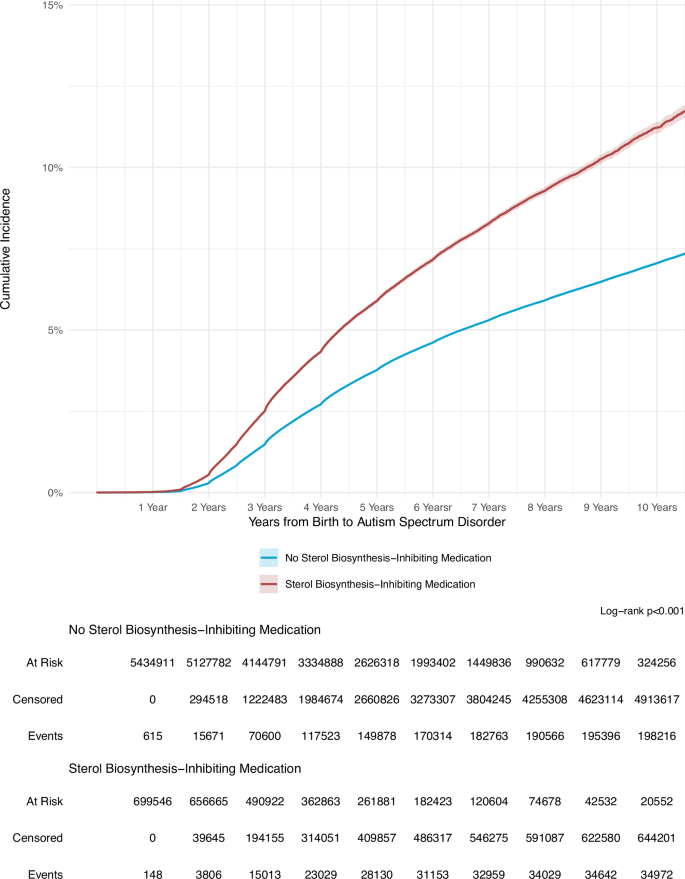
Study Links Antidepressants, Beta-blockers and Statins To Increased Autism Risk

An analysis of 6.14 million maternal-child health records  has linked prescription medications...

Pilot Study: Fibromyalgia Fatigue Improved By TENS Therapy

Fibromyalgia is the term for a poorly-understood condition where people experience pain and fatigue...

User picture.
News StaffRSS Feed of this column.

News Releases From All Over The World, Right To You... Read More »

Blogroll

This news release is available in German.

Even the so-called high-Tc superconductors still require very low temperatures of minus 200 degrees centigrade. While cooling down to these temperatures involves substantial effort, superconductors are already employed in many areas, e.g., for magnetic resonance tomography in medical applications. Despite extensive research, materials providing lossless conduction of electricity at room temperature are missing up to now.

The genomes of organisms from humans to corn are replete with "parasitic" strands of DNA that, when not suppressed, copy themselves and spread throughout the genome, potentially affecting health. Earlier this year Brown University researchers found that these "retrotransposable elements" were increasingly able to break free of the genome's control in cultures of human cells. Now in a new paper in the journal Aging, they show that RTEs are increasingly able to break free and copy themselves in the tissues of mice as the animals aged. In further experiments the biologists showed that this activity was readily apparent in cancerous tumors, but that it also could be reduced by restricting calories.

Americans don't like to talk about social class, we threw out the British because they believed an act of birth made them superior. In America, no class is better than any other - we are the only culture that thanks a waiter for interrupting our conversation at dinner in order to slosh water all over the table refilling a glass.

An international team of researchers led by scientists at Virginia Tech and the University of California, Berkeley has discovered that a process that turns on photosynthesis in plants likely developed on Earth in ancient microbes 2.5 billion years ago, long before oxygen became available.

The research offers new perspective on evolutionary biology, microbiology, and the production of natural gas, and may shed light on climate change, agriculture, and human health.

Researchers have found that the melanopsin pigment in the eye is potentially more sensitive to light than its more famous counterpart, rhodopsin, the pigment that allows for night vision.

For more than two years, the staff of the Laboratory for Computational Photochemistry and Photobiology (LCPP) at Ohio's Bowling Green State University (BGSU), have been investigating melanopsin, a retina pigment capable of sensing light changes in the environment, informing the nervous system and synchronizing it with the day/night rhythm. Most of the study's complex computations were carried out on powerful supercomputer clusters at the Ohio Supercomputer Center (OSC).

One of the issues of the Atapuerca sites that generates the most scientific debate is the dating of the strata where the fossils are found. Therefore, researchers at the Spanish National Research Centre for Human Evolution, among others, strive to settle the dates. A study published by the 'Journal of Archaeological Science' has clarified that the sediment of Gran Dolina, where the first remains of Homo antecessor were discovered in 1994, is 900,000 years old.

The findings at the Lower Palaeolithic cave site of Gran Dolina, in the Sierra de Atapuerca mountain range (Burgos), have led to major advancements in our knowledge of human evolution and occupation of Eurasia.


