

Banner
Synchrotron Could Shed Light On Exotic Dark Photons

There are many hypothetical particles proposed to explain dark matter and one idea to explore how...

The Pain Scale Is Broken But This May Fix It

Chronic pain is reported by over 20 percent of the global population but there is no scientific...
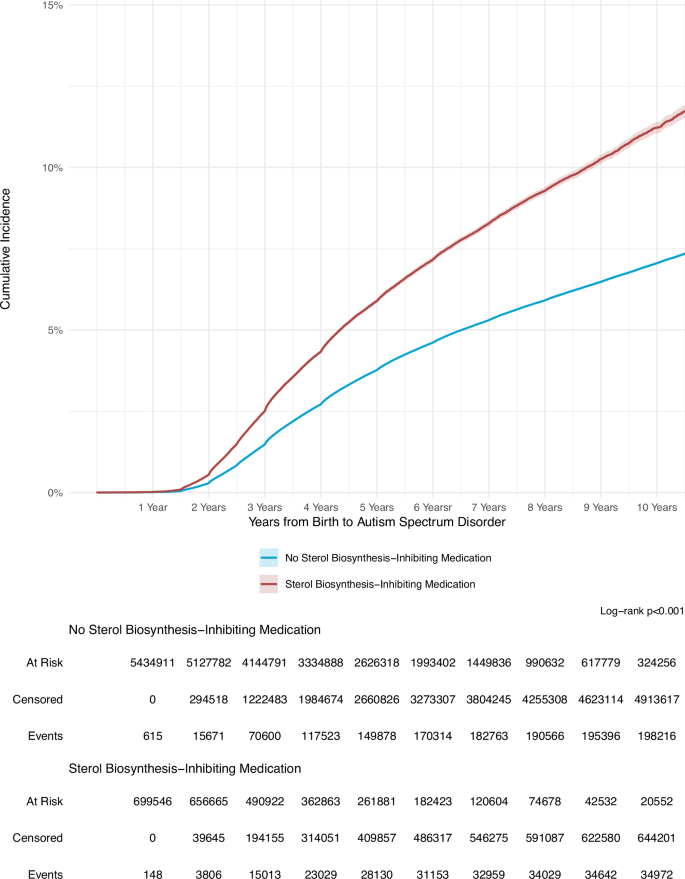
Study Links Antidepressants, Beta-blockers and Statins To Increased Autism Risk

An analysis of 6.14 million maternal-child health records  has linked prescription medications...

Pilot Study: Fibromyalgia Fatigue Improved By TENS Therapy

Fibromyalgia is the term for a poorly-understood condition where people experience pain and fatigue...

User picture.
News StaffRSS Feed of this column.

News Releases From All Over The World, Right To You... Read More »

Blogroll

While each American political party has positions that are determined to undermine science (food, medicine and energy for Democrats, evolution and global warming for Republicans) their constituents still respect scientists overall, even if they don't accept the legitimacy of some fields.

While most Americans could be a bit more knowledgeable in the ways of science, a majority are interested in hearing about the latest scientific breakthroughs and think highly of scientists.

The National Science Foundation's biannual survey of over 2,200 people is part of their Science and Engineering Indicators that they do for the president and Congress.

SAN ANTONIO (Jan. 28, 2014) — Although inflammation is frequently a cause of disease in the body, research from The University of Texas Health Science Center at San Antonio indicates that low levels of a pro-inflammatory cytokine in the brain are important for cognition. Cytokines are proteins produced by the immune system.

New results from NASA's MABEL campaign demonstrated that a photon-counting technique will allow researchers to track the melt or growth of Earth's frozen regions.

When a high-altitude aircraft flew over the icy Arctic Ocean and the snow-covered terrain of Greenland in April 2012, it was the first polar test of a new laser-based technology to measure the height of Earth from space.

Ever since the nineteenth century scientists have recognised that some regions contain more species than others, and that the tropics are richer in biodiversity than temperate regions. But why are there more species in the tropics? A new study publishing 28 January in the Open Access journal PLOS Biology scrutinizes most of the living mammalian species and reveals a two-fold mechanism; the rate at which mammals arose was higher in the tropics, and the rate at which they became extinct lower. They also propose that the tropics have been a continuous source of diversity that has permitted repeated colonization of the temperate regions.

Cambridge, Mass. – January 28, 2014 – Scientists at Harvard University and the Marine Biological Laboratory (MBL) hope new understanding of the natural nanoscale photonic device that enables a small marine animal to dynamically change its colors will inspire improved protective camouflage for soldiers on the battlefield.

The cuttlefish, known as the "chameleon of the sea," can rapidly alter both the color and pattern of its skin, helping it blend in with its surroundings and avoid predators. In a paper published January 29 in the Journal of the Royal Society Interface, the Harvard-MBL team reports new details on the sophisticated biomolecular nanophotonic system underlying the cuttlefish's color-changing ways.

Air pollution in China has exhibited noticeable changes over the past 30 years, shifting from point-source pollution (around factories and industrial plants) in the 1980s to urban pollution in the 1990s. Since the start of this century, air pollution has become increasingly regional and more complex. Recent research has indicated that the cooperative transition of SO2 and NOx into secondary aerosols (sulfate and nitrate) played a critical role in the haze pollution episode in China in January 2013.


