

Banner
Synchrotron Could Shed Light On Exotic Dark Photons

There are many hypothetical particles proposed to explain dark matter and one idea to explore how...

The Pain Scale Is Broken But This May Fix It

Chronic pain is reported by over 20 percent of the global population but there is no scientific...
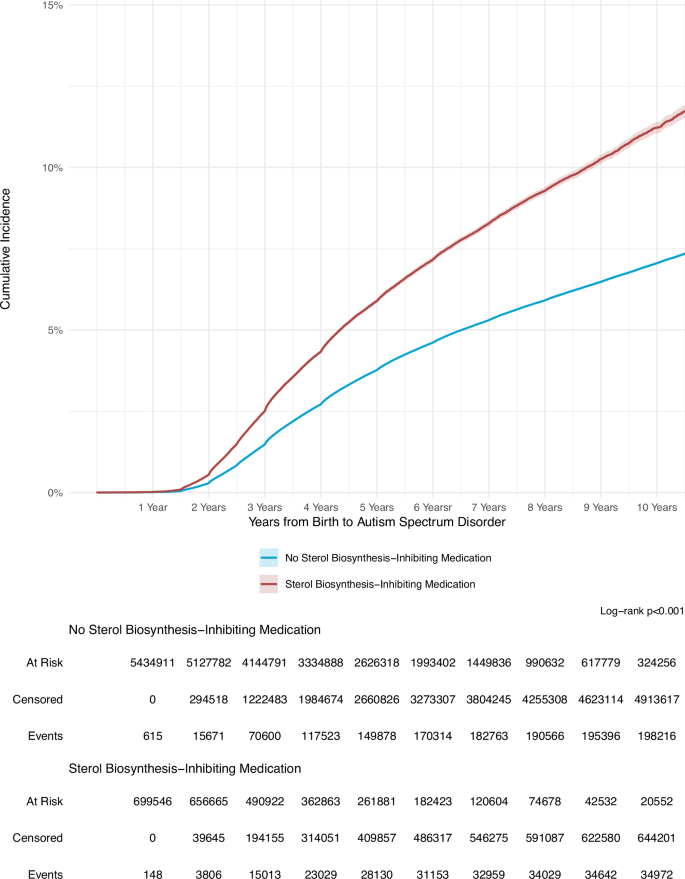
Study Links Antidepressants, Beta-blockers and Statins To Increased Autism Risk

An analysis of 6.14 million maternal-child health records  has linked prescription medications...

Pilot Study: Fibromyalgia Fatigue Improved By TENS Therapy

Fibromyalgia is the term for a poorly-understood condition where people experience pain and fatigue...

User picture.
News StaffRSS Feed of this column.

News Releases From All Over The World, Right To You... Read More »

Blogroll

When it comes to global warming, there are seven big contributors: China is obviously number one, but exempt from climate treaties, as is India and Brazil. Also leading are the United States, gradually weaning itself off of the coal increases that occurred when environmentalists drove nuclear power from the country. Russia, Germany and the United Kingdom round the list out.

A new article in Environmental Research Letters blames these countries for more than 60 percent of pre-2005 global warming. Uniquely, it also assigns a temperature change value to each country that reflects its contribution to observed global warming.

If you have ever visited a doctor's office, there is a 50 percent chance you left feeling ashamed or guilty, according to psychologists from the University of California, San Diego. And what happened next? Perhaps you were motivated to make changes in an unhealthy behavior. Or, did you just lie to that doctor on subsequent visits? Avoid him or her? Maybe even terminate treatment entirely?

When E. F. Thompson stood on the deck of a ship cruise ship the Indian Ocean in the 1930s and observed a dolphin speed past the vessel in 7 seconds, he had no idea that this single observation would lead Sir James Gray to formulate the enduring paradox that bears Gray's name to this day. 

Based on Thompson's anecdote, Gray estimated the power required to propel the boisterous mammal through the waves at 20 knots (10.3 m/s) and concluded that the animal did not have enough muscle to pull off the feat. Puzzled by the paradox, Gray concluded that dolphins must use a trick of fluid mechanics to sustain the remarkable performance.

A new study by shows a direct link between metabolism in brain cells and their ability to signal information. The research may explain why the seizures of many epilepsy patients can be controlled by a specially formulated diet.

The findings in Nature Communications by scientists at McGill University and the University of Zurich reveal that metabolism controls the processes that inhibit brain activity, such as that involved in convulsions. The study uncovers a link between how brain cells make energy and how the same cells signal information – processes that neuroscientists have often assumed to be distinct and separate.

The Subaru Telescope, an 8.2-meter telescope operated by the National Astronomical Observatory of Japan, has been combing the night sky since 1999. Located at the Mauna Kea Observatories in Hawaii, the telescope has been systematically surveying each degree of space, whether it looks promising or not, in search of objects worthy of further investigation. One of the most fascinating objects to emerge from the Subaru Telescope's wide-field survey—Himiko—was discovered in 2009. Himiko, a "space blob" named after a legendary queen from ancient Japan, is a simply enormous galaxy, with a hot glowing gaseous halo extending over 55,000 light-years.

Glaciers are important indicators of climate change. Global warming causes mountain glaciers to melt, which, apart from the shrinking of the Greenlandic and Antarctic ice sheets, is regarded as one of the main causes of the present global sea-level rise. Tibet's glaciers are also losing mass clearly, as scientists from the universities of Zurich, Tubingen and Dresden reveal using satellite-based laser measurements.




