Banner
Synchrotron Could Shed Light On Exotic Dark Photons

There are many hypothetical particles proposed to explain dark matter and one idea to explore how...

The Pain Scale Is Broken But This May Fix It

Chronic pain is reported by over 20 percent of the global population but there is no scientific...
Study Links Antidepressants, Beta-blockers and Statins To Increased Autism Risk

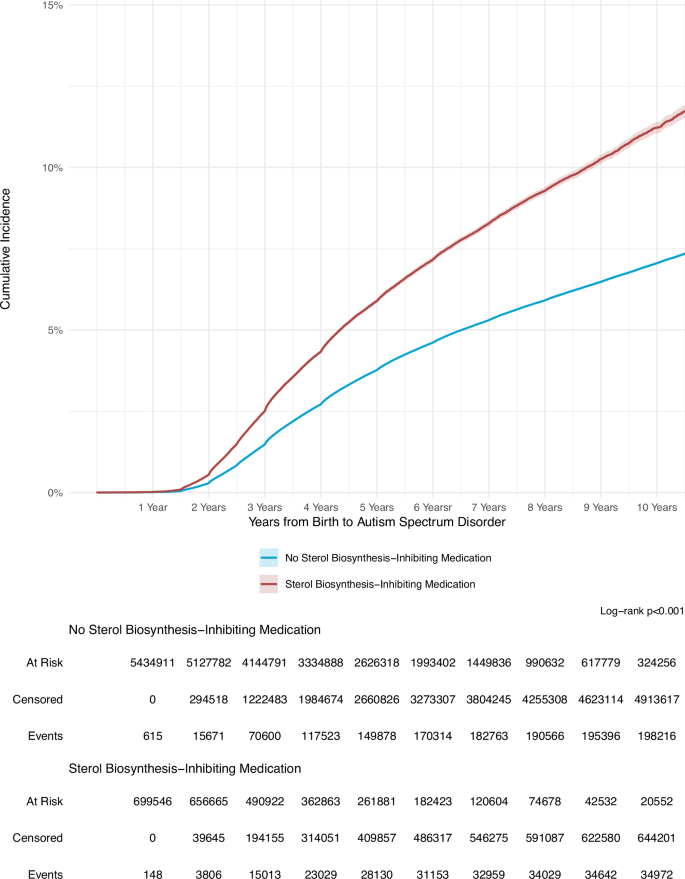
An analysis of 6.14 million maternal-child health records  has linked prescription medications...

Pilot Study: Fibromyalgia Fatigue Improved By TENS Therapy

Fibromyalgia is the term for a poorly-understood condition where people experience pain and fatigue...

User picture.
News StaffRSS Feed of this column.

News Releases From All Over The World, Right To You... Read More »

Blogroll

This news release is available in German.

This news release is available in German.

The structure of the human brain is complex, reminiscent of a circuit diagram with countless connections. But what role does this architecture play in the functioning of the brain? To answer this question, researchers at the Max Planck Institute for Human Development in Berlin, in cooperation with colleagues at the Free University of Berlin and University Hospital Freiburg, have for the first time analysed 1.6 billion connections within the brain simultaneously. They found the highest agreement between structure and information flow in the "default mode network," which is responsible for inward-focused thinking such as daydreaming.

This news release is available in German.

The survivors of a stroke often struggle with persistent loss of function of the central nervous system. Around the world strokes are one of the most frequent causes of paresis. Physiotherapy or occupational therapy can restore a certain degree of mobility. However, a patient with severe paresis, for instance of an arm, can only recover limited function through these therapeutic exercises.

Researchers at the RIKEN-MIT Center for Neural Circuit Genetics and MIT's Picower Institute for Learning and Memory have discovered a new brain circuit that shapes memory formation by endowing neurons with the ability to connect two events separated in time into a single experience.

In a study appearing in the journal Science a research team lead by Dr. Susumu Tonegawa, MIT Professor and Director of the RIKEN Brain Science Institute report the discovery of Island cells and a new brain circuit responsible for limiting the brain's ability to link two events that happen seconds or minutes apart into one experience, a property of memory called temporal association.

As the male túngara frog serenades female frogs from a pond, he creates watery ripples that make him easier to target by rivals and predators such as bats, according to researchers from The University of Texas at Austin, the Smithsonian Tropical Research Institute (STRI), Leiden University and Salisbury University.

A túngara frog will stop calling if it sees a bat overhead, but ripples continue moving for several seconds after the call ceases. In the study, published this week in the journal Science, researchers found evidence that bats use echolocation — a natural form of sonar — to detect these ripples and home in on a frog. The discovery sheds light on an ongoing evolutionary arms race between frogs and bats.

The linchpin location of the "Star Wars" franchise was the planet Tatooine, home to both Luke Skywalker and Obi-Wan Kenobi. It, along with its twin suns, appeared in every movie of the franchise except "The Empire Strikes Back".

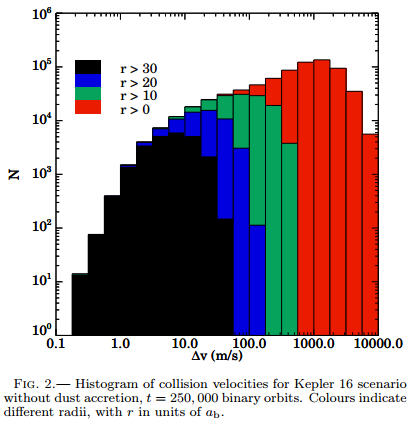
How would such a planet, orbiting two stars, form? There are few environments more extreme than a binary star system, if you are forming a planet. 

Kepler-34(AB)b has some answers, according to a new study. Like Tatooine, Kepler-34(AB)b is a circumbinary planet, its orbit encompasses two stars. Since powerful gravitational perturbations from two stars lead to destructive collisions that grind down planetary material, the existence of such planets can be difficult to explain.