

Banner
Synchrotron Could Shed Light On Exotic Dark Photons

There are many hypothetical particles proposed to explain dark matter and one idea to explore how...

The Pain Scale Is Broken But This May Fix It

Chronic pain is reported by over 20 percent of the global population but there is no scientific...
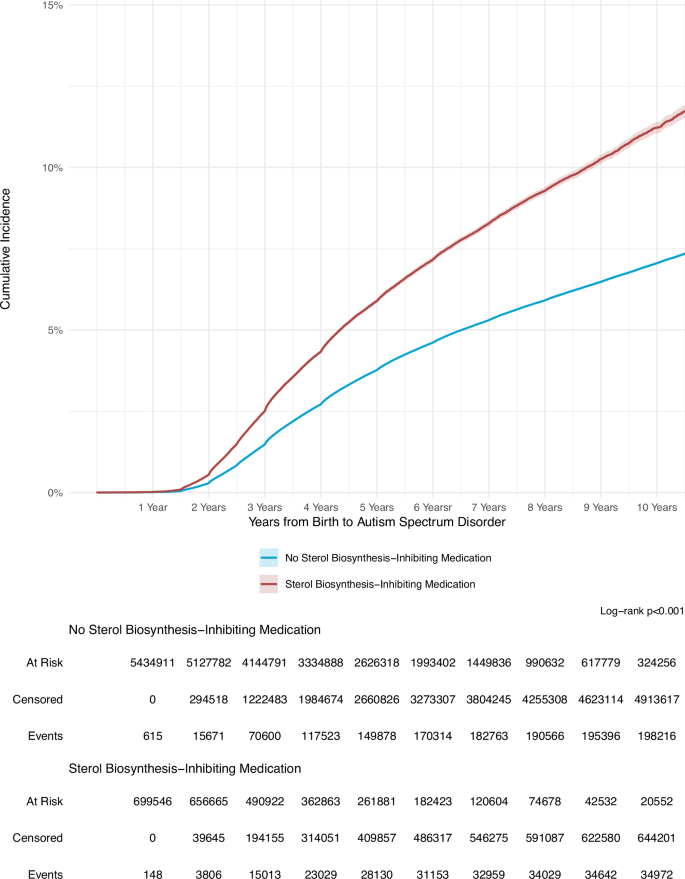
Study Links Antidepressants, Beta-blockers and Statins To Increased Autism Risk

An analysis of 6.14 million maternal-child health records  has linked prescription medications...

Pilot Study: Fibromyalgia Fatigue Improved By TENS Therapy

Fibromyalgia is the term for a poorly-understood condition where people experience pain and fatigue...

User picture.
News StaffRSS Feed of this column.

News Releases From All Over The World, Right To You... Read More »

Blogroll

SAN FRANCISCO - Jan. 21, 2014 - The probability of blindness due to the serious eye disease glaucoma has decreased by nearly half since 1980, according to a study published this month in Ophthalmology, the journal of the American Academy of Ophthalmology. The researchers speculate that advances in diagnosis and therapy are likely causes for the decrease, but caution that a significant proportion of patients still progress to blindness.

A new brain-imaging technique enables people to 'watch' their own brain activity in real time and to control or adjust function in pre-determined brain regions. The study from the Montreal Neurological Institute and Hospital – The Neuro, McGill University and the McGill University Health Centre, published in NeuroImage, is the first to demonstrate that magnetoencephalography (MEG) can be used as a potential therapeutic tool to control and train specific targeted brain regions. This advanced brain-imaging technology has important clinical applications for numerous neurological and neuropsychiatric conditions.

New research finds significantly higher levels of infectious pathogens in water from faucet taps with aerators compared to water from deeper in the plumbing system. Contaminated water poses an increased risk for infection in immunocompromised patients. The study was published in the February issue of Infection Control and Hospital Epidemiology, the journal of the Society for Healthcare Epidemiology of America.

"Aerators are a reservoir for drug-resistant bacteria and a source of infection for patients at risk," said Maria Luisa Cristina, PhD, a lead author of the study. "Safe water is vital to ensuring patient safety where waterborne infections increase morbidity, mortality, treatment costs, compensation claims and prolong hospital stays."

Given a choice, male dyeing poison frogs snub empty pools in favor of ones in which their tiny tadpoles have to metamorphose into frogs in the company of larger, carnivorous ones of the same species. The frog fathers only choose to deposit their developing young in unoccupied pools when others are already filled with tadpoles of a similar size as their own. These are seemingly counterintuitive decisions, given how often cannibalism involving a large tadpole eating a smaller one takes place in natural pools, writes Bibiana Rojas of the University of Jyväskylä in Finland. Her findings are published in Springer's journal Behavioral Ecology and Sociobiology.

A few years ago, sugar was engaged in a ground war against corn syrup, and the public relations campaign against high fructose corn syrup was so successful that even corn syrup carried labels saying 'no HFCS' while bleached white sugar was portrayed as a healthier alternative.

But now bleached white table sugar is under the gun also. It doesn't make much difference, really, sugar is sugar. And replacing fructose with glucose won't do a thing to make people healthier, according to a paper in Current Opinion in Lipidology, which shows that when portion sizes and calories are the same, fructose and glucose are the same.

Marriage is good for the health of men's bones - but only if they marry when they're 25 or older, new UCLA researcher suggests.

In a study published online in the peer-reviewed journal Osteoporosis International, researchers found evidence that men who married when they were younger than 25 had lower bone strength than men who married for the first time at a later age.

In addition, men in stable marriages or marriage-like relationships who had never previously divorced or separated had greater bone strength than men whose previous marriages had fractured, the researchers said. And those in stable relationships also had stronger bones than men who never married.


