Banner
Synchrotron Could Shed Light On Exotic Dark Photons

There are many hypothetical particles proposed to explain dark matter and one idea to explore how...

The Pain Scale Is Broken But This May Fix It

Chronic pain is reported by over 20 percent of the global population but there is no scientific...
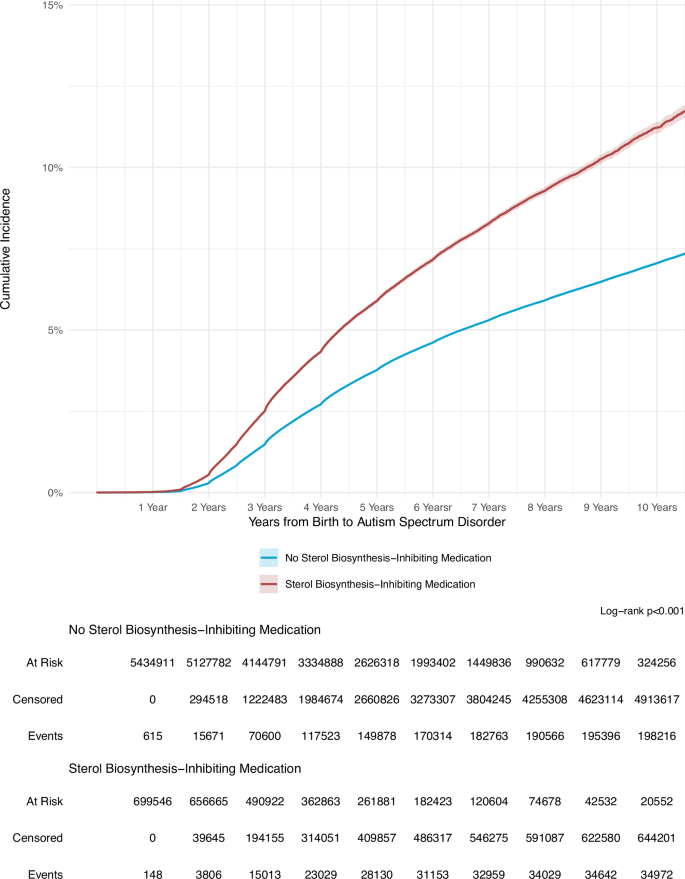
Study Links Antidepressants, Beta-blockers and Statins To Increased Autism Risk

An analysis of 6.14 million maternal-child health records  has linked prescription medications...

Pilot Study: Fibromyalgia Fatigue Improved By TENS Therapy

Fibromyalgia is the term for a poorly-understood condition where people experience pain and fatigue...

User picture.
News StaffRSS Feed of this column.

News Releases From All Over The World, Right To You... Read More »

Blogroll

The climate is a sensitive balancing act. There are a lot of knobs turning, making the future difficult to model.

But trees have done a surprisingly good job adapting quickly to keep atmospheric carbon dioxide in a 'sweet' spot for plant life.

As most people know, the cycles of the past have shown that about 90,000 of every 100,000 years have been ice ages. And it's been 12,000 years since the last one. But a biological mechanism could explain how the Earth's atmospheric carbon dioxide and climate were stabilized over the past 24 million years, so things never got too drastic.

Diversity police regulate success by making overachievers victims of their own success. They spread quickly, preventing too much dominance by undercutting whatever gets ahead and enforcing lots of mediocre equivalence. They're pests.

The pests we're talking about are, of course, fungi in rainforests. They play a crucial role in biodiversity by spreading quickly between closely-packed plants of the same species - the success of these fungal diversity police makes sure nothing can be superior, and more species flourish.

Marijuana is enjoying a golden age of cultural advocacy, to such an extent that its medical benefits are exaggerated while the obvious impact on health is trivialized.

America has developed a surveillance problem, hiding behind a facade of security. Britain has been down this road before, the average citizen in London is photographed 300 times per day by government, which has done nothing to reduce crime.

Thus it makes sense that a law academic from the University of East Anglia (UEA) has advice for how to repair the trust of people and foreign governments who feel violated by the administration's tactics.

Children who grow up in dangerous neighborhoods exhibit more aggressive behavior, according to a new paper in Societies.

Lots of U.S. studies have suggested a link between dangerous neighborhoods and aggressive behavior in kids but the authors of the new paper wanted to determine whether the pattern held true worldwide. So they interviewed parents and children from 1,293 families in nine countries: China, Colombia, Italy, Jordan, Kenya, the Philippines, Sweden, Thailand and the United States.

The questions involved dangers in their neighborhoods. Based on the answers, the researchers scored the neighborhoods according to their degree of danger.

The difference between 1 and 2 and 101 and 102 is the same, yet children perceive 1 and 2 as being much farther apart, because two is twice as much as one.

It takes years of education to recognize that the numbers in both sets are only one integer apart on a number line. But a new paper shows that different is not necessarily weaker and  educated adults retain traces of their childhood number sense — and that innate ability is more powerful than recognized.