Banner
Pilot Study: Fibromyalgia Fatigue Improved By TENS Therapy

Fibromyalgia is the term for a poorly-understood condition where people experience pain and fatigue...

High Meat Consumption Linked To Lower Dementia Risk

Older people who eat large amounts of meat have a lower risk of dementia and cognitive decline...

Long Before The Inca Colonized Peru, Natives Had A Thriving Trade Network

A new DNA analysis reveals that long before the Incan Empire took over Peru, animals were...

Mesolithic People Had Meals With More Tradition Than You Thought

The common imagery of prehistoric people is either rooting through dirt for grubs and picking berries...

User picture.
News StaffRSS Feed of this column.

News Releases From All Over The World, Right To You... Read More »

Blogroll

The handling of "incidental findings" in clinical genome and exome sequencing has been addressed by the American College of Medical Genetics and Genomics (ACMG). 

Incidental findings are health-related interpretations of a patient's genetic code that are unrelated to the primary reason for ordering the genetic testing. For example, if a clinician orders exome or genome sequencing to analyze genes related to a patient's cardiac condition, the laboratory will already have information about all the other genes in hand and could examine genes for something like cancer predisposition with relative ease. 

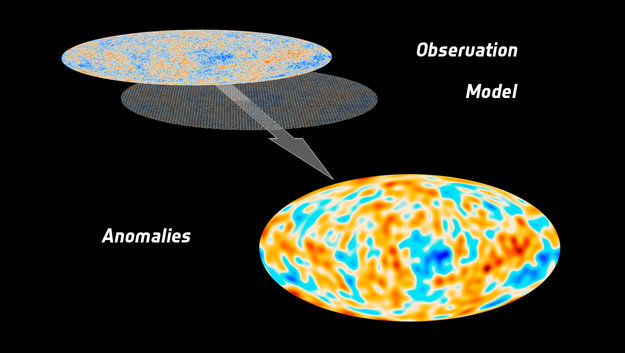
The most detailed map ever created of the cosmic microwave background – the relic radiation from the Big Bang – found something a little odd. 

The information extracted from Planck’s new map provides an excellent confirmation of the standard model of cosmology at an unprecedented accuracy, setting a new benchmark in our manifest of the contents of the Universe - but because precision of Planck’s map is so high, it also made it possible to reveal some peculiar unexplained features that may well require new physics to be understood.

In the early 1950's, a 66-year-old woman with colon cancer received a blood transfusion - but she suffered a severe rejection of the transfused blood. When writing the case study, the medical journal Revue D'Hématologie identified her only as "Patient Vel."

It was determined that Mrs. Vel had developed a potent antibody against some unknown molecule found on the red blood cells of most people in the world—but not found on her own red blood cells. But the molecule was unknown, nobody could find it. A blood mystery began, and, from her case, a new blood type, "Vel-negative," was described in 1952.

Scientists have found a layer of liquefied molten rock in Earth's mantle that may be acting as a lubricant for the sliding motions of the planet's massive tectonic plates. The discovery was made at the magma layer at the Middle America trench offshore Nicaragua. Using advanced seafloor electromagnetic imaging technology pioneered atScripps Institution of Oceanography at UC San Dieg , the scientists imaged a 16 mile-thick layer of partially melted mantle rock below the edge of the Cocos plate where it moves underneath Central America.

Can a computer predict the winner of the NCAA basketball tournament, called March Madness by fans and the NCAA corporate juggernaut alike?

If so, Science 2.0 will save you some time: third seed Florida will be your national champion.

The prediction is from Georgia Tech's Logistic Regression/Markov Chain (LRMC) college basketball ranking system, a computerized model that has correctly chosen the men's basketball national champ in three of the last five years. 

If you're a taxpayer in the UK, you get medical care for free - even if it's nothing at all.

A survey  conducted by the Universities of Oxford and Southampton found that 97% of UK doctors registered with the General Medical Council (GMC) have prescribed placebo treatments to patients at least once in their career. 

'Impure' placebos are treatments that are unproven, such as antibiotics for suspected viral infections, or more commonly non-essential physical examinations and blood tests performed to reassure patients. 'Pure' placebos are treatments such as sugar pills or saline injections which contain no active ingredients. 97% of doctors have used 'impure' placebo treatments while 12% have used 'pure' placebos.