Banner
Pilot Study: Fibromyalgia Fatigue Improved By TENS Therapy

Fibromyalgia is the term for a poorly-understood condition where people experience pain and fatigue...

High Meat Consumption Linked To Lower Dementia Risk

Older people who eat large amounts of meat have a lower risk of dementia and cognitive decline...

Long Before The Inca Colonized Peru, Natives Had A Thriving Trade Network

A new DNA analysis reveals that long before the Incan Empire took over Peru, animals were...

Mesolithic People Had Meals With More Tradition Than You Thought

The common imagery of prehistoric people is either rooting through dirt for grubs and picking berries...

User picture.
News StaffRSS Feed of this column.

News Releases From All Over The World, Right To You... Read More »

Blogroll

A new study indicates that  thousands of individuals have had kidneys removed unnecessarily because doctors misdiagnosed their disease.

20% of individuals with kidney tumors common in patients with tuberous sclerosis complex (TSC), a genetic disorder, has had a kidney removed. 40% had some kind of surgical procedure performed. Better diagnosis could have led to treatment that would have made surgery or kidney removal unnecessary, according to John Bissler, MD, a nephrologist at Cincinnati Children's Hospital Medical Center and lead author of the study. 

While corn ethanol was always a bad idea, biofuels themselves have a potential.

Perennial biofuel crops miscanthus, switchgrass, and mixed prairie species have shown high yields in producing ethanol, and a 4-year University of Illinois study has found another beneficial characteristic – the ability to reduce the escape of nitrogen in the environment.

The study compared miscanthus, switchgrass, and mixed prairie species to typical corn-corn-soybean rotations and each of the perennial crops were highly efficient at reducing nitrogen losses, with miscanthus having the greatest yield. 

Harvested biomass and nitrogen, nitrous oxide emissions, and nitrate leaching in the mid-soil profile and through tile drainage lines were all measured.

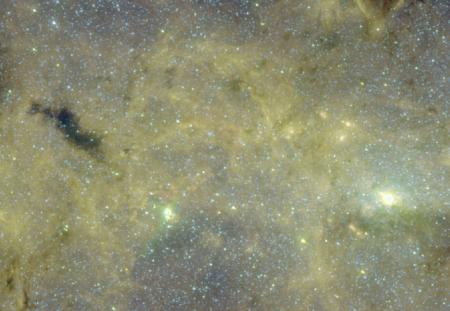
There's a mystery in them there clouds - but astronomers at Caltech are on the case.

Near the crowded galactic center, billowing clouds of gas and dust hide a supermassive black hole 3,000,000X as massive as our sun, Its gravity is strong enough to grip stars that are whipping around it at thousands of kilometers per second. One particular cloud named G0.253+0.016
has delighted astronomers. Because scientists love a mystery. 

G0.253+0.016 defies the rules of star formation. But apparently those are more guidelines than rules.

Students everywhere, put down those highlighters and pick up some flashcards! Some of the most popular study strategies, like highlighting and even re-reading, don't show much promise for improving student learning, according to a new paper.

In the article, psychologist John Dunlosky of Kent State University and colleagues review ten learning techniques commonly used by students.

Based on the available evidence, they provide recommendations about the applicability and usefulness of each technique.

People view brown-eyed faces as more trustworthy than those with blue eyes- unless the blue eyes belong to a man with a broad face, according to a new paper in PLOS ONE

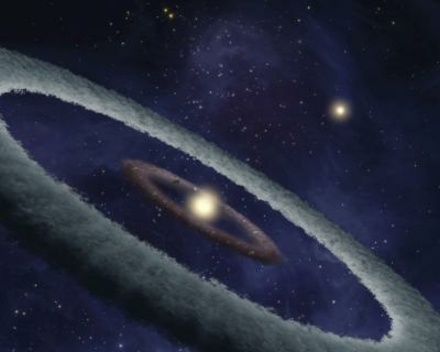
Vega is the second brightest star in northern night skies and astronomers using the Infrared Space Telescopes have discovered an asteroid belt much like that of our sun. 

Results showing an asteroid belt around Vega makes it more similar to its twin, the star called Fomalhaut. Both stars now are known to have inner, warm asteroid belts and outer, comet-filled belts, similar in architecture to the asteroid and Kuiper belts in our own solar system.