Banner
Pilot Study: Fibromyalgia Fatigue Improved By TENS Therapy

Fibromyalgia is the term for a poorly-understood condition where people experience pain and fatigue...

High Meat Consumption Linked To Lower Dementia Risk

Older people who eat large amounts of meat have a lower risk of dementia and cognitive decline...

Long Before The Inca Colonized Peru, Natives Had A Thriving Trade Network

A new DNA analysis reveals that long before the Incan Empire took over Peru, animals were...

Mesolithic People Had Meals With More Tradition Than You Thought

The common imagery of prehistoric people is either rooting through dirt for grubs and picking berries...

User picture.
News StaffRSS Feed of this column.

News Releases From All Over The World, Right To You... Read More »

Blogroll

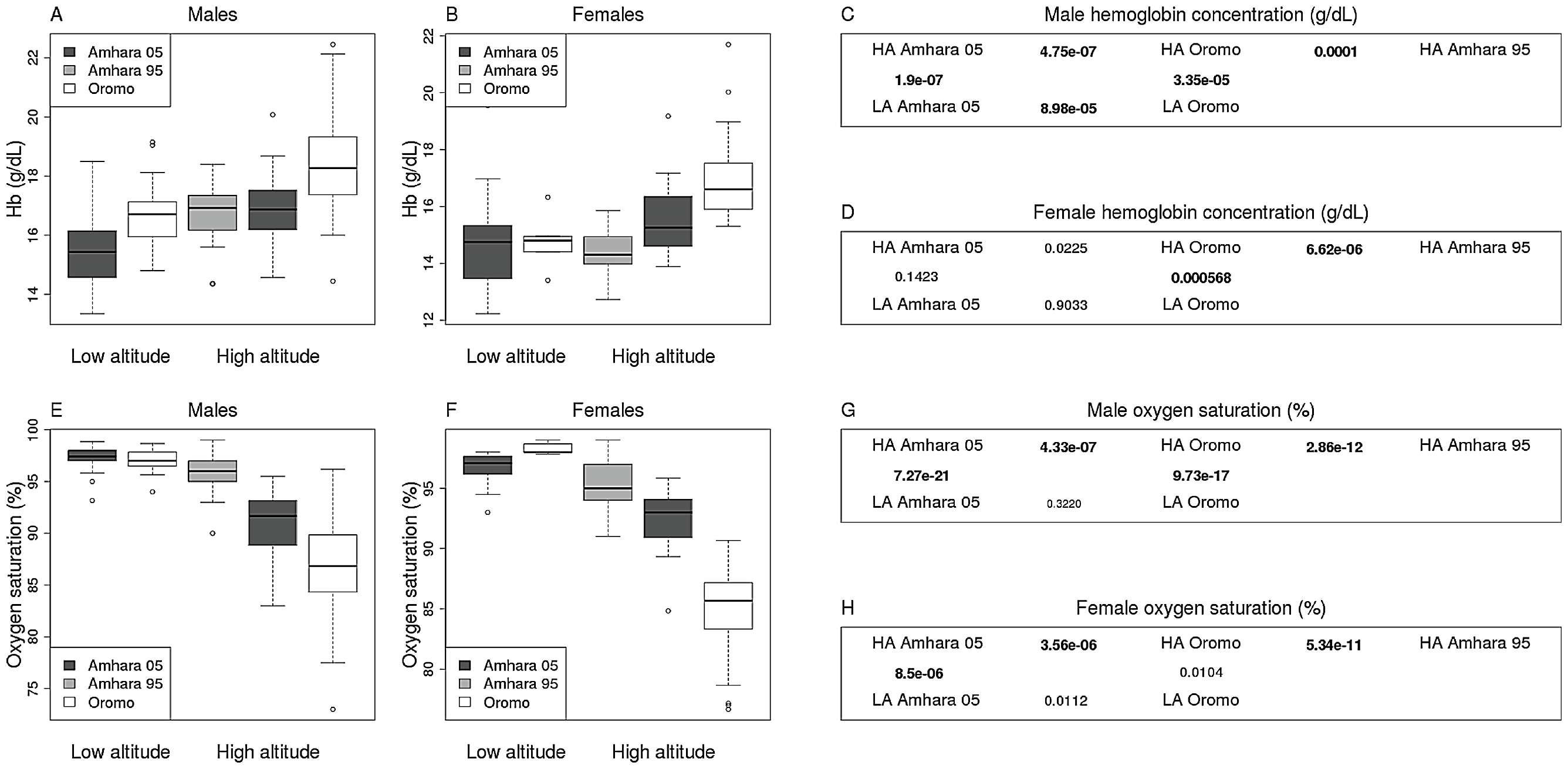
Tibetan and Ethiopian highlanders share a biological adaptation that enables them to thrive in the low oxygen levels of high altitudes, but the ability to pass on the trait appears to be linked to different genes in the two groups.

The adaptation is the share is the ability to maintain a low (for high altitudes) level of hemoglobin, the oxygen-carrying protein in red blood cells. Members of populations who historically live at low altitudes respond to the thin air by increasing hemoglobin levels. The response can help draw oxygen into the body to try and avoid hypoxia, but that increases blood viscosity and the risks for thrombosis, stroke and difficulties with pregnancies.

Plant growth patterns are influenced by a variety of stimuli, including gravity. Terrestrial plant roots exhibit characteristic behaviors called 'waving' and 'skewing' and those are thought to be gravity-dependent events. 

Not so, according to a study of Arabidopsis plants grown on the International Space Station (ISS).  Root 'waving' and 'skewing' occur even with no gravity.

The world's smallest reaction chamber has a mixing volume that can be measured in femtoliters - that's a million billionths of a liter.

The reaction chamber actually consists of nothing more than a tiny spray of liquid, produced by a technique known as electrospray ionization, in which a liquid is converted into lots of charged droplets by exposing it to a high voltage as it exits the nozzle of a thin capillary.

Like water being sprayed out of a hose, these charged droplets form a cone shape, known as a Taylor cone, as they are emitted from the nozzle. Because the electrospray process transforms any chemical entities within the liquid into ions, it is a commonly used technique for ionizing a liquid sample prior to analysis by mass spectrometry.

NASA's Tropical Rainfall Measuring Mission (TRMM) satellite was able to estimate rainfall rates  of Typhoon Bopha over the Philippines, where severe flooding killed several hundred people. Bopha is now a tropical storm in the South China Sea but high winds, flooding and landslides from heavy rains with Typhoon Bopha have caused close to 300 deaths in the southern Philippines.

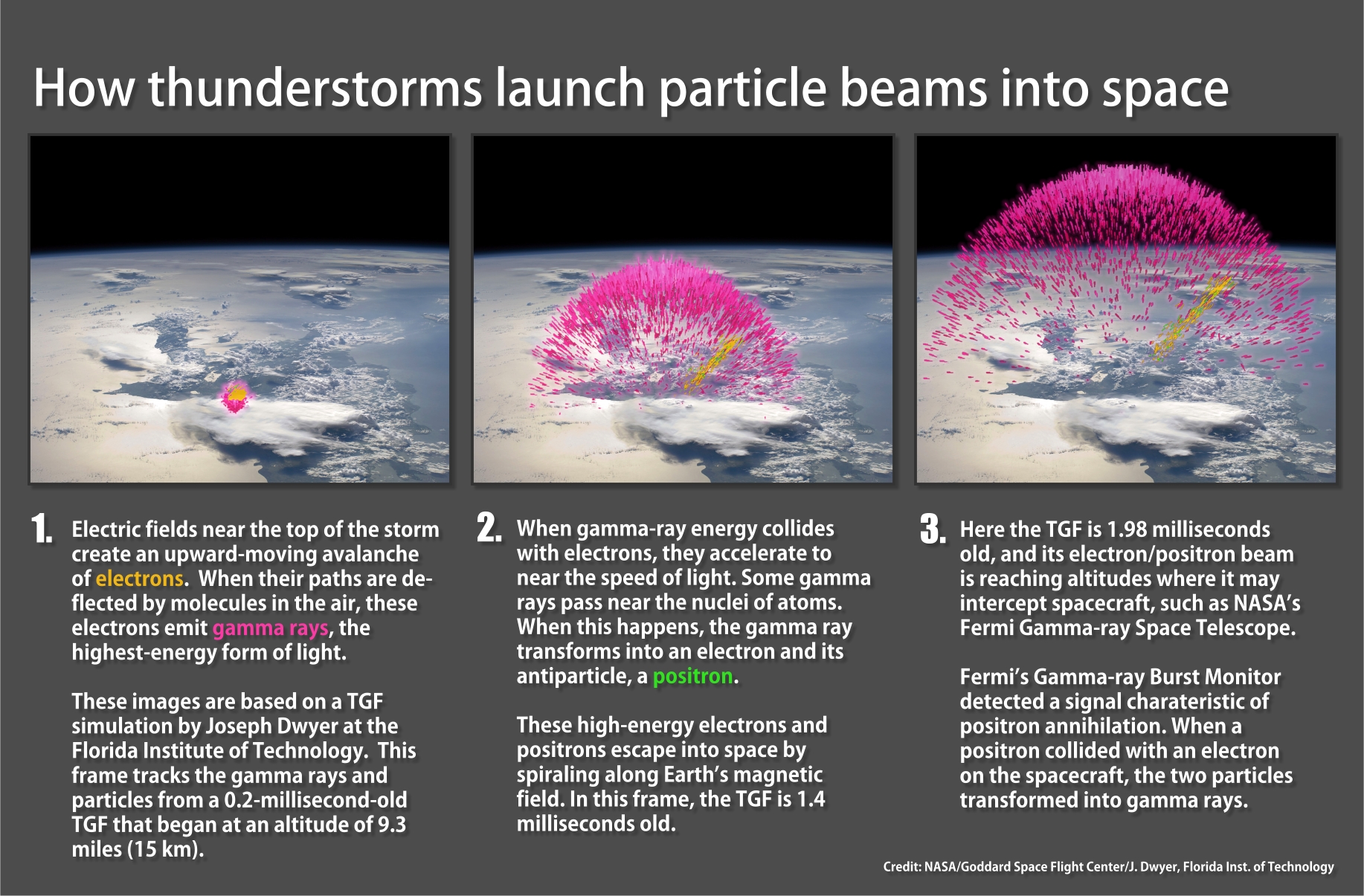
The Gamma-ray Burst Monitor (GBM) on NASA's Fermi Gamma-ray Space Telescope is now 10 times better at catching the brief outbursts of high-energy light, known as  terrestrial gamma-ray flashes (TGFs),mysteriously produced above thunderstorms.

Terrestrial gamma-ray flashes last only a few thousandths of a second but their gamma rays rank among the highest-energy light that naturally occurs on Earth. The enhanced GBM discovery rate helped scientists show most TGFs also generate a strong burst of radio waves, a finding that will change how scientists study this poorly understood phenomenon.

Fatty liver disease, diabetes and obesity are health issues that are not going to be solved during the holiday season.  The solution to much of it, healthier eating, is not realistic and so researchers at the University of California, Berkeley, examining the molecular mechanisms of how our body converts dietary carbohydrates into fat have found that disabling a gene with the catchy name BAF60c prevented carbohydrates from converting to fat, despite eating a high-carb diet. In mice, anyway