Banner
Pilot Study: Fibromyalgia Fatigue Improved By TENS Therapy

Fibromyalgia is the term for a poorly-understood condition where people experience pain and fatigue...

High Meat Consumption Linked To Lower Dementia Risk

Older people who eat large amounts of meat have a lower risk of dementia and cognitive decline...

Long Before The Inca Colonized Peru, Natives Had A Thriving Trade Network

A new DNA analysis reveals that long before the Incan Empire took over Peru, animals were...

Mesolithic People Had Meals With More Tradition Than You Thought

The common imagery of prehistoric people is either rooting through dirt for grubs and picking berries...

User picture.
News StaffRSS Feed of this column.

News Releases From All Over The World, Right To You... Read More »

Blogroll

OptiNose US Inc. has announced that its Norwegian affiliate was awarded $2.1 million by the Research Council of Norway to study its nasal drug delivery technology in the treatment of autism spectrum disorders (ASDs).

OptiNose will use this research grant to investigate "nose-to-brain" transport of oxytocin via the patented OptiNose Bi-Directional delivery technology for the treatment of ASDs. Partners who have agreed to collaborate with OptiNose in the project include the Department of Psychiatry at Oslo University Hospital, SINTEF and Smerud Medical Research and Norwegian academic insitutions. 

New data from the RELY-ABLE study have provided additional support to the safety profile and efficacy of Pradaxa(R) (dabigatran etexilate) for stroke prevention in patients with nonvalvular atrial fibrillation (AF) over a period in excess of 2 years.[*][1]

The new long-term results presented at the American Heart Association's (AHA) Scientific Sessions, are consistent with the findings from the RE-LY trial[*]. The rates of stroke and haemorrhage observed during an additional 2.3 years of blinded follow-up in RELY-ABLE correspond to the initial RE-LY results, with the benefit of both doses of dabigatran etexilate sustained throughout the study's duration.[1]-[3] 

Twelve-month data from the Global Anticoagulant Registry in the FIELD (GARFIELD) show that the poor management of stroke prevention therapy is widespread in clinical practice, which may lead to elevated rates of mortality, stroke and bleeding among individuals with newly diagnosed atrial fibrillation (AF).

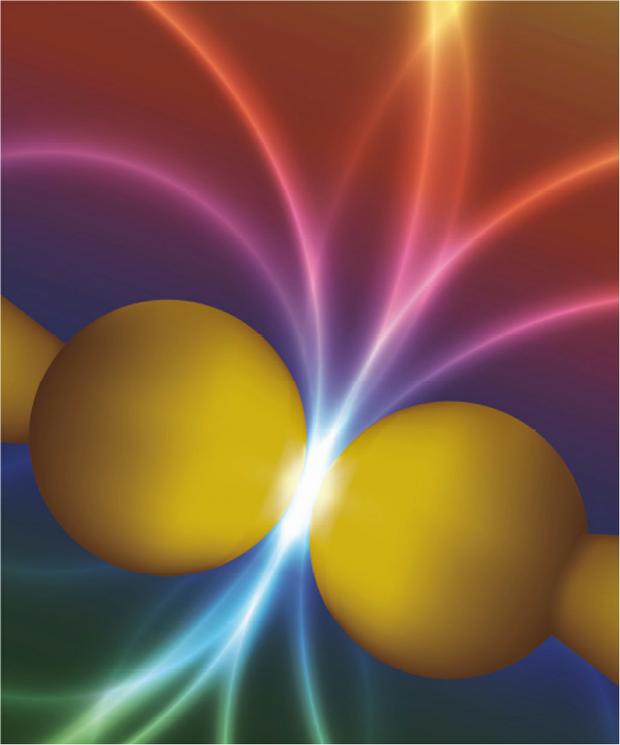
Researchers have observed the quantum regime in the interaction between nano-sized spheres of gold, thanks to the change of color of the gap between these particles when they are at distances of less than one nanometer.

They have literally 'seen' a quantum kiss between nanoparticles.
The fossilized fangs of saber-toothed cats, a leopard-sized Promegantereon ogygia and a much larger, lion-sized Machairodus aphanistus, hold clues to how large, extinct mammals once shared space and food with other large predators 9 million years ago.

Paleontologists have analyzed the tooth enamel of two species of saber-toothed cats and a bear dog unearthed in geological pits near Madrid. Bear dogs, also extinct, had dog-like teeth and a bear-like body and gait. 
Autologous stem cells from bone marrow 3 or 7 days following a heart attack did not improve heart function six months later, according to a new clinical trial. 

The results of this TIME (Transplantation In Myocardial Infarction Evaluation) trial were presented by Jay Traverse, MD of the Minneapolis Heart Institute Foundation Tuesday, today at the 2012 Scientific Sessions of the American Heart Association in Los Angeles.

The results of this trial mirror a previous, related study (LateTIME) which found that autologous bone marrow stem cell therapy given 2-3 weeks after a heart attack did not improve cardiac recovery. Both TIME and LateTIME were carried out by the Cardiovascular Cell Therapy Research Network (CCTRN).